
AI in Electronic Dance Music Production and What Ghost Production Buyers Should Know
Using AI in EDM While Preserving Human Creativity and Buyer Confidence
Artificial intelligence is becoming an increasingly visible part of electronic dance music production. From AI assisted mastering tools to synthetic vocals and composition helpers, producers now have access to technologies that were impossible just a few years ago.
For buyers of ghost-produced EDM tracks, understanding how AI is used matters. A track must still be original, exclusive, and legally safe to release. That is especially true on platforms like EDM Ghost Production, which allow AI in very specific situations while strongly protecting creative originality and buyer exclusivity.
This article explores where AI fits into modern EDM production, how it is being used responsibly, and how strict policies help ensure ghost-produced tracks remain valuable and release ready.
How AI Is Used in EDM Production
AI is not limited to a single part of the production process. Today it appears in four main areas:
• Vocal generation and processing
• Melody and composition assistance
• Sound design
• Mixing and mastering
Each of these raises different creative and legal questions.
AI Generated Vocals in EDM
One of the most talked about uses of AI in music is vocal synthesis. Producers can input lyrics and melodies and generate a realistic singing performance using trained voice models. This can be useful when no singer is available or when a specific vocal tone is needed for a track.
On EDM Ghost Production, AI vocals are allowed, but only under strict conditions designed to protect buyers.
Licensing and Royalty Free Use
Any AI vocal tool used must:
• Offer a clear commercial license
• Be royalty free
• Allow resale of the finished track
• Not require ongoing credits or fees
Free trials often do not include commercial rights, which makes them unsuitable for ghost production.
Industry legal analysis has also emphasized that AI vocals can be used in commercial releases only when the user controls the rights to the output and the tool explicitly provides a royalty free license covering distribution and resale.
When uploading a track, producers must provide a link to the AI tool license or terms confirming commercial usage rights. If there is any uncertainty, the vocal should not be used.
No Voice Cloning or Artist Imitation
AI may not be used to imitate real singers or famous artists.
In a widely reported case, an AI generated song using synthetic vocals modeled after Drake and The Weeknd was removed from major streaming platforms after copyright complaints, highlighting how risky voice imitation can be when proper rights are not secured.
Even top tier artists have treated voice cloning cautiously. David Guetta publicly demonstrated an AI generated vocal styled after Eminem during a live set, while making clear it was an experiment and not intended for commercial release.
That means:
• No cloning celebrity voices
• No training models on copyrighted recordings
• No recreating recognizable vocal identities
Only licensed AI voices designed for commercial use are acceptable.
Original Lyrics and Ethical Use
Producers are encouraged to:
• Write original lyrics themselves or with AI assistance
• Record their own voice and process it through a licensed AI model
• Avoid using copyrighted text
This keeps the vocal performance legally clean and creatively original.
Exclusivity for the Buyer
All AI vocals in tracks sold on EDM Ghost Production must be exclusive to the buyer.
Once purchased:
• The vocal may not be reused
• The vocal may not be resold
• The vocal may not be published elsewhere
Ownership of the finished track transfers to the buyer just like with any human recorded vocal.
AI in Melody Writing and Instrumentals
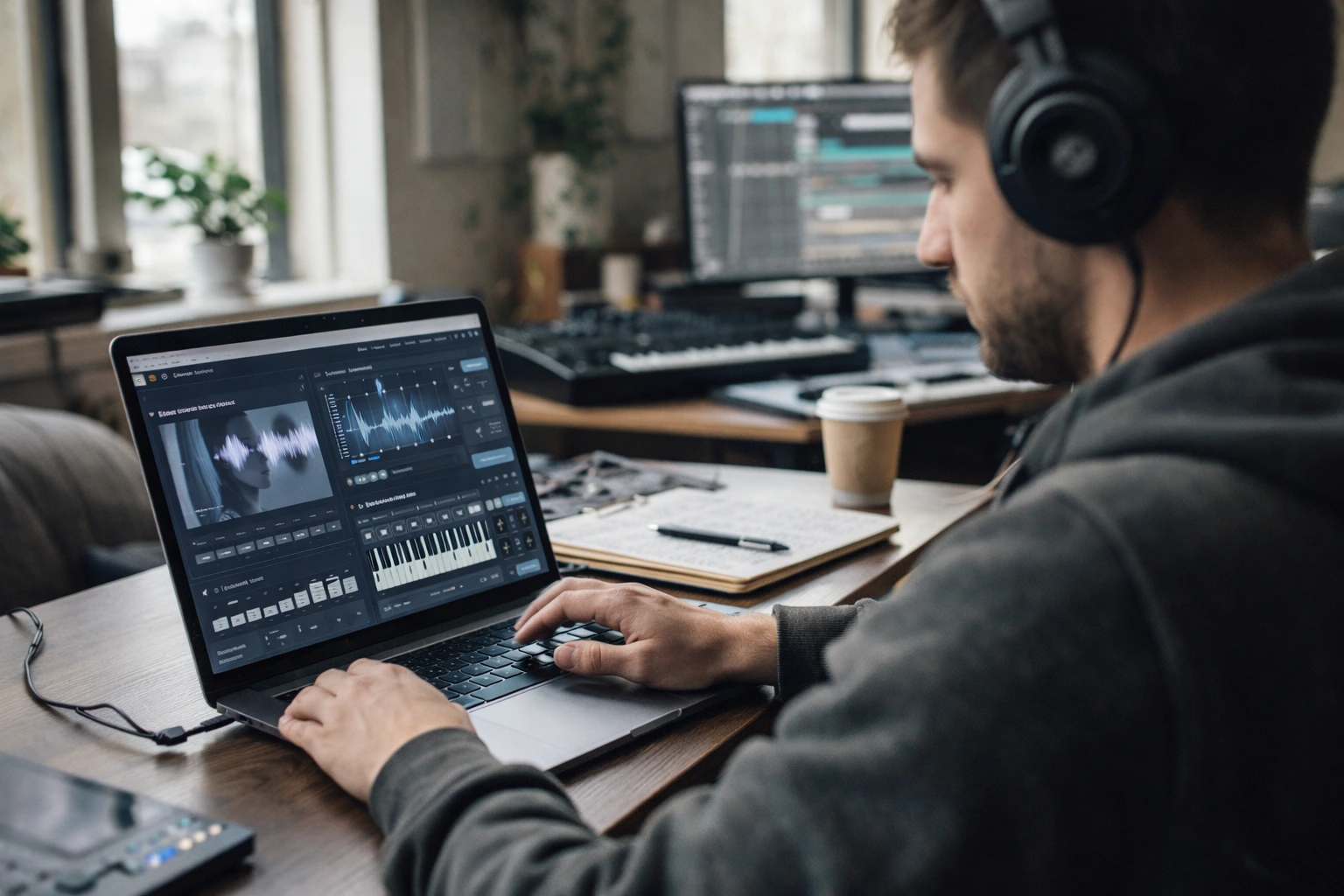
AI tools can now generate melodies, chord progressions, basslines, and even full songs. Some plugins suggest musical ideas while others compose entire arrangements automatically.
Recent industry overviews have mapped how AI tools are spreading across composition, sound design, and mastering workflows, showing how broad the technology’s footprint has become in modern music production.
While this technology can be useful during experimentation, ghost production platforms are far more cautious about how it is applied in finished products.
On EDM Ghost Production, AI generated instrumentals, melodies, or arrangements are prohibited.
All main musical elements must be created by the producer.
That includes:
• Leads
• Basslines
• Chord progressions
• Pads
• Guitar melodies
• Vocal chops
The reason is simple. Buyers expect a track that cannot exist anywhere else. AI generated music can often produce similar outputs for many users, which threatens exclusivity.
Why Original Melodies Matter in Ghost Production
The same philosophy applies to loops, MIDI packs, and melodic presets.
If a buyer releases a track and later discovers the same melody appearing in multiple songs, trust in the platform is damaged. That is why EDM Ghost Production enforces strict originality rules.
What Is Prohibited
Producers may not use:
• Ready made melodic loops
• MIDI melody packs
• Preset arpeggio sequences
• Unmodified guitar loops
• Stock vocal chops as lead hooks
Changing tempo or pitch is not enough.
What Is Allowed
Producers may use:
• Synthesizers and romplers such as Omnisphere, Nexus, Arcade, Kontakt
• One shot samples
• Drum loops
• Sound libraries
As long as:
• They write their own melodies
• They program the notes themselves
• Any melodic loops are heavily transformed and unrecognizable
If loops are used, they must be manipulated into something completely new.
In theory, a track could be built entirely from samples, provided the final melodies are unique and not traceable to the original sources.
AI for Sound Design
AI can also assist with creating new synth textures, effects, and experimental timbres. Some systems generate sounds rather than compositions, blending characteristics of instruments or creating entirely new tones.
Used this way, AI functions more like a synthesizer than a songwriter.
Ghost producers may incorporate AI created sounds as long as:
• The producer designs the melody manually
• The sounds are used creatively
• The finished result is original
This keeps AI in a supportive role rather than replacing musical authorship.
AI in Mixing and Mastering
One of the most accepted uses of AI in EDM production is in technical processing.
AI mastering services analyze tracks and apply EQ, compression, stereo enhancement, and limiting automatically. Mixing assistants can balance levels, detect frequency clashes, and suggest processing chains.
Common applications include:
• Automated mastering
• Intelligent EQ and compression
• Vocal cleanup
• Noise removal
• Stem separation
• Sample tagging
These tools help producers reach professional sound quality faster without altering the composition itself.
For ghost production buyers, this is a positive. It means the track you purchase is likely polished, loud, and club ready.
Since these tools do not create musical ideas, they do not conflict with originality rules.
Balancing AI With Creativity and Exclusivity
The key principle behind EDM Ghost Production policies is that AI should enhance production, not replace creativity.
AI can:
• Help generate vocal performances
• Assist with sound creation
• Speed up mixing and mastering
• Provide inspiration during early writing stages
But it cannot:
• Compose the main melody
• Generate full instrumental tracks
• Replace the producer’s musical authorship
• Compromise exclusivity
This balance ensures that every ghost-produced track remains:
• Original
• Exclusive
• Legally safe to release
• Created by a human producer
From a buyer perspective, these rules are protective. They ensure that you are not purchasing something mass produced by an algorithm or built from widely reused melodic content.
Why This Matters for Ghost Production Buyers
When buying a track that used AI:
• The vocals must be licensed and royalty free
• The instrumental must be human created
• The melody must be unique
• The rights must transfer fully to you
• The vocal cannot appear anywhere else
These safeguards protect your brand, your releases, and your reputation.
AI is becoming part of modern music production, but in professional ghost production environments it is carefully controlled. Used responsibly, it allows producers to work faster and experiment with new sounds while delivering the same core promise to buyers: a one of a kind track that belongs entirely to you.