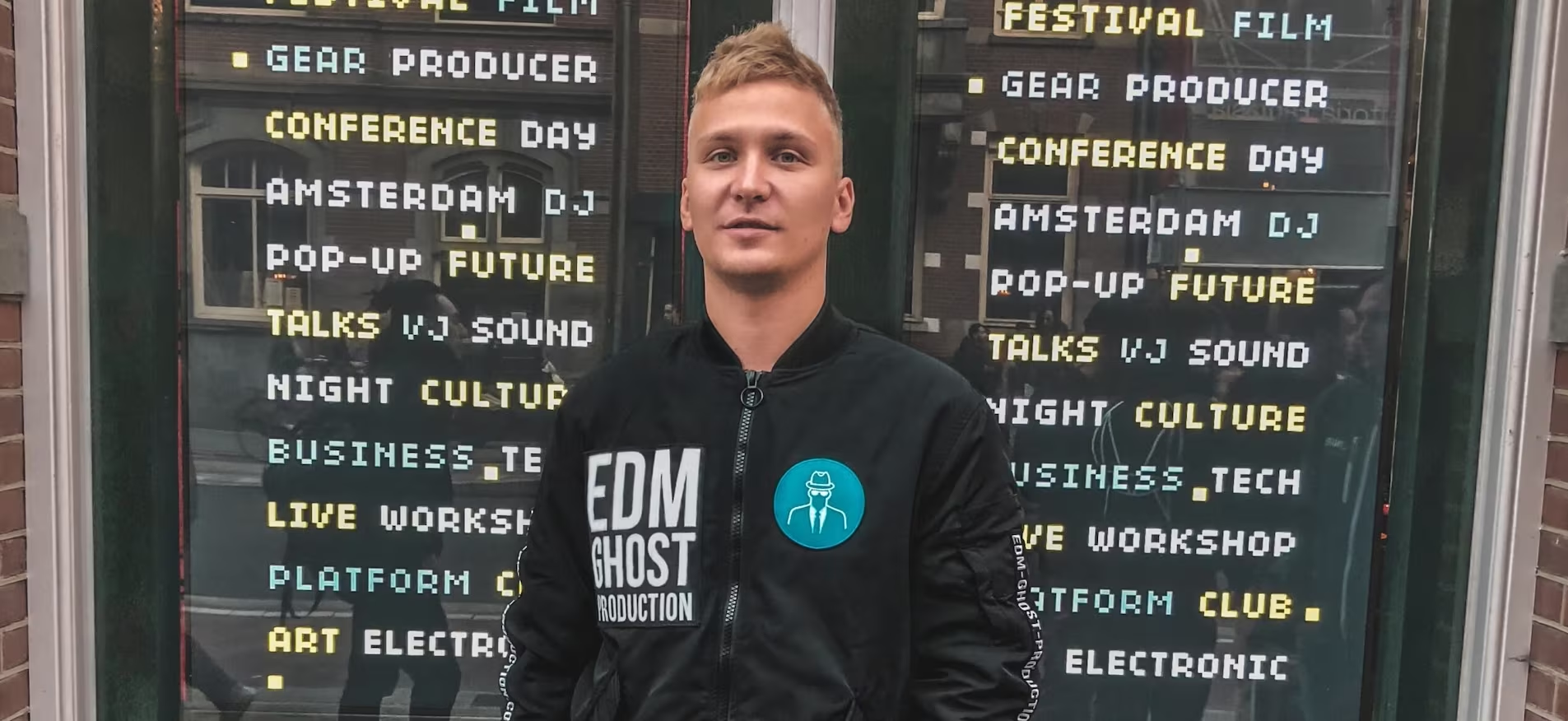
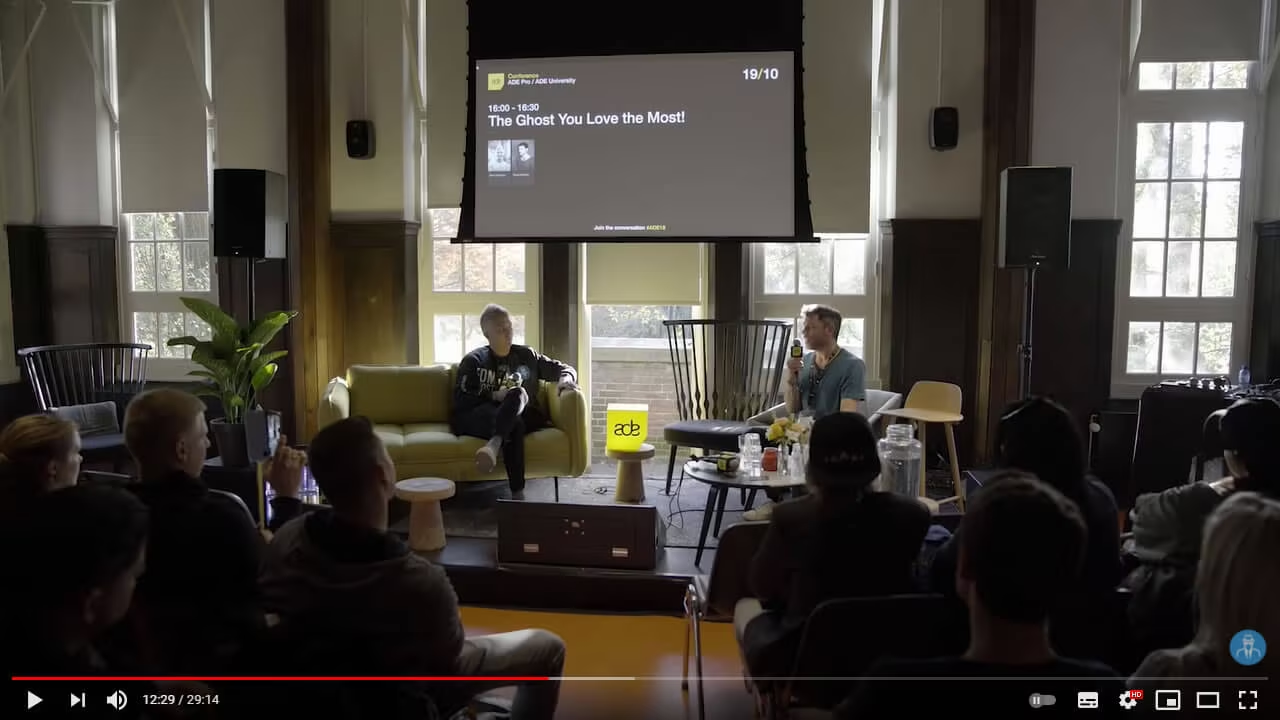
Alex describes how his ghost production business started in the simplest way possible. After his mother passed away, he faced a decision between returning to retail work or trying to make music pay. A friend named Vladimir built a basic landing page that showcased Alex’s released tracks and offered production services. Within about a month, Alex received his first order worth 400 euros. That first payment was not a huge amount, but it proved demand existed and gave him enough confidence to commit fully. From there, the business grew into a wider community that included producers from Russia, Ukraine, Belarus, Kazakhstan, India, and Brazil, with Alex acting as the organizer, seller, and quality gate.
The interview becomes unexpectedly human when Alex talks about who these producers are. He says many are young, often 15 to 26, working in basic bedroom studios and living in difficult conditions. He shares a story about a producer named Alec who has cerebral palsy and hearing loss, cannot work traditional jobs, and has to push headphones extremely loud while producing. Despite those limitations, Alec creates successful dance tracks that sell. For Alex, this is the strongest argument that ghost production is not only about DJs “cheating”, it can be a real income route for people who would otherwise have very limited options. He mentions producers using their earnings to improve their lives in tangible ways, upgrading equipment, improving living conditions, and in some cases buying a used car.
Operationally, Alex explains two main product formats. The first is a track shop model where pre made tracks are available for purchase, similar to browsing a digital store. The second is custom work where clients provide an idea or direction and the producer develops the track with feedback loops. Alex believes custom collaboration produces better outcomes because it reduces misunderstandings and aligns the final result with the client’s intent. Financially, he describes a standard 70 30 split where producers receive 70% and the agency takes 30% commission. In terms of scale, he cites roughly 500 producers contributing to the track shop and a smaller core in house team of five producers handling custom orders.
He also gives a simple view of demand. The client base is global, with around 40% from the United States, around 20% from Germany, around 20% from Italy, and the rest spread across other markets. Clients are not only DJs. Alex mentions movie production companies and game developers looking for music that fits their needs without complicated royalty structures, effectively treating the output as practical, ready to use licensing.
On ethics, Alex acknowledges the uncomfortable part, the absence of credit. He claims the model works because many producers prefer guaranteed fees over uncertain royalty outcomes, and because clients buy time and consistency. He adds a detail that underscores how rarely the system bends toward recognition: out of thousands of clients, only two offered to include him in credits voluntarily. He also notes how attitudes have shifted. A few years earlier, promoting ghost production at conferences could trigger hostile reactions as if it were a dirty secret. By ADE 2018, he felt the conversation was becoming more pragmatic, with mainstream figures acknowledging that co producers and behind the scenes help are common.