
Ghost producer Maarten Vorwerk and Alex Larichev interview
An honest conversation with Alex Larichev at Amsterdam Dance Event about ghost production, pricing, transparency, and the real role of producers in modern EDM.
Introduction
Ghost production remains one of the most controversial and misunderstood topics in the EDM industry. While collaboration is common behind the scenes, the term “ghost producer” is still surrounded by stigma and secrecy.
During Amsterdam Dance Event, we spoke with two producers who represent different but closely related sides of this industry: Alex Larichev, a Russian ghost producer, and Maarten Vorwerk, a Dutch dance producer who actively rejects the ghost producer label. Together, their perspectives paint a clearer picture of how modern EDM production actually works.

Alex Larichev on pricing, workflow, and transparency
The conversation begins with the atmosphere at ADE itself. Surrounded by superstar DJs and aspiring artists, the host describes discovering an “EDM Ghost Producer” flyer in the official conference materials. The experience felt almost taboo, with the process of contacting a ghost producer compared to looking for a drug dealer.
Alex Larichev openly addresses this perception. He provides concrete pricing for his work, explaining that a high-quality track comparable to or even exceeding Beatport Top 100 standards typically costs between €700 and €800, depending on the complexity of the task.
Alex usually produces tracks alone, but the process is not isolated. Clients provide feedback and direction throughout production, shaping the final result. This model reflects how many modern EDM tracks are created: a single producer executing the work, guided by external input.
Alex also highlights a broader industry shift toward transparency. He appreciates seeing major DJs openly working with teams in the studio, rather than hiding collaboration behind anonymity. As an example, he points to Avicii and his desert studio streams, where the full production team was visible and credited. For Alex, this represents co-production, not ghost production, and he sees it as a healthier direction for the industry.
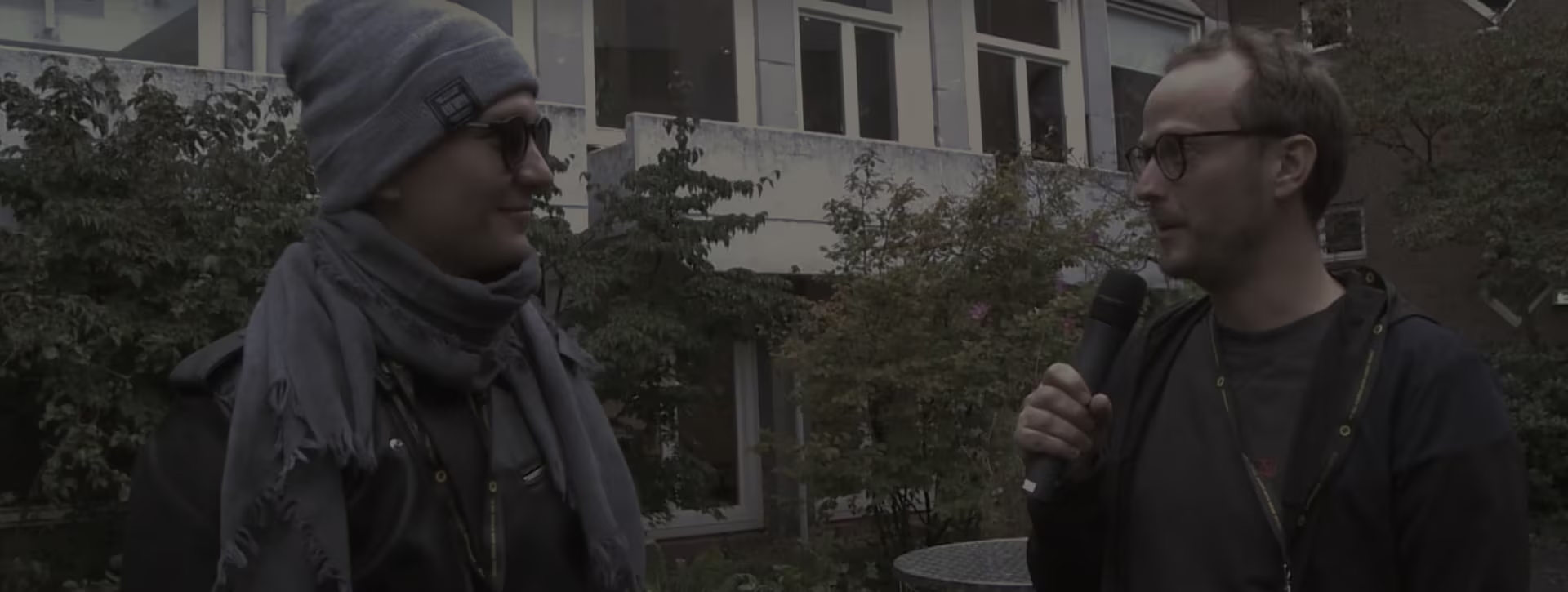
Maarten Vorwerk on labels, credits, and industry recognition
Maarten Vorwerk offers a different but complementary perspective. While often associated with ghost production, he strongly prefers to be called a dance producer.
Maarten explains that traditional ghost production implies surrendering all rights and remaining completely uncredited. That is not how he works. He retains certain rights and appears in the credits of the tracks he produces, which fundamentally changes the nature of the collaboration.
This distinction matters. For Maarten, visibility and credit are what separate professional production work from true ghost production. His approach reflects a model where collaboration is acknowledged rather than hidden.
The discussion also touches on industry recognition and DJ MAG Top 100. Despite not being a DJ, Maarten has repeatedly attempted to enter the ranking. He describes DJ MAG as essentially a popularity contest and believes that both producers and DJs should be eligible. His annual attempts are less about personal promotion and more about highlighting the role producers play in shaping the EDM landscape.
Two perspectives on ghost production in modern EDM
Taken together, Alex Larichev and Maarten Vorwerk illustrate the evolving reality of ghost production in electronic music. The industry is moving away from fully anonymous, rights-free ghosting toward more transparent co-production models.
The stigma remains, but openness is increasing. Pricing and workflows are becoming less secretive, and the lines between DJ, producer, ghost producer, and co-producer are no longer as rigid as they once were.
What this interview makes clear is that modern EDM is rarely the product of a single individual. Whether through ghost production, credited co-production, or team-based collaboration, the music industry is gradually acknowledging the people behind the scenes and redefining what authorship really means.