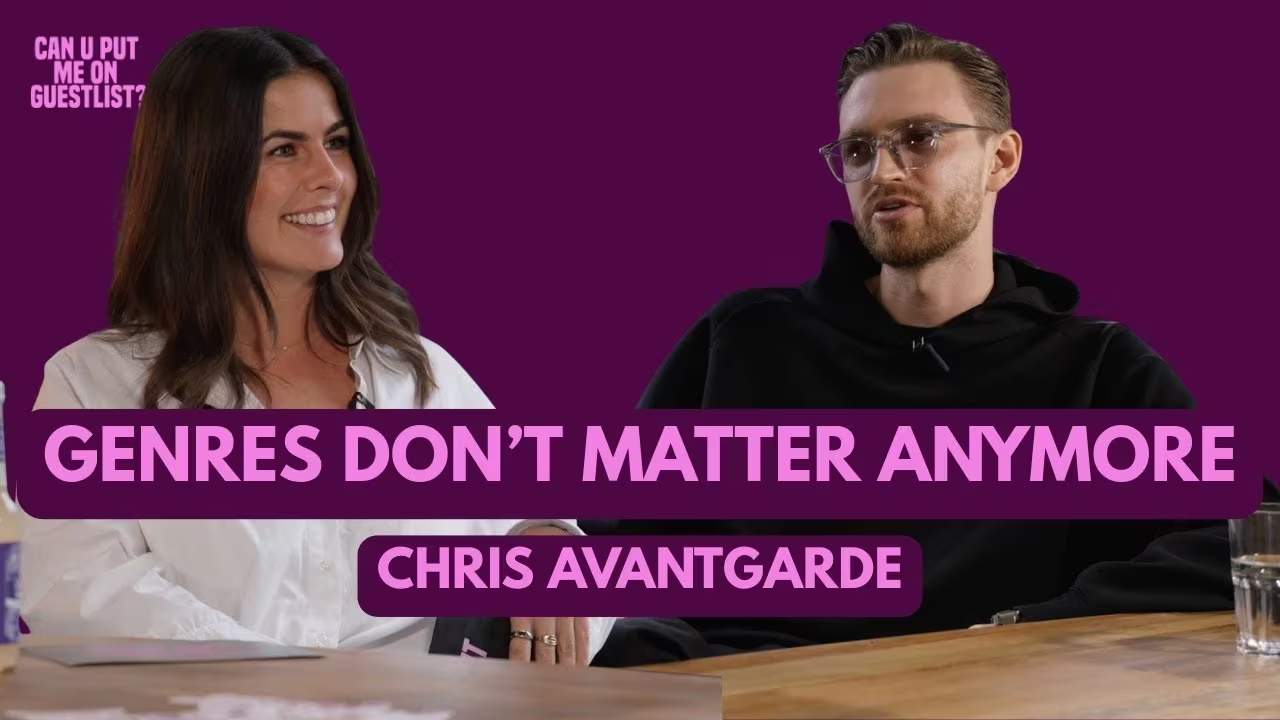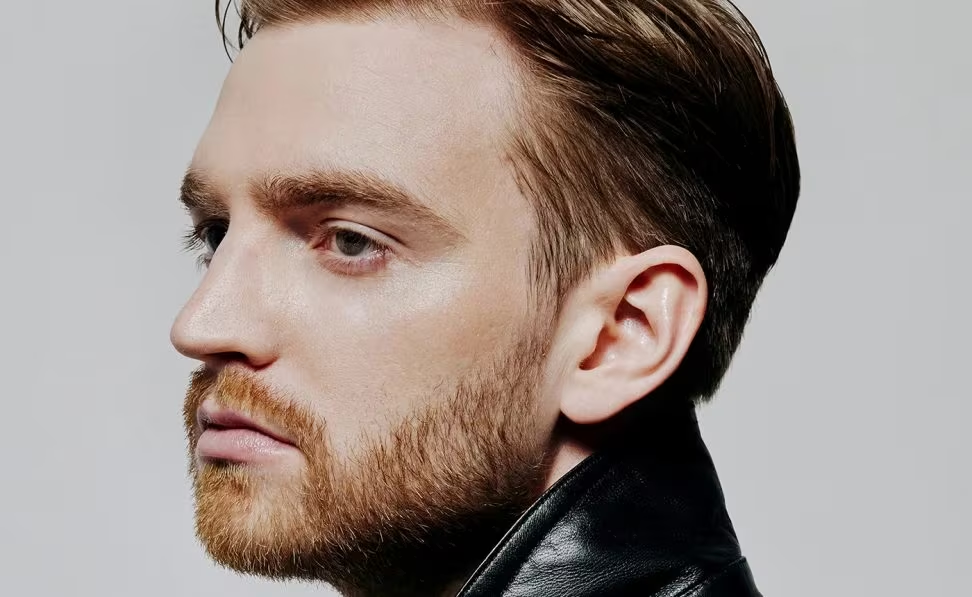
Chris Avantgarde’s interview offers a profound and candid exploration of his multifaceted career in electronic music, highlighting the challenges and personal growth he has experienced over the years. Starting with his early days, Chris reveals that entering the music industry requires a certain degree of “healthy delusion”, a deep conviction that you will succeed despite frequent doubts and setbacks. He openly discusses his past struggles with perfectionism, admitting that his hyper critical nature once prevented him from releasing music, a common hurdle for many artists. However, he stresses the importance of overcoming this paralysis by sharing imperfect work to foster growth and opportunity.
Chris’s journey began in Germany, with a significant early break working alongside the iconic act Scooter in Hamburg. This experience taught him the realities of music production and the industry’s demands. Despite pressure to conform to commercial EDM trends, Chris chose authenticity over fitting into predefined genres, which initially positioned his music as “too commercial for techno people and too techno for commercial people.” Over time, the evolution of melodic techno helped bridge this gap, allowing him to feel more at home within the scene.
A key theme throughout the conversation is the evolving nature of dance music. Chris observes that genre boundaries are increasingly blurred, with artists freely mixing styles from house to techno to bass music. This shift fosters greater creative freedom and reflects a generational change, where younger producers prioritize vibe and authenticity over rigid genre constraints.
Chris also shares insights into his diverse work in sync music, composing for high profile clients like Netflix, Amazon, and major advertising campaigns. This parallel career demanded adaptability and discipline, especially under tight deadlines, which helped him develop a more efficient workflow and mental detachment from his ego, lessons he applies to his own artistic output.
Touring life presents its own challenges, including sleep deprivation and being away from home. Yet, with age and experience, Chris has learned to balance health and creativity better, emphasizing the importance of integrating work and life rather than compartmentalizing them.
His approach to DJing is equally thoughtful; he prepares sets harmonically but remains responsive to the crowd’s energy, valuing the moment’s vibe over strict perfection. Collaborations are also discussed, with Chris noting that while in person studio sessions are valuable for building rapport, remote collaborations can be equally effective when artists share a mutual understanding.
The interview concludes with reflections on authenticity and evolution as central to sustaining a fulfilling career. Chris encourages artists to trust their instincts, experiment freely, and embrace the ongoing journey of self discovery in music. His story is one of resilience, passion, and a continual quest to create “real” and emotionally resonant art in an ever changing industry landscape.