
Is Ghost Production Legal in EDM?
Ghost production in EDM is legal in ountries when it is handled through proper contracts. The legality depends on how rights are transferred, not on whether the real producer is publicly credited.
Is Ghost Production Legal?
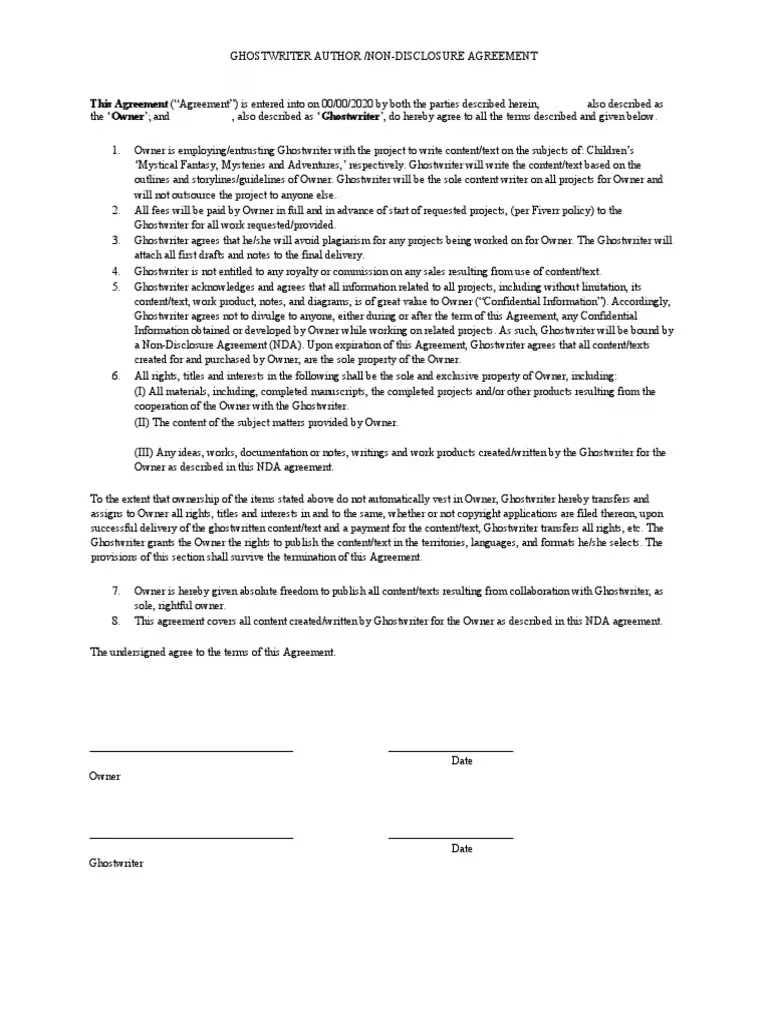
Yes, ghost production is legal when it is structured through a work for hire agreement or a copyright assignment. In both cases, the ghost producer agrees to transfer authorship and economic rights to the buyer in exchange for a fixed fee.
Music industry explanations referenced by Tracklib clearly outline how ghost production works in EDM and why copyright ownership can be contractually reassigned, making the public facing artist the legal rights holder even if they did not create the track.
Is Using a Ghost Producer Fraud?
Using a ghost producer is not fraud by default.
It only becomes fraudulent if:
• A contract, competition, or grant explicitly requires original authorship
• A label agreement prohibits third party production
• The buyer knowingly misrepresents ownership in a legally binding context
Within the EDM industry, it is widely understood that many touring DJs rely on uncredited collaborators to keep up with release schedules. This practice is controversial publicly, but accepted operationally inside the industry.
Can Labels Reject Ghost Produced Tracks?
Labels do not reject tracks simply because they are ghost produced. Rejections usually happen when:
• Rights are unclear or undocumented
• Multiple parties claim ownership
• Metadata conflicts with contracts or distributor requirements
When legal ownership is clear, labels focus on sound quality, branding, and market fit rather than authorship.
Work for Hire vs Copyright Assignment
Work for hire means the buyer owns the track from the moment it is created. Copyright assignment means the producer initially owns the work and then transfers the rights after completion. Both models are commonly used in EDM ghost production and both are legally valid when documented correctly.
Expert Insight from EDM Ghost Production
At EDM Ghost Production, most disputes we see come from missing or poorly written agreements rather than from ghost production itself. Clear contracts protect both sides, allow tracks to be released safely, and prevent future ownership conflicts.
If you want practical examples, see our guides to ready made EDM tracks and custom ghost production services.
Key Takeaways
• Ghost production is legal under copyright law
• Contracts determine ownership and credit
• NDAs are enforceable and standard
• Legal problems come from poor documentation, not the practice itself
Understanding the legal side of ghost production protects both DJs and producers — and separates professional operations from risky shortcuts.
