Some sounds arrive with a manifesto. Slap house arrived with a bassline: one short, rubbery, percussive thwack that lands between the kicks and makes an entire song bounce. For a few years around the turn of the decade it was inescapable, on car stereos, in streaming playlists, in the endless churn of short-form remixes that took a pop song you half-remembered and made it feel brand new. This is the story of how a Brazilian club sound became a European remix machine, briefly ruled dance music, and then cooled off, leaving its fingerprints all over how pop-dance records get made.
Blog
Slap House and the Brazilian Bass Wave
How a punchy, bouncing bass sound born in Brazil became the most viral formula in dance music.
The Sound: Bass as the Whole Hook
Strip slap house to its essentials and you are left with a mid-tempo, four-on-the-floor groove, usually somewhere around 120 to 128 BPM and often sitting near 122 to 126, and that bass. The slap is a plucky, saturated, heavily processed one-shot that hits with a fast attack and a satisfying snap, bouncing on the offbeats to create the genre's signature elastic, push-and-pull swing. It is glued to the kick with aggressive sidechain compression, so the low end breathes in and out with the beat.
Everything else is deliberately spare. Drums are minimal, arrangements are clean, and the drops are restrained and groove-focused rather than crowded with big melodic leads. Where big room EDM chased maximum drama, slap house went the other way: leaner, glossier, more adult, and tailor-made for streaming. Vocals do the emotional lifting, often pitched-up hooks lifted from covers or remixes of familiar songs, while the bass carries the melody. In slap house, the bass basically is the hook.
Brazil: Where the Bass Began
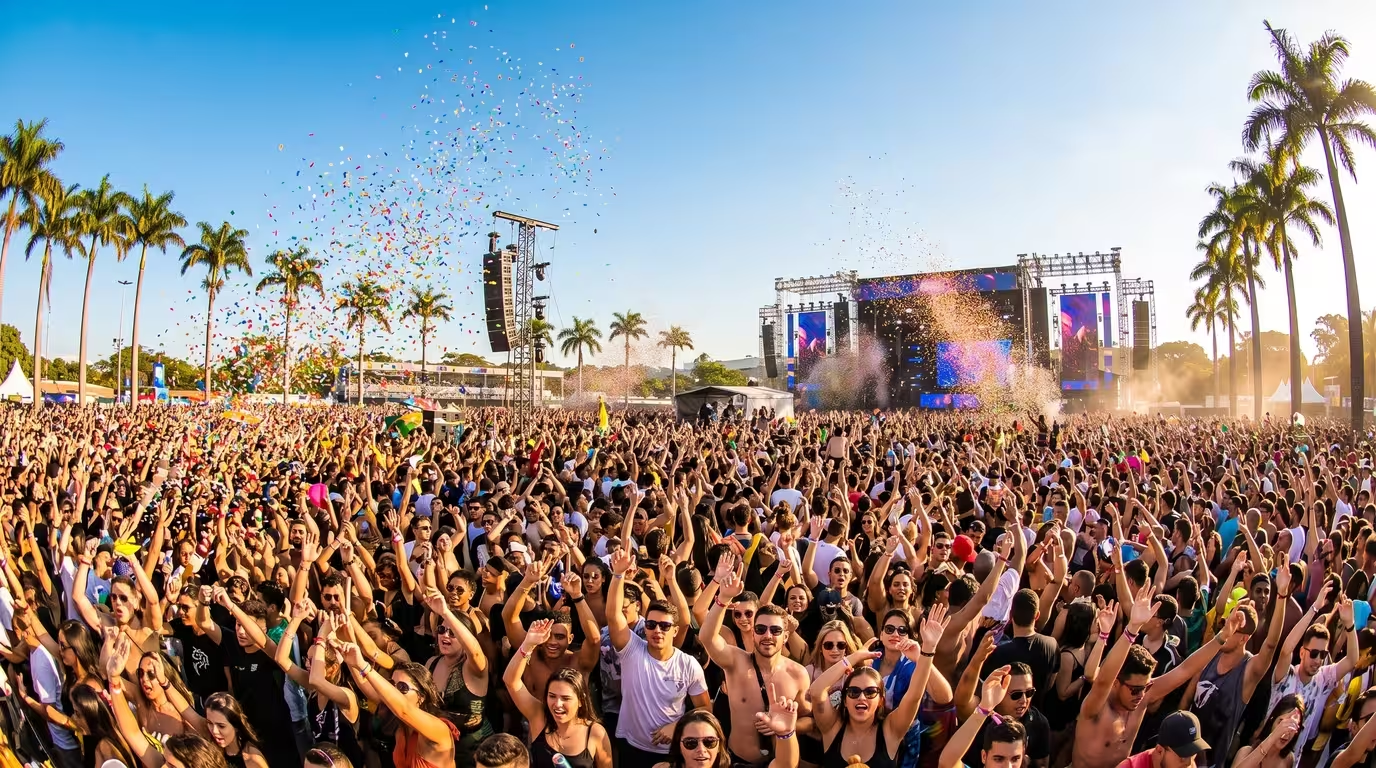
Before slap house had a name, it had a home. In the mid-2010s a bass-driven, mid-tempo strain of house took shape in Brazil, evolving out of deep house and tech house at roughly 120 to 125 BPM and defined by deep, punchy, filtered basslines. The Brazilian DJ Alok is widely credited with coining the term Brazilian bass around 2016, though the style had been brewing in Brazilian clubs for a few years, with Vintage Culture also cited as a key pioneer and a wider circle, including Bhaskar, Cat Dealers, Sevenn, Illusionize, Liu and VINNE, emerging alongside them.
The track that carried the sound abroad was Hear Me Now, Alok and Bruno Martini's 2016 single featuring Zeeba, released via Spinnin' Records. A breezy, guitar-tinged song with a restrained slap-bass chorus, it earned a triple-platinum certification, charted in over a dozen countries, and became widely reported as the first song from Brazil to pass 100 million Spotify streams; its official video has since gathered more than 670 million views. It turned Alok into the most internationally streamed Brazilian artist of his generation.
The Balkan and Baltic Mutation
By 2017, Brazilian bass had cooled at home, but the idea travelled. In Lithuania, producers clustered around the YouTube channel and label Lithuania HQ, among them Lucky Luke and a young producer called Dynoro (Edvinas Pechovskis), began pumping out a leaner, bouncier, more pop-facing take. They called it Lithuanian house; some called it Lithuanian bass. It was Spinnin' Records that later coined and promoted the name that stuck: slap house.
The European breakout was Dynoro and Gigi D'Agostino's 2018 smash In My Mind, which welded a bouncing slap bass to the hook of D'Agostino's Eurodance classic L'amour toujours. It peaked at number five on the UK's Official Singles Chart, hit number one in Germany, Sweden, Switzerland, Finland, Hungary and several other markets, and has since passed 1.7 billion Spotify streams, hard-wiring the template: take a familiar melody, hollow out the arrangement, and let the bass do the talking. Germany then became a powerhouse of the sound through the Berlin duo VIZE, whose Glad You Came (2018) and Stars (2019) helped popularise the term via their own slap house playlist, alongside acts like Topic and twocolors. Turkey's Mahmut Orhan and Romania's Sllash & Doppe fed the wider Balkan-facing scene, and established names like R3HAB, Tiesto and VINAI eventually chased the trend too.
The Viral Explosion
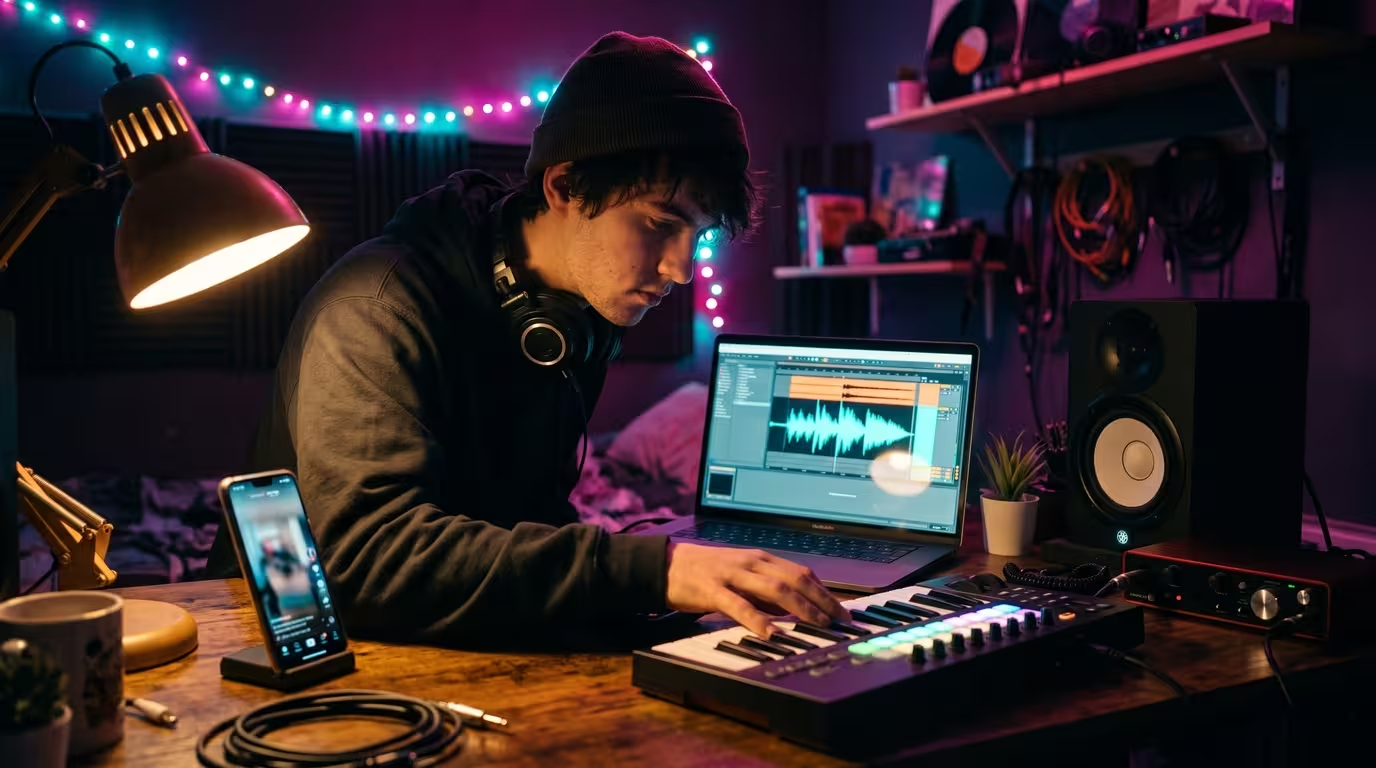
If In My Mind was the precursor, the genre's defining case study is Roses. In 2019, a teenage producer named Imanbek Zeikenov, living in the small town of Aksu, Kazakhstan, and working at his local railway station, flipped SAINt JHN's woozy 2016 rap track into a pitched-up, rubbery-bass dance record. According to Gray Area, the then-17-year-old built it in his bedroom on an old Windows laptop with cheap earbuds, a copy of FL Studio and a handful of sample packs, in under two hours. He had messaged Saint Jhn for permission, been ignored, and posted the unofficial remix to social media anyway.
SAINt JHN - Roses (Imanbek Remix)

Then it detonated. After an official release in September 2019 through Russia's Effective Records and a licensing deal with Saint Jhn's camp, the remix went supernova in 2020 via TikTok and Snapchat, peaking at number four on the Billboard Hot 100, hitting number one in the UK, Canada, Australia and New Zealand, topping Billboard's Hot Dance/Electronic Songs chart for 23 weeks, and racking up more than a billion Spotify streams. In March 2021 it won the Grammy for Best Remixed Recording, Non-Classical at the 63rd Grammy Awards, making Imanbek the first Grammy winner from Kazakhstan and the first from a post-Soviet country in a non-classical category.
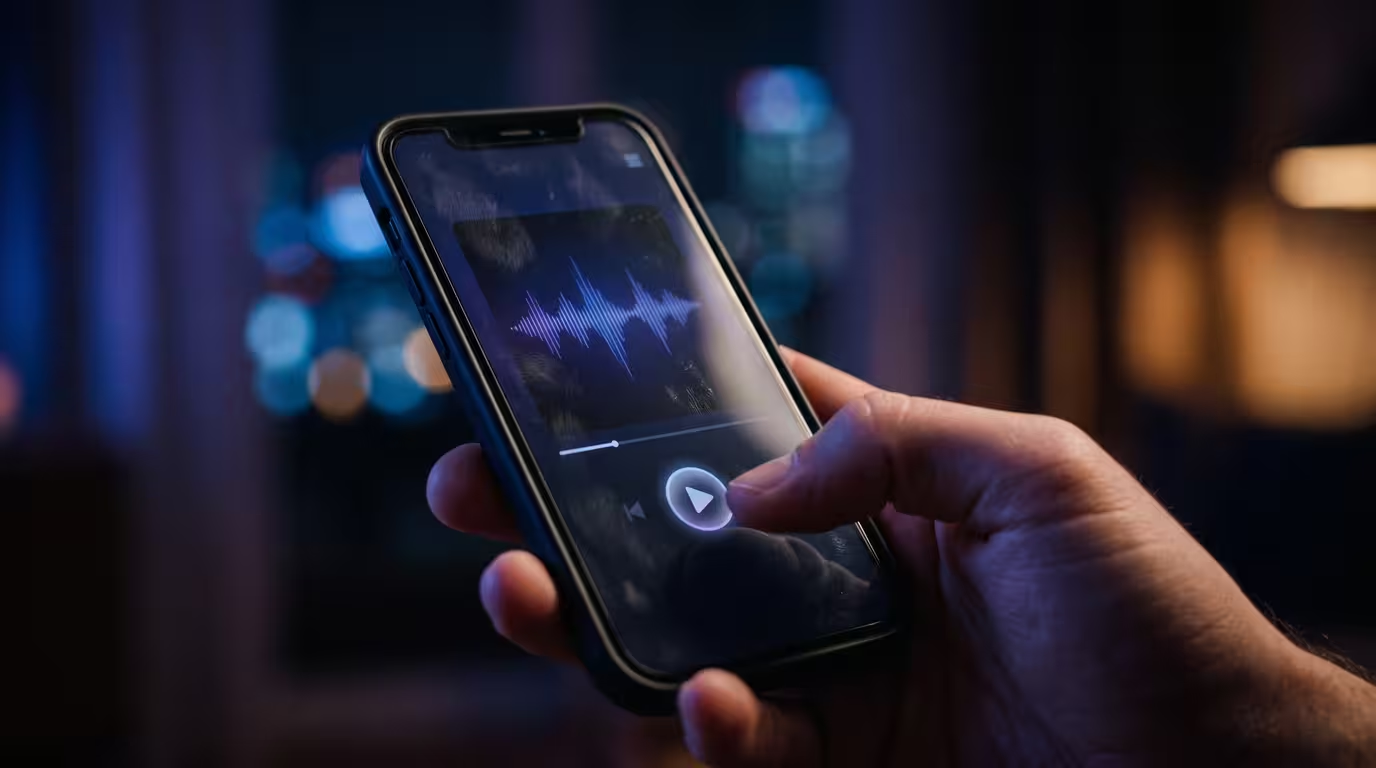
Roses crystallised a machine that was already humming. Spinnin' Records and its sub-labels, including Alok's Controversia and KSHMR's Dharma Worldwide, where Imanbek landed, leaned hard into the sound, as did Ultra Music, Kontor and others. YouTube car-music and bass-boosted channels turned slap house into a genre unto itself, and streaming playlists made it the default sound for making an old song feel new. The remix economy, turning throwback hits and current pop into playlist-ready dance edits, was the engine, and slap house was its perfect fuel.
The Backlash
Success on this scale invites suspicion, and slap house drew plenty. The core complaint was that it was formulaic, repetitive and cynically engineered for streaming metrics, a sound-alike factory of interchangeable tracks built on the same bass preset. Even sympathetic coverage described the template bluntly. Writing in the dance publication Gray Area, James K Glover reduced the recipe to a basic deep house pattern in the chorus and little to none in the verses, a high-pitched lead counter-melody over the chorus, and heavily affected, synthetic-sounding vocals with effect swells between sections, in a genre where a single sampled, one-shot bass, pitch-shifted across notes, does most of the work. Critics griped that the same bass patterns were replicated over and over, and that a remix-driven genre was riding on other people's hits.
It is worth being fair here. The craft is real: the sound design, the sidechain groove and the restraint that lets a hook breathe are genuinely instructive, and the appeal, an irresistible, uncluttered bounce, is not an accident. It is also worth noting that formula-fatigue backlashes have hit nearly every dominant dance sound before it, big room EDM included. Slap house was neither the first nor the last genre to be accused of sounding like a preset.
Where It Stands Now
The wave crested around 2021 and then receded as tastes moved on, toward tech house, Afro house, amapiano-influenced grooves and the broader 2020s house revival. But its DNA persisted. The mid-tempo, bass-led, remix-ready formula bled into mainstream pop-dance, and the viral-remix logic it pioneered simply mutated into the sped-up remix boom that took over short-form video and streaming charts in 2022 and 2023.
Its stars kept moving. Alok remains a global fixture, ranked number three in DJ Mag's 2025 Top 100 DJs poll, his highest placement yet, after four straight years at number four. Imanbek kept working with major pop and dance names well beyond his breakout. Judged clearly, slap house contributed two things worth remembering: a genuinely distinctive bass-and-groove idea, and a vivid lesson in how streaming and short-form video reshaped what dance music sounds like. The sound that started as Brazilian bass, got sharpened in the Baltics and the Balkans, and briefly ran the charts is quieter now, but you can still hear its bounce every time an old song comes back to life with a new bassline underneath.
Key takeaways
• Slap house is a mid-tempo house sound, roughly 120 to 128 BPM, where a punchy, sidechained slap bass is the main hook.
• It grew out of Brazilian bass, a term coined by Alok around 2016 and carried abroad by Hear Me Now.
• Producers in Lithuania and Southeastern Europe refined it into a pop-facing, remix-ready formula, named by Spinnin' Records.
• Dynoro's In My Mind and Imanbek's Grammy-winning Roses remix drove its streaming and short-form-video explosion around 2019 to 2021.
• It cooled amid formula fatigue but reshaped pop-dance production and viral remix culture.
