Hardstyle / Hardcore Ghost Production with Extreme Energy and Festival Power
Hardstyle and Hardcore represent the most intense and technically demanding branches of electronic dance music. Both genres evolved from the European rave and hard dance scenes of the late 1990s and early 2000s, with deep roots in the Netherlands, Belgium, and Italy. Hardcore (known colloquially as gabber) erupted in Rotterdam between 1990 and 1992, driven by distorted kick drums, extreme tempos, and a rebellious working class culture that took over warehouses and sports arenas across the country. Hardstyle emerged later as a fusion of hard trance, hard house, and early hardcore influences at slower tempos, eventually eclipsing its parent genre in both popularity and global reach. Together, these interconnected styles have grown from underground warehouse raves into a global movement filling stadiums with 65,000 fans, generating billions of streams annually, and sustaining a year round festival circuit that spans every continent.
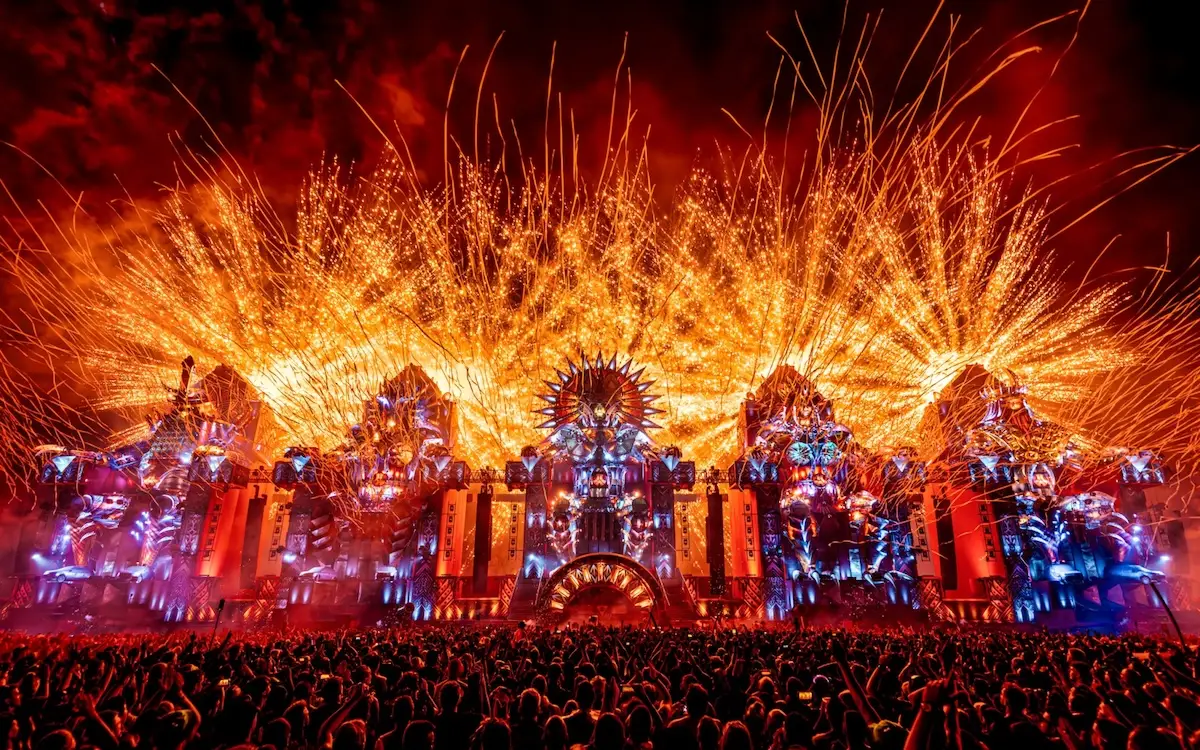
The gabber explosion began when Paul Elstak pivoted from hip-hop DJing to producing pounding, distorted dance music, founding Rotterdam Records in 1992 as the first dedicated Dutch hardcore label. That same year he etched the phrase "Gabber zijn is geen schande!" ("Being a gabber is no disgrace!") on his Euromasters vinyl, effectively naming an entire subculture. Simultaneously in Amsterdam, Irfan van Ewijk, Duncan Stutterheim, and Theo Lelie founded ID&T in 1992, whose first event "The Final Exam" on June 20, 1992 drew approximately 12,000 people to the Jaarbeurs in Utrecht. This led directly to the creation of Thunderdome, whose first edition on October 3, 1992 at Thialf Stadium in Heerenveen attracted 30,000 attendees and launched the most iconic brand in hardcore history.
Key pioneering artists who defined gabber's first wave included Rotterdam Terror Corps (aggressive Rotterdam hardcore), Neophyte (Jeroen Streunding and collaborators, active since 1992, who founded Neophyte Records in 1999), and Italy's The Stunned Guys (formed 1993 in Milan by Gianluca Rossi and Massimiliano Monopoli, who founded Traxtorm Records in 1995). DJ Buzz Fuzz (Mark Vos) became a central figure as part of The Dreamteam alongside DJ Dano and The Prophet, while Amsterdam's Mokum Records (founded 1993 by Freddy B) became an important label for international acts. Paul Elstak's "Rainbow in the Sky" (July 1995) became one of hardcore's biggest crossover hits, bridging gabber with happy hardcore and reaching mainstream audiences across Europe.
The Thunderdome compilation CD series began in 1993, initiated by Mental Theo at Arcade Records. The numbered main series ran from Volume I through XXII (1993–1998), with additional special editions pushing the total catalog to over 50 volumes and more than 3 million copies sold worldwide. Thunderdome spawned an entire subculture: hakken (the fast paced dance style), shaved heads, baggy tracksuits, Nike Air Max sneakers, and the iconic Thunderdome Wizard mascot that inspired approximately 2,000 fans to get it tattooed. The scene entered mainstream Dutch culture by the mid 1990s before declining toward the decade's end due to over commercialization. Revival editions have continued periodically, including the 25th anniversary in 2017 (34,000 attendees), 30th anniversary in 2022 (50,000 tickets sold), and continued editions through 2025–2026.
From Hard Trance to a New Genre: The Birth of Hardstyle
While gabber burned hot and fast, a quieter revolution was brewing. By the late 1990s many Dutch producers felt creatively exhausted by hardcore's relentless extremity and began experimenting with elements from hard trance, hard house, and early hardcore at slower tempos around 140 BPM. DJ The Prophet (Dov Elkabas), universally recognized as the "Godfather of Hardstyle," played a hard house set in 1999 at Q-dance's Houseqlassics event after a decade in hardcore as part of The Dreamteam and the Thunderdome generation. He began producing with DJ Pavo under the Hardheadz project, creating tracks like "Wreck Thiz Place" that planted hardstyle's early seeds. Most critically, The Prophet founded Scantraxx Records, the label that would become hardstyle's most important institution, nurturing virtually every major artist of the genre's golden era. He retired in 2023 with a final performance at Defqon.1.
Other early pioneers included Lady Dana (Dana van Dreven), one of the genre's first female artists, DJ Zany (Raoul Van Grinsven) who founded Fusion Records in 2002, and DJ Isaac (Roel Schutrups) whose track "B*tches" became an early anthem. Q-dance (originally founded as Qlass Elite in 1999) provided essential infrastructure, hosting Qlubtempo in Zaandam (2000) as its first event and holding the inaugural Qlimax at the Beursgebouw in Eindhoven in June 2000. On July 4, 2002, Q-dance trademarked the term "hardstyle," officially christening the genre. The first Defqon.1 festival followed in 2003.
The reverse bass technique became the genre's defining sonic fingerprint in its early years. This hard, distorted offbeat bass pattern "swoops up" between kick hits, creating hardstyle's signature pumping groove. The undisputed masters of reverse bass were the Italian duo TNT (Technoboy 'N' Tuneboy), consisting of Cristiano Giusberti (Technoboy) and Antonio Donà (Tuneboy), operating from The Saifam Group in Bologna. Their track "Teknogym" (2003) became a massive hit, while the track "Age Of Reverse Bass" (2005) literally defined the era. Italy became the second most important country in hardstyle's early development, with artists like Zatox (Gerardo Roschini) and Tatanka (Valerio Mascellino) following TNT's path, releasing through labels like Titanic Records and Dance Pollution.
