Hip-Hop / Beats Ghost Production for Modern Artists and Content Creators
Hip-hop is one of the most influential cultural movements in modern history, and its production side has evolved from turntable breakbeats into a multi billion dollar global beat economy. On August 11, 1973, 18 year old Clive "DJ Kool Herc" Campbell DJed his sister Cindy's back to school party in the recreation room of 1520 Sedgwick Avenue in the West Bronx, isolating and looping the rhythmic instrumental sections of funk and soul records using two turntables and a technique he called "The Merry-Go-Round." That single event is now officially recognized as the birth of hip-hop. What Herc invented was essentially the loop, and every time a modern producer grabs a four bar section and repeats it, they are building on what he started with vinyl in 1973.
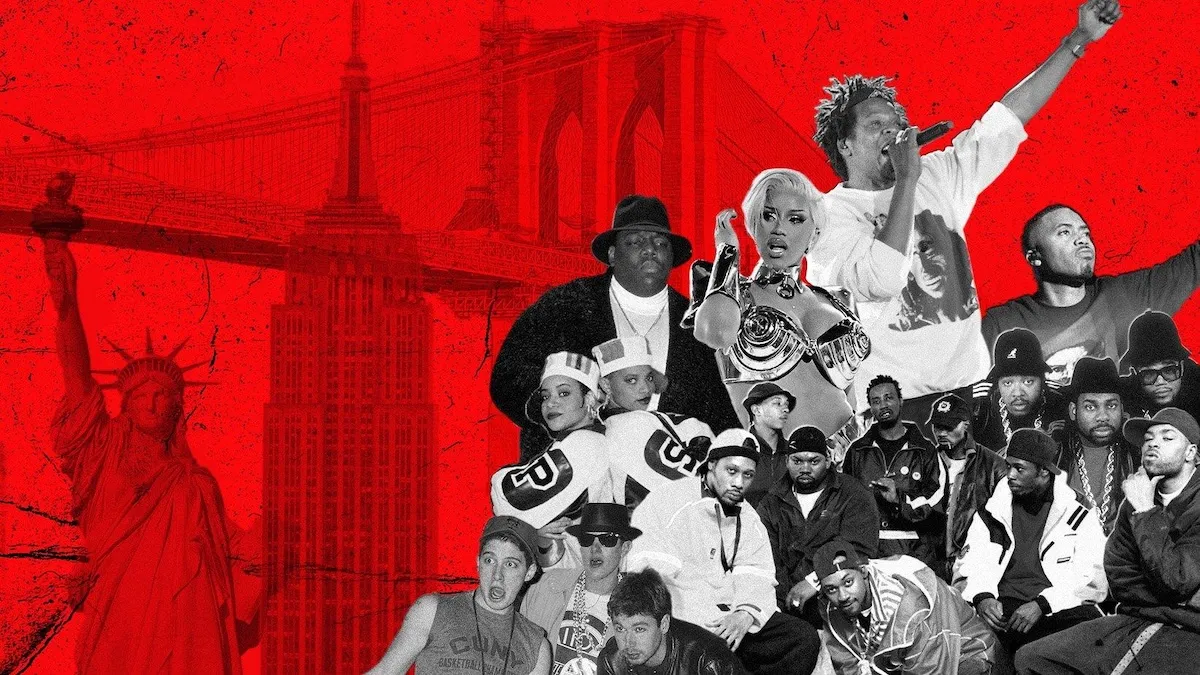
Grandmaster Flash refined Herc's approach with his "Quick Mix Theory," marking break points on vinyl with crayon for precision, and his 1981 single "The Adventures of Grandmaster Flash on the Wheels of Steel" became the first documented scratching on a commercial record. Afrika Bambaataa then fused hip-hop with electronic music through "Planet Rock" (1982), built on a Roland TR-808 drum machine and interpolating Kraftwerk's "Trans-Europe Express," spawning the entire electro funk movement that directly influenced Detroit techno, Miami bass, and Chicago house. The first commercial hip-hop recordings, "Rapper's Delight" by the Sugarhill Gang (1979) and "The Message" by Grandmaster Flash & the Furious Five (1982), established the genre's viability and its potential for social commentary.
Today hip-hop beats power a massive global industry that includes rappers, vocalists, content creators, and streaming focused producers. Platforms like Beathunterz have introduced an exclusive ownership model where every beat is sold only once with full copyright transfer, eliminating the licensing confusion that plagues the traditional lease based marketplace. Modern beat marketplaces and online collaboration platforms have made high quality instrumentals accessible to artists worldwide, fueling an ecosystem where producers and vocalists collaborate remotely to create new music across every conceivable style from classic boom-bap to trap, drill, lo-fi, pluggnb, rage beats, and jersey club.
The Golden Age and the Sampling Revolution
The golden age of hip-hop production (roughly 1986–1996) established beatmaking as an art form in its own right. Marley Marl, born September 30, 1962 in Queensbridge, Queens, is widely considered the father of modern beatmaking. While interning at Unique Recording Studios in the early 1980s, he accidentally discovered he could sample individual drum hits from records and reassemble them into entirely new patterns. This breakthrough circa 1985 transformed hip-hop production from live DJing into studio composition. His "Home of Hits" apartment in Queensbridge became a legendary studio (1988–1992), producing MC Shan's "The Bridge," the iconic posse cut "The Symphony" (1988), and LL Cool J's Grammy winning "Mama Said Knock You Out" (1991).
The Bomb Squad (Hank Shocklee, Keith Shocklee, Eric "Vietnam" Sadler, and Chuck D) created Public Enemy's revolutionary dense, multi layered production, sometimes stacking dozens of samples per track. Their masterpiece "It Takes a Nation of Millions to Hold Us Back" (1988) set the standard for maximalist hip-hop. Pete Rock received his first E-mu SP-1200 from rapper Freddie Foxx at age 17 and used it as his primary instrument until 2003. His signature warm, hazy, soul and jazz sampling style defined the golden age aesthetic, and "They Reminisce Over You (T.R.O.Y.)" (1992) remains one of the greatest hip-hop songs ever produced. DJ Premier pioneered the art of the hook scratch, sampling a vocalist's one liner and transforming it into a melodic, percussive chorus via turntable cuts, defining hardcore East Coast hip-hop through his work with Gang Starr, Nas, and Jay-Z.
RZA led the Wu-Tang Clan, a nine member collective from Staten Island whose debut "Enter the Wu-Tang (36 Chambers)" (November 1993) was produced almost entirely on an E-mu SP-1200, establishing a deliberately grimy aesthetic built from dusty soul samples fused with kung fu film dialogue. J Dilla (James Dewitt Yancey, February 7, 1974 to February 10, 2006) changed production forever by disabling the quantize function on his Akai MPC3000, playing drums manually in real time to create his signature "drunk," off kilter timing that Questlove called "the world's greatest drumming." His magnum opus "Donuts" was released February 7, 2006 via Stones Throw Records, and he died three days later. His MPC3000 is now housed at the Smithsonian National Museum of African American History and Culture. MF DOOM (1971–2020), producing under the alias Metal Fingers, released the Special Herbs instrumental series (Vols. 0–9, 2002–2004), while his collaboration with Madlib as Madvillain produced "Madvillainy" (2004, Stones Throw Records), widely regarded as one of the greatest rap albums ever made.
Hardware That Shaped the Sound
Two machines defined golden age hip-hop's sonic identity. The Akai MPC60, released December 8, 1988 at $5,000 retail, was designed by Roger Linn in collaboration with Akai. Its 12 bit sampling at 40 kHz and 16 pressure sensitive pads introduced the pad based workflow that defines hip-hop production to this day, while Linn's signature swing/quantize feature gave beats their human, groovy feel. The MPC3000 (1994) upgraded to 16 bit stereo at 44.1 kHz and was Linn's final MPC design. The E-mu SP-1200 (1987) sampled at 12 bit, 26.04 kHz with approximately 10 seconds of total sample time. Producers loved it precisely for its limitations: the low sample rate created aliasing artifacts, the 12 bit resolution produced a warm compressed "dusty" texture, and the SSM2044 analog filters added character. The famous "45 RPM trick" (sampling 33⅓ RPM vinyl at 45 RPM to save time, then pitching down) further degraded resolution, creating the iconic gritty sound of golden era hip-hop. Original SP-1200s now fetch $15,000+ on the vintage market.
The Grand Upright Music v. Warner Bros. Records case (December 17, 1991) transformed the sampling landscape overnight. Rapper Biz Markie sampled Gilbert O'Sullivan's "Alone Again (Naturally)" without clearance, and Judge Kevin Thomas Duffy opened his opinion with "Thou shalt not steal," granting an injunction and even referring the case for possible criminal prosecution. Sample clearance became mandatory and expensive, driving the shift toward fewer samples, interpolation (replaying samples with live musicians), and the live instrumentation approach that Dr. Dre would perfect.
The South's Rise and the Road to Trap
Organized Noize (Rico Wade, Ray Murray, and Sleepy Brown) jumpstarted Southern hip-hop from "The Dungeon," Rico Wade's mother's basement in Atlanta's East Point area, discovering OutKast and producing "Southernplayalisticadillacmuzik" (1994) plus TLC's "Waterfalls" (1995). Three 6 Mafia (DJ Paul and Juicy J, Memphis) defined the dark, lo-fi Memphis sound with "Mystic Stylez" (May 1995), which became one of hip-hop's most overlooked yet deeply influential albums, later cited by A$AP Rocky among many others. Mannie Fresh became Cash Money Records' sole in house producer in 1993, powering the label's late 90s explosion with bouncing 808 basslines, fast hi-hats, and New Orleans brass band influences across Juvenile's "Ha" and "Back That Azz Up," B.G.'s "Bling Bling," and Lil Wayne's early catalog. DJ Toomp produced T.I.'s "Trap Muzik" (2003), which gave the nascent genre its name, while Shawty Redd's work on Young Jeezy's "Let's Get It: Thug Motivation 101" (2005) bridged the bouncing Southern sound with the harder, darker aesthetic that would evolve into mainstream trap.
Super Producers and the Kanye Era
Timbaland revolutionized pop rap production with stuttering syncopated rhythms, beatboxing samples, Eastern melodies, and unconventional found sound percussion, defining Aaliyah's mature sound on "One in a Million" (1996) and powering Missy Elliott's discography from "Supa Dupa Fly" (1997) onward before pivoting to pop dominance with Justin Timberlake's "FutureSex/LoveSounds" (2006). The Neptunes (Pharrell Williams and Chad Hugo) took the opposite approach with stripped back minimalism, with "Grindin'" (2002) for Clipse featuring almost entirely percussive production (just drums, handclaps, and tongue clicks), while their credits spanning Jay-Z, Snoop Dogg, Kelis, and Britney Spears made them the dominant production force of the early 2000s.
Kanye West pioneered "chipmunk soul," speeding up vocal samples from classic soul records to a higher pitch and layering them over boom-bap drums on "The College Dropout" (2004). His production evolved through the orchestral "Late Registration" (2005), arena ready "Graduation" (2007, sampling Daft Punk on "Stronger"), and the pivotal "808s & Heartbreak" (2008), which replaced soul samples with Roland TR-808 drums, Auto-Tune, and minimalist synths. That album profoundly influenced the next decade: Drake, Kid Cudi, Future, and Travis Scott all cited it as foundational to their sound. Just Blaze provided grandiose, bombastic soul sampling for Roc-A-Fella Records on Jay-Z's "Song Cry" and "Public Service Announcement," while Scott Storch contributed the instantly recognizable piano line on Dr. Dre's "Still D.R.E." plus 50 Cent's "Candy Shop" and Chris Brown's "Run It!"
