Heavy Dubstep and Deathstep Tracks Inspired by the World of MARAUDA
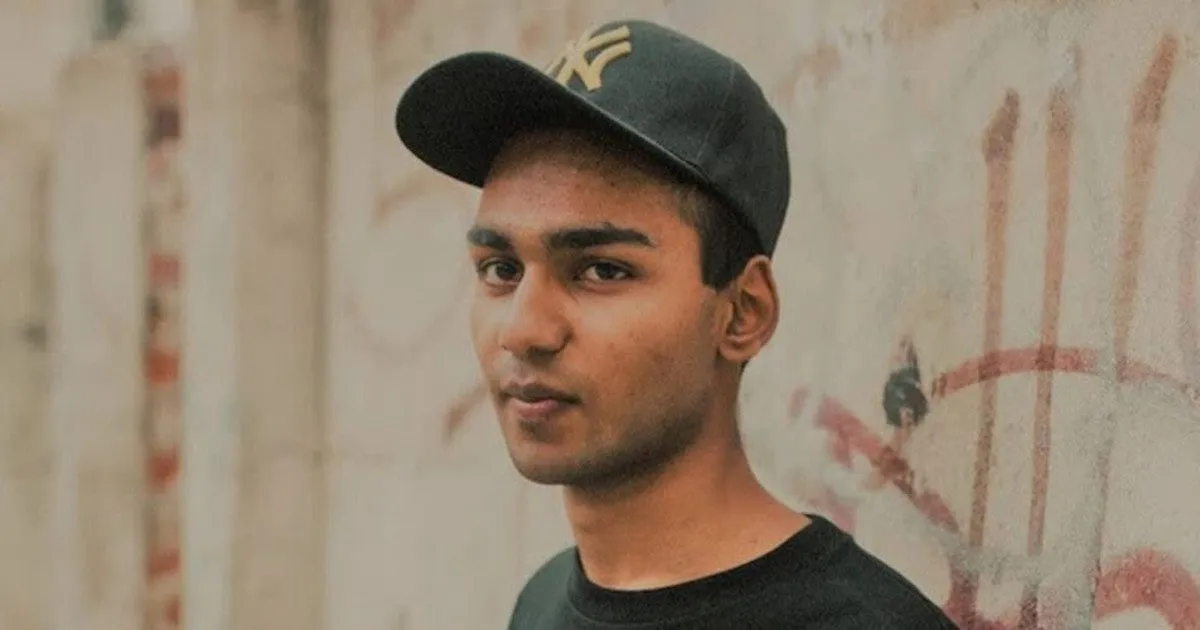
By the early 2020s, MARAUDA had become one of the clearest indicators that dubstep's underground was no longer a separate ecosystem from the festival circuit. The Sydney-born producer, born Hamish Prasad in 2001, had spent his teenage years developing one of the most technically uncompromising sounds in heavy bass music. His production identity was built around iterative resampling, metal-influenced aggression, and a Lovecraftian aesthetic that refused to simplify itself for broader audiences. What happened instead is that the broader audience moved toward him.
His name became closely associated with the period when tearout and deathstep stopped being subcultural curiosities and began appearing on Excision lineups, Lost Lands stages, and EDC bassPOD slots. That transition mattered because MARAUDA did not achieve it by softening his approach. The music stayed heavy, the mixing stayed precise, and the crowd response grew anyway. By 2025 he was performing at Ultra Music Festival Miami, a venue that barely registers bass music as a primary genre, which said something more meaningful about the sound's reach than any streaming number could.
That context still matters because the MARAUDA reference is not simply shorthand for loud drops or extreme sub-bass. It points to a specific production logic: iterative resampling through unconventional tools, FM-derived bass textures layered with scream synthesis, riddim-informed repetitive motifs inside deathstep arrangements, and an overall aesthetic coherence that makes every track feel like it belongs to a larger world rather than a standalone moment.
How this direction became so recognizable
The background is worth understanding because it explains why the sound has a character that is genuinely difficult to imitate. Prasad began producing at thirteen, came from a metal music background rather than a dance music background, and found his direction entirely through Trampa's discography after a period of quitting music entirely. His first significant track was a bootleg remix of Trampa and SKisM's "Black Hole," an unsolicited upload to SoundCloud that caught Trampa's attention within days and was signed to NSD: Black Label as an official release. He was sixteen when the Malignant EP appeared on that same label. The tracks were already doing something technically unusual: heavy, physically overwhelming drops built with clean, precise mixing despite the sonic aggression.
That quality, extremity without blur, is what made the early material stand out from generic heavy dubstep. The Decimate EP followed in 2018, then a growing run of releases that established his connection to what was then still a fairly underground corner of the bass world. When he was forced to rebrand from MASTADON to MARAUDA in 2019 after a legal challenge from the metal band Mastodon, the name change did not interrupt the momentum. If anything, it clarified the identity: MARAUDA became the project that carried everything forward.
The founding of Malignant Music as a full independent label in 2020 locked the infrastructure in place. Rather than remaining dependent on external imprints for visibility, Prasad built his own release channel and began using it to develop a roster of adjacent tearout and deathstep artists. That meant the MARAUDA reference stopped being about one producer and started representing an ecosystem with its own label, its own compilations, and its own developing scene identity.
The musical language behind MARAUDA
The core of this sound is built on FM-derived bass synthesis processed through multiple rounds of resampling rather than a single synthesis pass. Prasad's documented workflow begins with the Thor synthesizer inside Reason, an unconventional choice in a scene dominated by Serum and standard Ableton templates. He renders the output to audio, processes it through a heavy effects chain, exports it, and repeats the cycle several times. Each resampling pass adds distortion, harmonic complexity, and timbral character that single-pass synthesis cannot produce. The result is bass material with a density and texture that sounds immediately different from what most heavy producers can achieve with conventional methods.
On top of that foundation, the productions layer screech and scream synthesis: high-pitched, cutting synth elements that contrast against the sub-bass weight and create the tonal signature most associated with tearout and deathstep. The machine gun bass pattern is another defining element, rapid-fire staccato hits that accelerate the rhythmic density inside the drop and give the music its physical impact on large systems. BPM typically sits at 140 to 150, though more recent material has explored halftime registers at 70 to 110, a range expansion that reflects growing compositional ambition without abandoning the core identity.
What separates stronger production in this lane from generic imitation is structural intelligence. MARAUDA tracks consistently deploy repetitive riddim-influenced motifs inside the drop, phrases that recur, lock in, and become the crowd-responsive element even within otherwise extreme sonic contexts. The introductions build through ominous, cinematic atmospheres that create genuine tension rather than mechanical buildup. The drops are preceded by strategic silence that resets the listener's expectation and makes the impact of the return hit harder. These are arrangement decisions, not just sound design decisions, and they account for why the music works at festival scale when many sonically similar productions do not.
The metal background is also audible in ways that go beyond simple genre reference. The aggression in Prasad's drops has a rhythmic specificity and intentionality that comes from understanding how metal builds and releases intensity through attack speed, density layering, and the relationship between harmonic tension and rhythmic resolution. Tracks like "Death Pit," "Casket," and "Wall of Death" with Eptic have a structural logic that reads as compositional rather than purely sonic.
Sound, arrangement, and mix priorities
In technical terms, this direction depends on achieving overwhelming physical impact without sacrificing mixing clarity. The low end needs to be genuinely heavy and not just loud, which requires precise control of how sub-bass material interacts with the kick at the frequencies where most mixes collapse under pressure. The screech elements need enough high-frequency definition to cut through on festival systems without fatiguing the listener to the point of disengagement. The overall mix needs to remain readable at extreme volumes, which is where the iterative resampling approach earns its value: each processing pass refines the tonal character of the bass material and removes the muddiness that makes lesser heavy productions sound dense rather than impactful.
Arrangement priorities in this lane are specific. The intro needs to establish the aesthetic world immediately, ominous and foreboding, with enough harmonic character to signal what is coming. The buildup should not rely on predictable filter sweeps or generic risers. Stronger MARAUDA-influenced production uses tonal tension and rhythmic acceleration instead. The drop itself should feel physically inevitable rather than mechanically triggered, which requires attention to the dynamic relationship between what precedes it and what it delivers. The break between drops is not dead time. It is the moment where silence earns the next impact. The second drop typically hits harder than the first because the arrangement has been managing expectation the entire time.
Track lengths in this lane run short by comparison to standard club music. The Ascension Rite debut album packed eight tracks into under twenty-three minutes. That economy of structure is itself a production statement: nothing is repeated past the point of usefulness, and the arrangements move forward rather than padding runtime.
