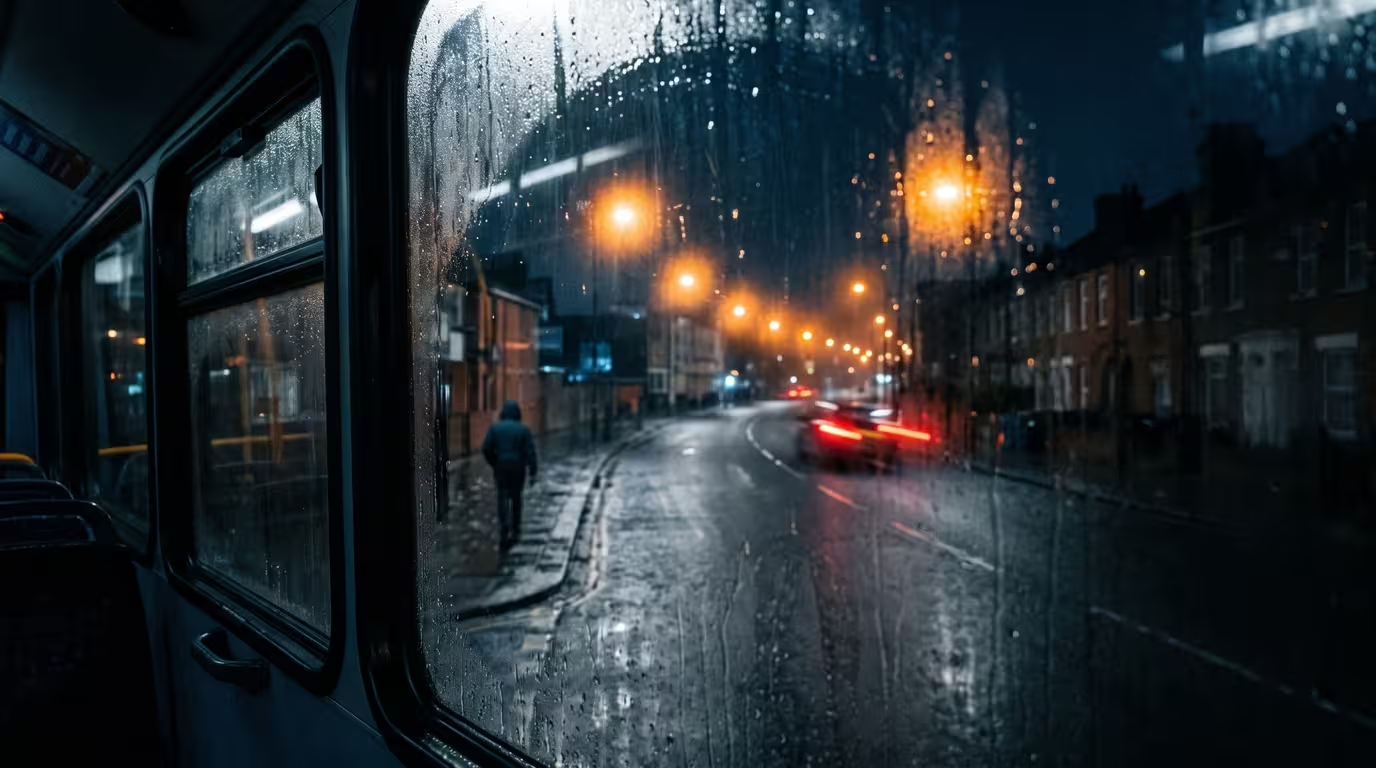
Some records sound like places. Burial's sound like a place at a specific hour: the long walk home after the club has closed, the top deck of an empty night bus, rain on a window, the city humming to itself while almost everyone sleeps. For a few years in the mid-2000s no one even knew who made this music, and that only made the spell stronger. This is the story of Burial, the anonymous South London producer who made club music turn inward, and then quietly declined to take a bow.
Blog
Burial and the Ghost of Dubstep
How an anonymous South London producer turned garage rhythms, rain and vinyl crackle into the sound of a city at 4am.
The Man Who Wasn't There
Burial is William Emmanuel Bevan, an electronic producer from South London. He was the first artist signed to Hyperdub, the London label founded in 2004 by Steve Goodman, who records and DJs as Kode9. His debut EP, South London Boroughs, appeared in 2005; the self-titled debut album followed in 2006, the first full-length the label ever released.
For a long time that was almost all anyone knew. Bevan gave no interviews with his face attached, never performed live, and let the music arrive with no biography and no photographs. As he put it in an early interview, only five people knew he made tunes. In an era when every producer was building a brand, the absence was radical, and, inevitably, it turned into a mystery people wanted to solve.
The Unmasking
The speculation grew loud after his second album, Untrue, was shortlisted for the 2008 Mercury Prize. Because nobody could picture him, people assumed he had to be someone famous already: tabloid coverage floated the idea that Burial was Richard D. James or Norman Cook. In February 2008, The Independent named Bevan as the man behind the alias. Then The Sun ran a campaign urging readers to help unmask him, with one writer calling him the Banksy of music.
Rather than be dragged out, Bevan stepped forward on his own terms. On 5 August 2008 he posted a short message and a single photograph on his MySpace page. There had been some talk about who he was, he wrote, but it was not a big deal; he had wanted to be unknown because he just wanted it to be all about the tunes. He described himself as a low-key person who only wanted to make music, gave his name as Will Bevan from South London, thanked the people who had supported him and, self-deprecating to the last, apologised for any rubbish tunes he had made in the past.
The remarkable thing is how little changed. He has remained almost entirely private ever since, granting only a handful of interviews, most notably a comprehensive one with the late critic Mark Fisher for The Wire, and he has still never played a live show or DJ set. When a rumour spread in 2015 that Burial had finally performed at Poland's Unsound festival, Hyperdub shut it down flatly: Kode9 confirmed to Fact that Burial had never performed live or DJed, was not at Unsound, and had no plans to play anywhere in the future.
The Sound: Rain, Crackle and Wordless Yearning
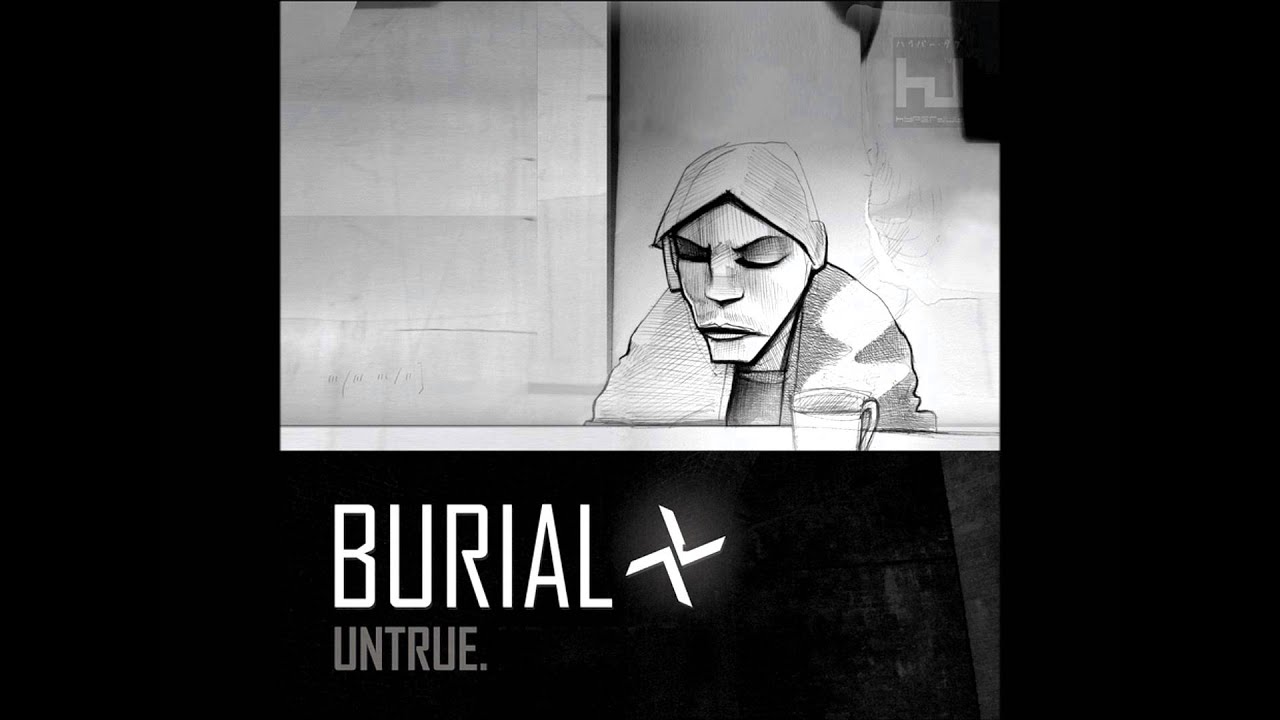
Strip away the mystique and the music still stops you. Burial's palette is instantly recognisable: the hiss and pop of vinyl, the patter of recorded rain, field recordings of the city, and vast reaches of empty, reverberant space. Over that he lays shuffling, two-step and garage-derived rhythms and deep sub-bass, and, his signature move, anonymous vocal samples pitched up and down until they lose gender and meaning, chopped into pure, wordless longing. On Untrue he built melodies out of single syllables borrowed from R&B tracks, turning a fragment of Ray J's One Wish into the aching centre of Archangel.
His sources are part of the folklore. Burial is a serious video-game fan, and Archangel is built partly on music from Metal Gear Solid 2: Sons of Liberty; incidental sounds from the same series recur across his records, and film dialogue surfaces too. Nothing is left clean. Everything is dusted with crackle, as if every sound has been played a hundred times before and is being remembered rather than heard.
Burial - Archangel
A Method No DAW Would Teach You
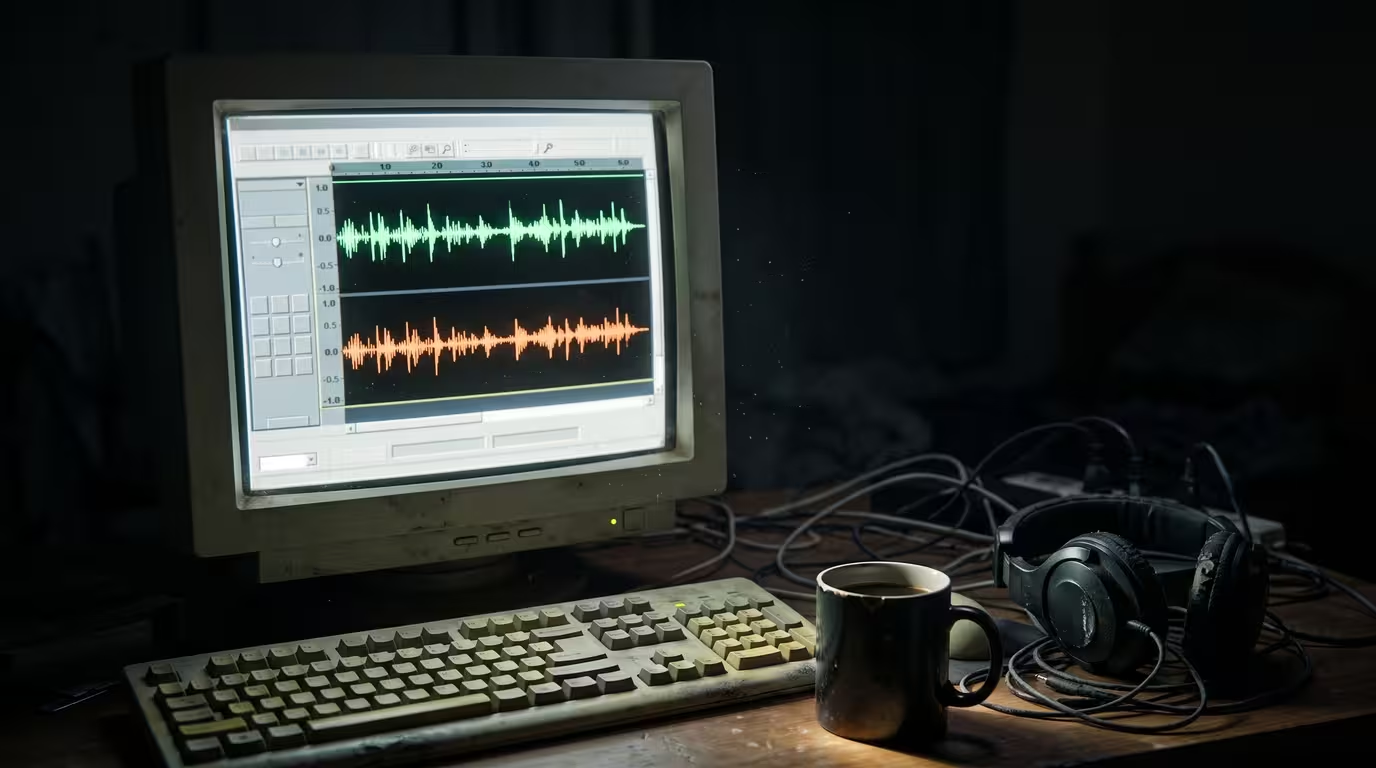
Here is the detail producers never quite believe. Burial made his early music in Sound Forge, a basic, single-track audio editor with no sequencer and no grid. He arranged everything by eye, sliding waveforms around a blank timeline until they looked right. He told The Wire that he had seen people using sequencers and tried hard to use them, but that they were blocks in different colours and he was only used to seeing the waves; he did not need to listen much to the drums, because he knew they looked right, like a fishbone, rigged up to be skittish and sharp. He has described sticking with that basic little program because, untrained and wary of people with proper studios, it was the only thing he knew.
That constraint is the secret. Without a grid to snap to, his beats breathe and stumble; the timing is loose, wonky and unmistakably human. It is the strongest argument you will find that a limited, wrong tool used obsessively can produce something no perfectly quantised session ever will.
Two Albums and a Shelf Full of Ghosts
The 2006 debut, Burial, was named album of the year in The Wire's critics' poll and read by many as an elegy for a rave culture that had already faded. Then came Untrue (2007), the masterpiece. It pushed the pitch-shifted voices to the front and turned the whole record into something between a club night and a memory of one. It was shortlisted for the 2008 Mercury Prize, as the bookmakers' favourite, though the award went to Elbow's The Seldom Seen Kid, and its reputation has only grown since. Fact named Untrue the number one album of the 2000s; Resident Advisor ranked it the third best album of the decade; Pitchfork placed it at number 41 on its Top 200 Albums of the 2000s; and The Guardian ranked it number 31 on its 100 Best Albums of the 21st Century. In 2017, Simon Reynolds, writing in Pitchfork, argued outright that Untrue was the most important electronic album of the century so far.
Since Untrue, Burial has never released a third album, instead pursuing a prolific run of EPs and singles: Street Halo (2011), Kindred (2012), Truant / Rough Sleeper (2012), Rival Dealer (2013) and, more recently, the beatless, ambient-leaning Antidawn (2022) and Streetlands (2022). Much of the earlier run was gathered on the 2019 compilation Tunes 2011-2019. He has also become an unlikely collaborator: with Four Tet and Thom Yorke on Ego and Mirror (2011) and Her Revolution and His Rope (2020); with Massive Attack; with Zomby; and with Kode9.
Hauntology, and the Sound of a City at Night
Critics reached for a word to describe all this: hauntology. Borrowed from the philosopher Jacques Derrida and adapted for music by the writers Mark Fisher and Simon Reynolds, it named art haunted by lost futures, by pasts that never quite arrived. Burial became its defining musician. The vinyl crackle, Fisher argued, is the sound of time itself, a recording that will not let go; the ghostly voices are presences that refuse to leave. Bevan seemed to feel it himself, telling Fisher that sometimes you get the feeling a ghost has touched your heart, that someone walks with you, while walking through deserted parts of London at night.
That, finally, is the through-line. Burial's real subject is London after dark: night buses, wet streets, council estates, the strange half-euphoria of the walk home. He has said his music is just for moody people to walk across London in the rain to. It is the most honest description anyone has offered of it.
The Ghost's Long Shadow
Burial changed what dance music was allowed to feel. Before him, club-derived electronic music was largely about abandon; he proved it could be about abandonment, melancholy and interior, and shaped like an album rather than a DJ tool. A whole generation followed him through the door, across post-dubstep, future garage, ambient, lo-fi and pop, and his textures, the crackle, the pitched vocal chop and the rain, became a shared vocabulary you can still hear everywhere. He also helped define the identity of Hyperdub, one of the most important labels of the century.
He did it, more or less, from a bedroom, with a dying computer and a program that was not built for the job, and then he stepped back into the dark. Burial made the sound of a city at 4am, and declined to take a bow. The music kept walking anyway.
Key takeaways
• Burial is William Bevan, a South London producer and the first artist on Hyperdub; he emerged anonymously in 2005 and 2006.
• He confirmed his identity himself in a low-key MySpace post on 5 August 2008 and has still never performed live.
• His signature sound, built from rain, vinyl crackle, pitched-up vocal fragments and loose two-step beats, was arranged by eye in Sound Forge, without a sequencer.
• Untrue (2007) is his landmark: Mercury-shortlisted, named Fact's number one album of the 2000s, and later called the century's most important electronic record by Simon Reynolds.
• His real influence was emotional: proving club-derived music could be melancholy, album-shaped and deeply human.
