These two styles get lumped together so often that many listeners assume they are the same thing. They are not, though you would be forgiven for the mistake. Melodic techno and melodic house are close cousins, born from the same European club lineage, chasing the same goosebump-and-groove feeling. One leans into techno's dark, driving hypnotism; the other into house's warm, uplifting bounce. Learn to hear that difference and a whole corner of modern dance music snaps into focus.
Blog
Melodic Techno Versus Melodic House
How to tell apart two of dance music's moodiest, most emotional styles.
A Shared Family, and a Famous Blur
The clearest sign of how intertwined these sounds are is that the industry itself files them together. On 20 March 2018, Beatport added a dedicated Melodic House & Techno category, scooping up music that had been scattered across techno, deep house, tech house and electronica. Beatport's label and artist relations director, Jack Bridges, said the quiet part out loud: this was a thriving sound that had not been easy to categorise as the lines blurred between styles. It was part of a wider genre cleanup that, the company said, moved over 1.5 million tracks to their correct categories. A single shelf for two leanings, precisely because the boundary is so porous.
Both descend from the same family tree: progressive house, trance, deep house and techno, all filtered through decades of European club culture. Both prize a sense of journey, with long, patient builds, lush atmospheric pads, rich melodic content and a mood that is euphoric and introspective at once. DJs cross between them mid-set without blinking, and many of the genre's biggest names release tracks that sit comfortably on either side. So before drawing lines, it is worth being honest: the line is real, but it is drawn in sand.
What Melodic Techno Actually Is
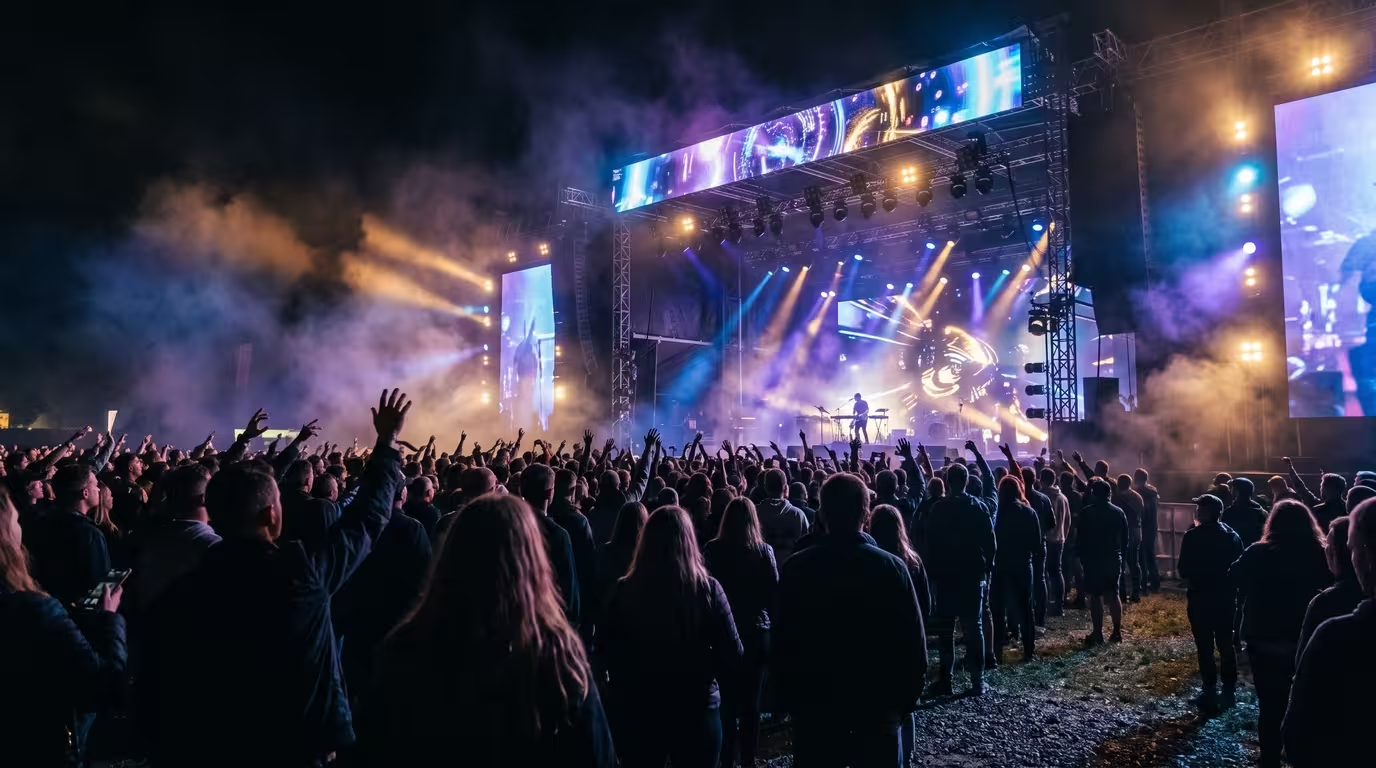
Melodic techno is the techno-leaning half, and it sounds like it. Underneath the soaring synths is a relentless techno engine: a steady, powerful kick, rolling and driving basslines, and an emphasis on tension and hypnotism over instant gratification. The melodies tend to be broad, minor-key and arpeggiated, the pads cinematic, the overall mood darker, more brooding and more propulsive. It is techno you feel in your chest and your gut at the same time.
The defining force here is the Italian duo Tale of Us, Carmine Conte and Matteo Milleri, and the label and party series they founded in 2016, Afterlife, whose immersive audio-visual events turned the sound into a global, almost ritualistic experience. The Afterlife and adjacent orbit reads like a who's-who of the style: Mind Against (the brothers Alessandro and Federico Fognini), Mathame, Adriatique, Massano, Argy, Colyn and Kevin de Vries, alongside elder statesmen like Stephan Bodzin, whose live hardware sets are a touchstone, and Recondite (Lorenz Brunner), the Bavarian master of moody, minimal hypnotism. Maceo Plex (Eric Estornel) and Kolsch drift through the same emotional, cinematic territory.
The most striking recent chapter belongs to Anyma, Milleri's solo project, which pushed melodic techno toward arena-scale spectacle. In late 2024 and early 2025, Anyma became the first electronic act to hold a residency at the Sphere in Las Vegas; across the eight shows of his The End of Genesys run, Variety reports he sold more than 130,000 tickets in the 20,000-capacity venue, fusing his melodic techno albums with the dome's wraparound visuals.
Stephan Bodzin live for Cercle at Piz Gloria

What Melodic House Actually Is
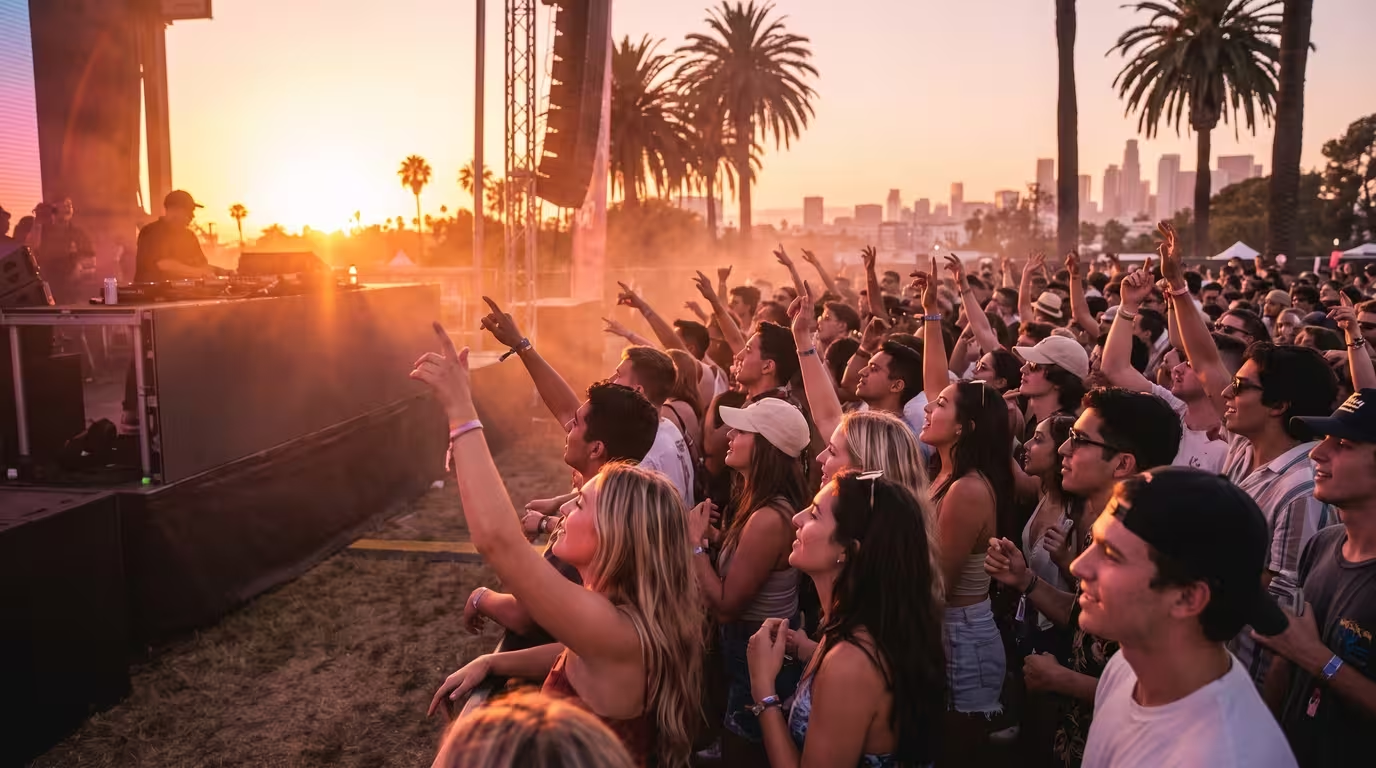
Melodic house is the house-leaning half: warmer, groovier, often lighter and more uplifting. It keeps house music's four-on-the-floor swing and warmth at its centre, with a rounder, more forgiving kick, deep and rolling basslines, lush emotional chords and frequent vocal touches. Where melodic techno broods, melodic house tends to glow. It is dreamy and feel-good, built as much for a sunset as for a dark room, and it descends more directly from deep house and the modern, emotional strain of progressive house.
Its spiritual home is Anjunadeep, the London label founded in 2005 by Above & Beyond and their manager James Grant, which has spent two decades refining a lush, melodic, emotionally generous sound. Its breakout star, Lane 8 (Daniel Goldstein), signed to Anjunadeep before launching his own label and the no-phones This Never Happened concept in 2016, built entirely around living in the moment. Around them orbit Yotto, Ben Bohmer, whose sunrise set for Cercle, performed live from a hot air balloon roughly 3,000 feet above Cappadocia, Turkey on 31 August 2020, became one of that channel's most-watched streams, plus Tinlicker, Nora En Pure and Marsh, all trading in the same warm, widescreen melodicism.
Telling Them Apart
Here is the practical part, the cues a listener or DJ can actually use, with the caveat that plenty of tracks sit defiantly in between.
• Drums: melodic techno rides a harder, more driving techno kick; melodic house leans on a groovier, warmer kick with more swing.
• Mood: techno-leaning tends dark, tense, hypnotic and cinematic; house-leaning tends warm, uplifting and dreamy.
• Rhythm: melodic techno feels propulsive and relentless; melodic house feels bouncy and rolling.
• Vocals and chords: melodic house more often foregrounds vocal hooks and lush chord progressions for direct emotional pull.
• Lineage: one traces back to techno's machine pulse, the other to house and deep house's human groove.
Tempo offers only a loose hint. Both styles cluster in a similar window, with genre guides typically placing melodic techno around 122 to 126 BPM and the progressive and melodic house side around 120 to 124, but the real difference is not BPM. A track at the same tempo can read as either depending on the weight of its kick and the warmth of its groove. The honest test is feel: does the track want to hypnotise you in the dark, or lift you toward the light?
The Rise, and Why It Took Over
This was not an overnight takeover so much as a steady conquest across the late 2010s and into the 2020s. Afterlife and Tale of Us gave melodic techno its cinematic, festival-conquering identity; Anjunadeep and Lane 8 gave melodic house its intimate, emotional one. Around them, established tastemakers lent weight and credibility. Dixon and Ame, through their Berlin label Innervisions, founded in 2005, had long championed a deep, emotional, drama-and-grand-emotions approach to the dancefloor. Solomun built Diynamic in Hamburg into a hub for melodic, emotionally charged house and techno. CamelPhat parlayed their 2017 crossover smash Cola with Elderbrook, a Grammy-nominated track that has since passed two billion streams according to Defected, into richer, more melodic territory, and the Berlin collective Keinemusik (&ME, Rampa and Adam Port) rode a wave of euphoric, melodic, globe-trotting sets into one of dance music's biggest recent success stories.
The reasons it resonates are not mysterious. These styles balance emotional depth with genuine dancefloor function; they offer an immersive, cinematic experience and that prized journey quality inherited from progressive house; and they translate equally well to a sweaty club and a giant festival main stage. They are main-room music that still feels deep.
These emotive, atmospheric productions are also, not coincidentally, exactly the kind of music a generation of producers and DJs now most wants to make and play. The umbrella term is convenient, and the overlap is real, but at their extremes the two leanings still feel genuinely different. One pulls you into the shadows; the other turns you toward the sun.
Key takeaways
• Melodic techno and melodic house are closely related, emotionally driven strains often grouped under one melodic house and techno umbrella.
• Melodic techno leans dark, driving and hypnotic; melodic house leans warm, groovy and uplifting.
• Both run at similar tempos, so judge by kick weight, mood and groove rather than BPM alone.
• Afterlife and Tale of Us define the techno side; Anjunadeep and Lane 8 anchor the house side.
• The boundary is genuinely blurry, and many tracks, and DJs, live happily in between.
