Pirate radio exists because legal British radio had a hole in it the size of a culture. In the 1960s the problem was pop itself: the BBC held a near-monopoly and, hamstrung by needle time agreements limiting how much recorded music it could broadcast, offered only a trickle of it. The offshore pirates filled the void. Radio Caroline, founded by the Irish entrepreneur Ronan O'Rahilly, began broadcasting from a converted ferry anchored off the Essex coast on Easter Saturday, 28 March 1964; rivals like Radio London followed. Broadcasting from international waters, they were beyond the reach of UK law until the Marine, &c., Broadcasting (Offences) Act 1967, passed that August, made it illegal to supply or advertise on them. The BBC's answer was to co-opt the model: Radio 1 launched at 7am on 30 September 1967, with the ex-Radio Caroline DJ Tony Blackburn at the mic.
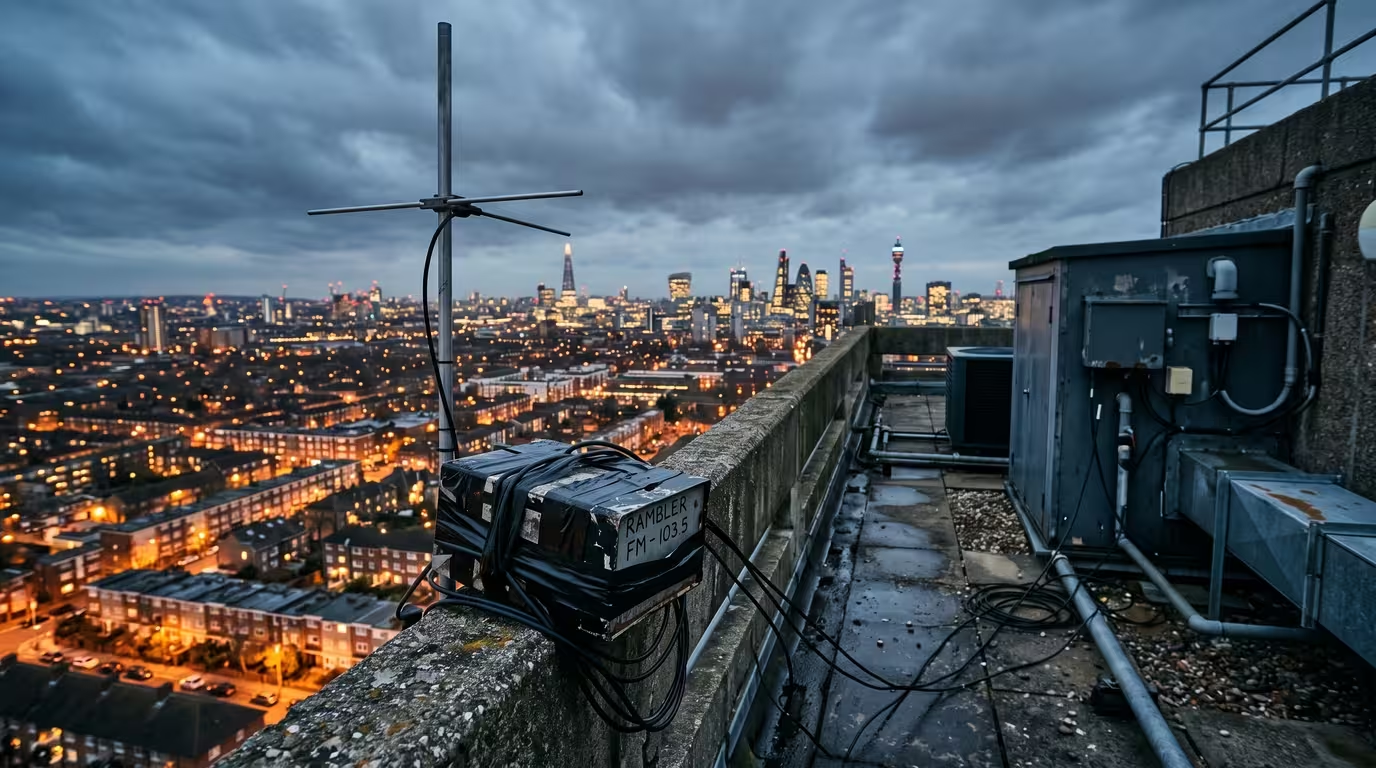
By the late 1970s a second hole had opened, and this one never really closed. Legal radio gave almost no airtime to the soul, funk, reggae, boogie and, later, dance music that Black British communities were listening to. So the pirates came ashore. The pivotal early station was the Dread Broadcasting Corporation, DBC, a pun on the BBC, widely credited as Britain's first Black-owned radio station. It was founded by Leroy Lepke Anderson, brother of Rita Marley, who acquired a medium-wave transmitter and, in the autumn of 1980, began broadcasting from his home in Neasden, moving to FM at the end of 1981 before repeated raids ended the station in 1984. Others followed across London: Horizon, Solar, Invicta, London Weekend Radio and, most consequentially, Kiss FM, founded by Gordon Mac McNamee and George Power, which first broadcast on 7 October 1985. These were the sound-system continuum wired into the FM band: the same music, the same communities, now with citywide reach.