Few bands have ever sounded as much like a threat as The Prodigy. They came out of the English rave scene, a world of strobes and repetitive beats, and somehow emerged as a group that could headline a rock festival and terrify a nation's parents. This is the story of how a producer's bedroom project became one of the most successful and confrontational electronic acts ever made, and how it took rave's euphoria and armed it with punk's snarl.
Blog
The Prodigy and Rave Gone Punk
How four men from Essex turned hardcore breakbeats into the most dangerous-sounding electronic band on earth.
From Braintree Bedroom to the Barn
The Prodigy were formed in Braintree, Essex, in 1990 around the producer, keyboardist and songwriter Liam Howlett, who wrote and produced essentially all of the band's music. Howlett had come up as a hip-hop DJ in the local group Cut 2 Kill, but a night at a barn party near Braintree converted him to acid house and rave. He began DJing the local scene and making his own tracks at home.
It was at The Barn nightclub that Howlett met the dancers Keith Flint and Leeroy Thornhill. Flint asked Howlett for a mixtape; Howlett handed one back with some of his own productions on the B-side, and the word Prodigy scratched onto the cassette, a nod to his Moog Prodigy synthesizer. Flint and Thornhill built dance routines to the music and pushed Howlett to take it on stage. With the MC and vocalist Maxim, real name Keith Andrew Palmer, from Peterborough, and, briefly, the dancer Sharky, the group was born. Their early live debut came at the Four Aces in Dalston, one of the roughest rooms in London.
Signed to XL Recordings by Nick Halkes, the band issued the What Evil Lurks EP in February 1991. Then came Charly in August 1991, a rave track built around a sample from a children's public-information cartoon. It reached number three on the UK Singles Chart and made the band famous, but it also sparked a wave of cartoon-sampling toytown techno imitators that Howlett came to resent, fearing it would brand the Prodigy a novelty. He refused to write another one. The debut album Experience followed in September 1992, peaking at number 12 in the UK and now regarded as a landmark of British rave.
The Turn: Anger, Guitars and Their Law
If Experience was a document of the rave, Music for the Jilted Generation, released in July 1994, was its furious hangover. The album entered the UK chart at number one and was widely read as a response to the Criminal Justice and Public Order Act 1994, which criminalised raves and the repetitive beats they were built on. That defiance is loudest on Their Law, recorded with Birmingham's Pop Will Eat Itself, a slab of dance-rock built for mosh pits rather than clubs. The singles Voodoo People and No Good (Start the Dance) showed Howlett folding rock riffs and jungle energy into breakbeat.
The record repositioned the Prodigy as something harder and more confrontational, a hard dance band, in Howlett's words, that could fill stadiums rather than fields.
Firestarter and Global Domination
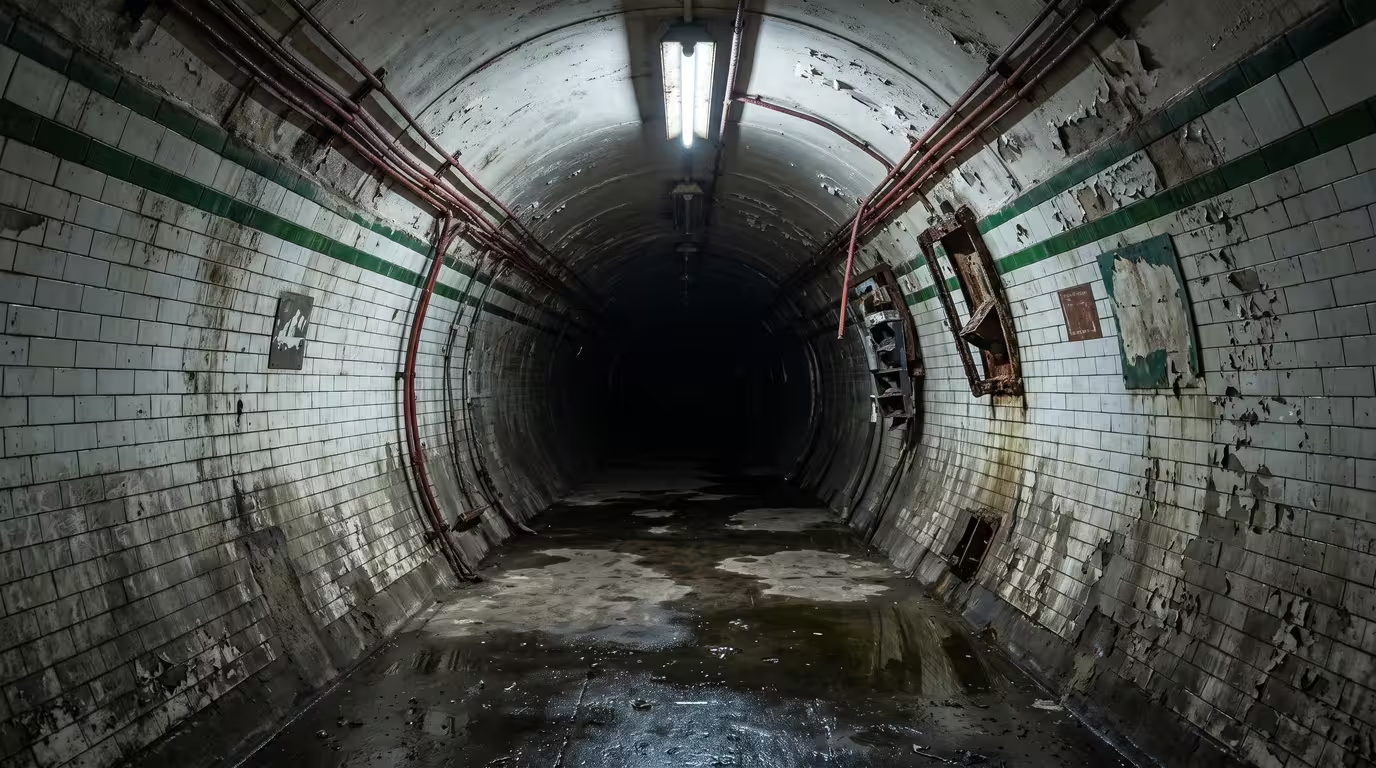
Everything changed in March 1996 with Firestarter. Howlett had recorded it as an instrumental; when Flint asked to write and sing a vocal, the dancer became a frontman. The single hit number one in the UK and stayed there for three weeks. Its stark black-and-white video, directed by Walter Stern and shot in a disused London Underground tunnel at Aldwych, turned Flint, with his devil-horned hair, black eyeliner and manic grin, into an icon overnight. It also generated a storm of complaints; the BBC pulled the video after it aired on Top of the Pops, and it drew the highest number of complaints the broadcaster had received at the time.
The Prodigy - Firestarter

Breathe followed in November 1996 and also went to number one. Then, in June 1997, came The Fat of the Land, which debuted at number one in the UK and the US and, per Mixmag, reached the top spot in another 21 countries. It has since sold more than 10 million copies worldwide, was certified double platinum in the US in December 1997 on sales of around 2.6 million, and in 1999 entered the Guinness World Records as the fastest-selling UK dance album, selling 317,000 copies in its first week. For a few years, the Prodigy were arguably the biggest electronic act on the planet.
The album's third single pushed the controversy further. Its first-person video, directed by Jonas Akerlund, depicted a chaotic night of drink, drugs and violence with a twist ending, and its title alone was enough to cause trouble. It was criticised by women's groups including the National Organization for Women, restricted or banned from television on both sides of the Atlantic, and shown by MTV only in a late-night slot. The band argued the phrase referred to doing something with intensity rather than literal violence, and Howlett defended the video's realness while expressing frustration at the misreadings.
The Live Force
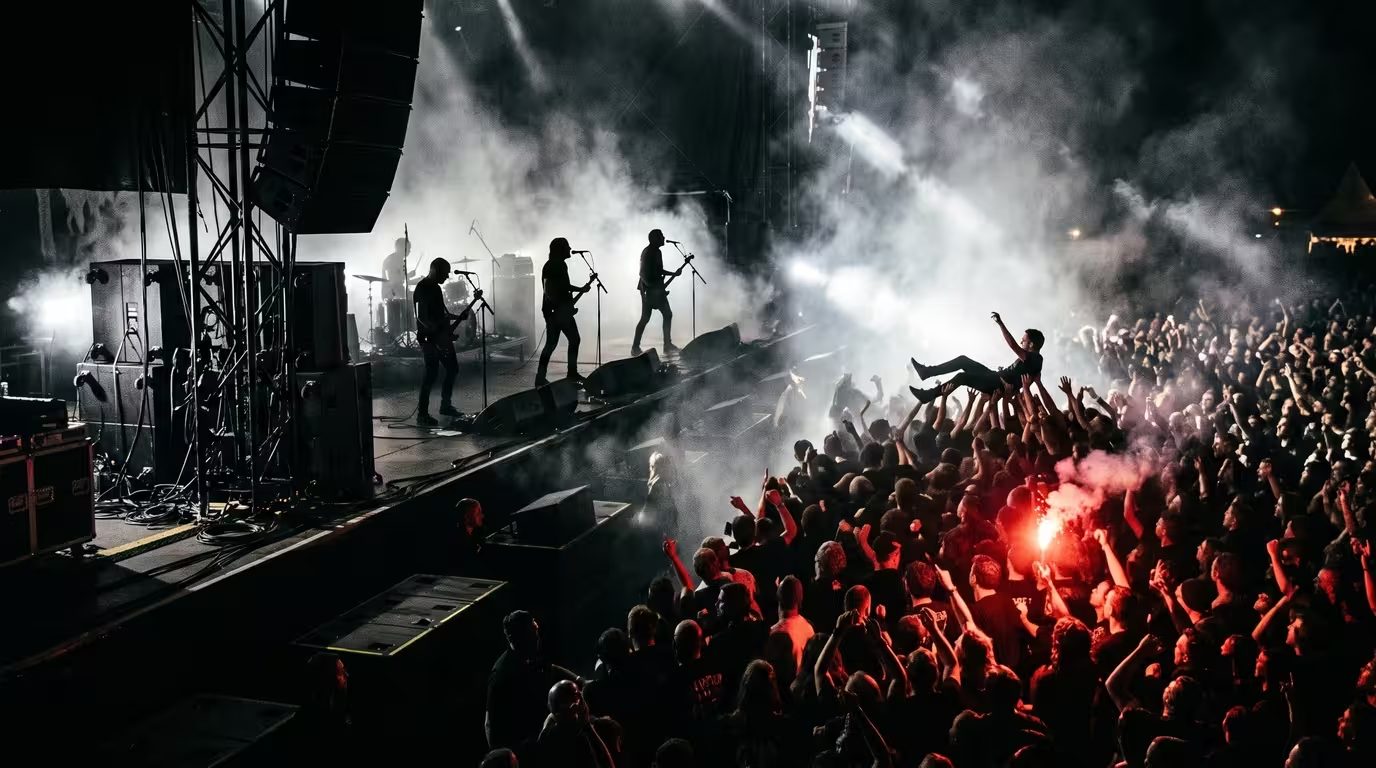
What truly separated the Prodigy from their peers was the stage. This was a band, not a DJ set: Howlett behind the keyboards, Flint and Maxim as twin frontmen, with a live guitarist, Jim Davies and then Gizz Butt during the Fat of the Land years, and, later, live drums adding rock muscle. They made electronic music read as a physical, sweat-soaked gig, and they won over rock and metal crowds who normally had no time for dance music.
In June 1997, days before The Fat of the Land dropped, they headlined Glastonbury's Pyramid Stage, the first dance act to top the bill at Britain's biggest rock festival, a booking that provoked plenty of debate about whether an electronic group belonged there. Rolling Stone later wrote that no act was quite as profoundly incendiary as the ragtag group from Essex. Their reputation only grew: they played to enormous festival crowds for decades and, on 24 July 2010, headlined their own Warrior's Dance Festival at the Milton Keynes National Bowl to a crowd of 65,000, their biggest-ever headline show. In America, MTV rotation, a Rolling Stone cover and a Lollapalooza run made them the face of the late-1990s electronica push that was supposed to be the next big thing.
The Later Albums
After the peak, the band fractured for a while. Leeroy Thornhill left in 2000. Always Outnumbered, Never Outgunned (2004) was essentially a Howlett solo record, with Flint and Maxim absent, and guest vocalists including Liam Gallagher, Kool Keith, Twista and Juliette Lewis. The classic lineup reunited for Invaders Must Die (2009), which returned to a harder rave sound and hit number one. The Day Is My Enemy (2015) and No Tourists (2018) also topped the UK chart, giving the band seven consecutive UK number one albums and an estimated 25 million records sold worldwide, including 4.7 million UK album sales alone, across three decades.
Keith Flint and After
On 4 March 2019, Keith Flint was found dead at his home in North End, Essex, aged 49. At the inquest, the Essex senior coroner recorded an open conclusion, saying there was not enough evidence to determine his intent. Tributes poured in from across music. After a period of grief and doubt about whether they could continue, Howlett and Maxim returned to the stage in 2022, timed to the 25th anniversary of The Fat of the Land, and have continued to tour, dedicating Firestarter to Flint each night. The band has spoken about new material and further live plans.
The Legacy
The Prodigy's importance is simple to state and hard to overstate: they took rave's energy and gave it punk's attitude and a rock band's stagecraft. They helped break electronic music in America, they were pioneers of big beat alongside the Chemical Brothers and Fatboy Slim, and they proved a breakbeat could hit as hard as a guitar riff. For producers, Howlett's craft, from the breakbeat programming and sampling to arrangements built for maximum physical impact, remains a genuinely instructive study in making electronic music that lands like a punch. More than anything, they proved dance music could be genuinely dangerous.
Key takeaways
• The Prodigy formed in Braintree, Essex, in 1990 around the producer Liam Howlett, named after his Moog Prodigy synth.
• They turned rave into something harder with Music for the Jilted Generation, then conquered the world with The Fat of the Land.
• Firestarter and its BBC-pulled video made Keith Flint an icon, and the band's third Fat of the Land single made them notorious.
• Their live reputation, as a band rather than a DJ act, won over rock and metal crowds and made them festival headliners.
• After Keith Flint's death in 2019, Howlett and Maxim returned to the stage and carry the band on.
