UK garage is the sound of a country remixing someone else's record until it became unmistakably its own. Born in mid-1990s London from imported New York house, it grew into a swung, bass-heavy, vocal-led music that briefly ruled British pop, then collapsed amid moral panic and overexposure. In falling, it did something rare: it seeded at least two whole new genres. This is the story of how garage rose, dominated, declined, and became one of the most influential parent genres Britain has ever produced.

Blog
The Rise and Fall of UK Garage
How a sped-up British twist on New York house ruled the charts, then quietly fathered grime and dubstep.
From Paradise Garage to a London Afters
The word garage is a New York inheritance. It comes from the Paradise Garage, the SoHo club where DJ Larry Levan spun soulful, gospel-tinged, vocal-rich dance music from the late 1970s. That sound, warm, song-driven and more soulful than the drum-machine house of Chicago, became known as garage house or, later, US or New York garage.
In the early 1990s, British DJs steeped in rave, hardcore and jungle began importing these American records. The crucial move was tempo. American garage house sat around 120 BPM; UK DJs pitched it up toward 130 to bring it closer to the hardcore and jungle energy that ruled British clubs. DJ EZ is widely credited with an emblematic moment: while playing in a Greenwich club, he spun a garage-house track by the New Jersey producer Todd Edwards at a faster speed. Edwards' chopped, time-stretched vocal style, slicing a sung line into rhythmic confetti, became a foundational technique. At first this music lived in the second room of jungle nights and at Sunday afters in pub backrooms, a more sensual, soulful alternative to jungle's 170 BPM intensity.
Speed Garage and the Jungle Connection
Around 1996 and 1997, the first distinctly British strain crystallised: speed garage. It was faster, darker and bass-heavy, borrowing the rolling sub-bass and sound-system weight of jungle and reggae. The genre's calling card was Double 99's RipGroove (1997), built by Tim Liken (later Tim Deluxe) and Omar Adimora around a warping, sub-rupturing bassline and a chopped Tina Moore vocal, a club record that eventually reached the UK Top 20 and is still dropped today. Armand van Helden's remix of the Sneaker Pimps' Spin Spin Sugar pushed the same heavy, plus-8 template.
This was also a migration story. As jungle hardened into a colder, more aggressive sound in the mid-1990s, many ravers and MCs, especially women and the soul-leaning crowd, drifted toward garage's warmer groove. The garage MC, descended directly from the Jamaican dancehall toaster, came with them, and the crowd's ritual call of Bo! to rewind a tune became scene shorthand.
The 2-Step Golden Era
The defining UK garage sound arrived when producers broke the beat. Around 1997 to 1999, 2-step emerged: a skippy, syncopated rhythm that dropped the steady four-to-the-floor kick, leaving audible gaps filled with shuffling hi-hats, ghost snares and swung, lurching funk. Over the top went sub-bass and pitched-up, soulful R&B vocal chops. An early template was the 1997 Kelly G remix of Tina Moore's Never Gonna Let You Go, a UK Top 10 hit.
The culture around it was aspirational and glamorous, a deliberate contrast to rave's dressed-down ethos. Clubs such as Twice as Nice enforced strict dress codes (no trainers, no jeans), champagne replaced water bottles, and the scene crowned its own glamorous overseas capital in Ayia Napa, Cyprus. Pirate radio was its lifeblood: stations like Rinse FM, Freek FM and Deja Vu FM broke the records that legal radio would not touch.
Then it conquered the charts. Artful Dodger and Craig David's Re-Rewind (The Crowd Say Bo Selecta) reached UK number two at the end of 1999 and went platinum. Shanks & Bigfoot's Sweet Like Chocolate had already topped the UK Singles Chart for two weeks from 29 May 1999, the first UK garage number one, and the first song to top the UK Singles, Dance, R&B and Indie charts (though not simultaneously). The hits kept coming:
• Craig David's solo breakthrough, with Fill Me In and 7 Days both hitting number one in 2000 off the multi-million-selling album Born to Do It.
• Sweet Female Attitude's Flowers (2000), a number two smash with one of the genre's most recognisable hooks.
• MJ Cole's Sincere, a bedroom-made, classically informed cut that helped push 2-step toward musical sophistication.
• Oxide & Neutrino's Bound 4 Da Reload (Casualty), which sampled the BBC medical-drama theme and crashed in at number one in 2000.
• DJ Luck & MC Neat, Wookie, Zed Bias' Neighbourhood, and Daniel Bedingfield's chart-topping Gotta Get Thru This.
The peak came in summer 2001, when So Solid Crew's 21 Seconds hit number one, the first UK garage crew to top the chart. Its concept, in which each of nine MCs gets roughly 21 seconds on the mic, and its blockbuster, BRIT-winning video announced a harder, MC-driven direction.
So Solid Crew - 21 Seconds

The Fall: Trouble, Panic and Dilution
The same energy that made So Solid thrilling also marked a turning point. As garage tilted toward a darker, rowdier, crew-led sound, it attracted tabloid attention and, more seriously, real trouble. A series of violent incidents at clubs, including a shooting at a London Astoria party for So Solid's MC Romeo's birthday, fed a moral panic. So Solid's December 2001 UK tour was cancelled by promoters after a shooting at a gig. Venues grew reluctant to book garage nights, and UK garage acts were informally pushed out of the West End.
The scene also fragmented from within. Established smart-and-sexy promoters clashed with a younger, grimier wave in the so-called garage committee meetings. Commercial overexposure, from novelty hits to endless R&B bootlegs, diluted the brand, while the darkest, sparsest, most aggressive elements pulled away from the soulful chart sound. By 2002 to 2004, mainstream UK garage had effectively died as a chart force and gone back underground.
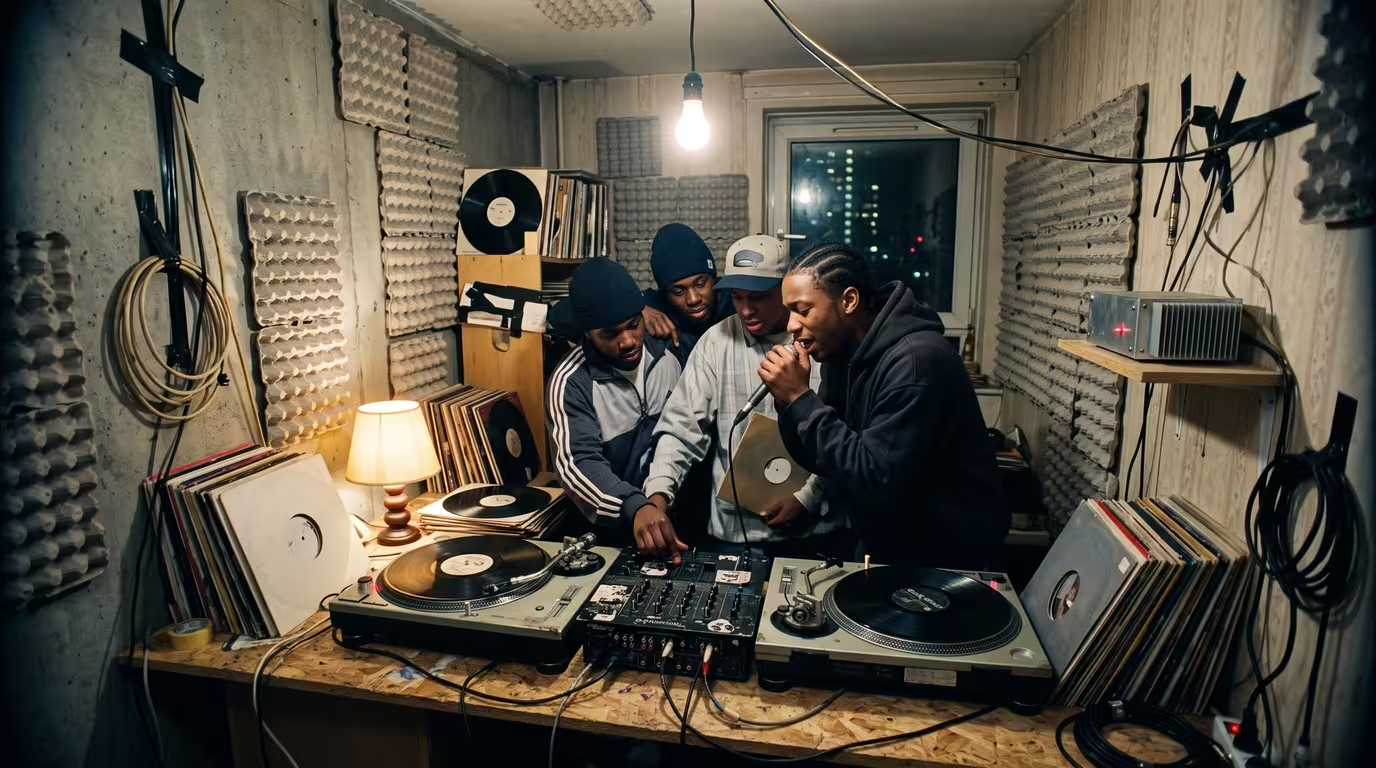
How the Fall Birthed Grime and Dubstep
Here is the twist that makes UK garage so important: its collapse was generative. The darker, MC-led end of garage curdled into grime around 2002 to 2003. In Bow, east London, Wiley, a veteran of the garage crew Pay As U Go, developed eskibeat, a cold, sparse, sub-heavy sound at around 140 BPM, on tracks like Eskimo. His Roll Deep crew became grime's founding institution, and a 16-year-old protege named Dizzee Rascal made a school-computer track called I Luv U. Dizzee's debut album Boy in da Corner won the 2003 Mercury Prize, the first grime album to do so, and the moment the new genre could no longer be ignored. Pirate stations like Rinse FM, again, were the engine.
Dubstep grew from the other end of garage, the dark, instrumental, dub-influenced B-side. Its crucible was Big Apple Records, a record shop in Croydon, south London, where producers and DJs swapped tracks and plotted trips to the London club night FWD>>. The bridge was dark garage: El-B, Horsepower Productions, Zed Bias and Steve Gurley stripped the R&B gloss away around 1999 to 2002, leaving sub-bass, space and tension. From that scene came Skream, Benga and Digital Mystikz (Mala and Coki); their 2003 Big Apple release Judgement still had a garage swing but added the warping bass weight that would define dubstep.
The lineage did not stop there. UK garage's 4x4 strain fed bassline (sometimes called niche), which grew out of Sheffield's Niche nightclub in the early 2000s and broke nationally with T2 featuring Jodie Aysha's Heartbroken, which spent three weeks at number two on the UK Singles Chart in late 2007. Its decline also fed UK funky, and its DNA echoed through Burial, whose acclaimed 2007 album Untrue reframed 2-step rhythms and pitched vocals as haunted, rain-soaked future garage.
The Revival and Enduring Legacy
UK garage never fully died, it kept resurfacing. In 2013, the brothers Howard and Guy Lawrence brought a clean, UKG-indebted sound to global success as Disclosure; their debut album Settle debuted at number one on the UK Albums Chart, selling 44,633 copies in its first week, and was nominated for the 2013 Mercury Prize, putting 2-step's swing in front of a worldwide pop audience.
The 2020s brought a fuller revival, sometimes branded new UK garage. A new generation, including Conducta and his Kiwi Rekords label, Flava D and Interplanetary Criminal, pushed garage back into clubs and charts. AJ Tracey's 2-step anthem Ladbroke Grove, produced by Conducta, peaked at number three on the UK Singles Chart in October 2019 and is certified quadruple platinum. PinkPantheress built bedroom-pop hits on UKG and breakbeat foundations, and her track Pain interpolated Sweet Female Attitude's Flowers. The clearest sign of garage's renewed chart power came in September 2022, when Eliza Rose and Interplanetary Criminal's speed-garage-flavoured B.O.T.A. (Baddest of Them All) spent two weeks at number one, the chart's 1,400th number-one single, and the first UK number one by a female DJ since Sonique's It Feels So Good.
That swung, bass-driven, vocal-and-rhythm template, the sound a lot of today's producers still chase, has proven astonishingly durable. UK garage was a uniquely British reinvention of US garage house that rose to mainstream glory, fell amid trouble and overexposure, and in falling seeded grime, dubstep, bassline and beyond. Few genres can claim to be the parent of so many. Fewer still sound this good a quarter-century on.
Key takeaways
• UK garage was a British reinvention of US (Paradise Garage) house: sped up, swung, and made bass- and vocal-led.
• Speed garage in the mid-1990s and then 2-step in the late 1990s defined the sound, peaking commercially around 1999 to 2001.
• A glamorous club scene and pirate radio drove it; chart number ones ran from Sweet Like Chocolate to 21 Seconds.
• Violence, moral panic and overexposure pushed it back underground by 2002 to 2004.
• In falling, it birthed grime (Wiley, Dizzee Rascal) and dubstep (Croydon's Big Apple, Skream, Benga), plus bassline and future garage.
• It revived through Disclosure in 2013 and a 2020s new UK garage wave, capped by a 2022 chart-topper, cementing its status as a pivotal parent genre.
