Ask a room full of dance-music fans what deep house is and you will get two answers at once. Some will talk about a sound: sub-heavy basslines, hushed atmospheres, a slow late-night pulse. Others will talk about a feeling, something spiritual and blue and hard to name. Both are right. Deep house is the jazzy, soulful, atmospheric soul of house music, born in 1980s Chicago out of jazz, soul, funk, gospel and disco, defined as much by mood as by mechanics, and stubbornly enduring as house's most musical strain, despite a 2010s pop detour that nearly stole its name.
Blog
What Actually Makes Deep House Deep
Tracing the jazzy, soulful roots of house music's mellower, more introspective cousin, and the feeling at its core.
The Deep in Deep House
The word does double duty. There is the literal depth, the warm, rounded, often sub-heavy bassline that sits low and unhurried under everything. And there is the emotional depth, the immersive, hypnotic, introspective feeling that the best of this music carries. Deep house is felt as much as heard.
Sonically, it is house music with the edges softened and the harmony enriched. According to the standard reference description, deep house fuses Chicago house with 1980s jazz-funk and touches of soul, typically running between 110 and 125 BPM with muted basslines, spacious percussion (frequently built on a Roland TR-909), soft keyboard pads, ambient mixes and soulful vocals. The four-on-the-floor kick is still there, but it is steady and unobtrusive rather than pummelling, a heartbeat rather than a battering ram.
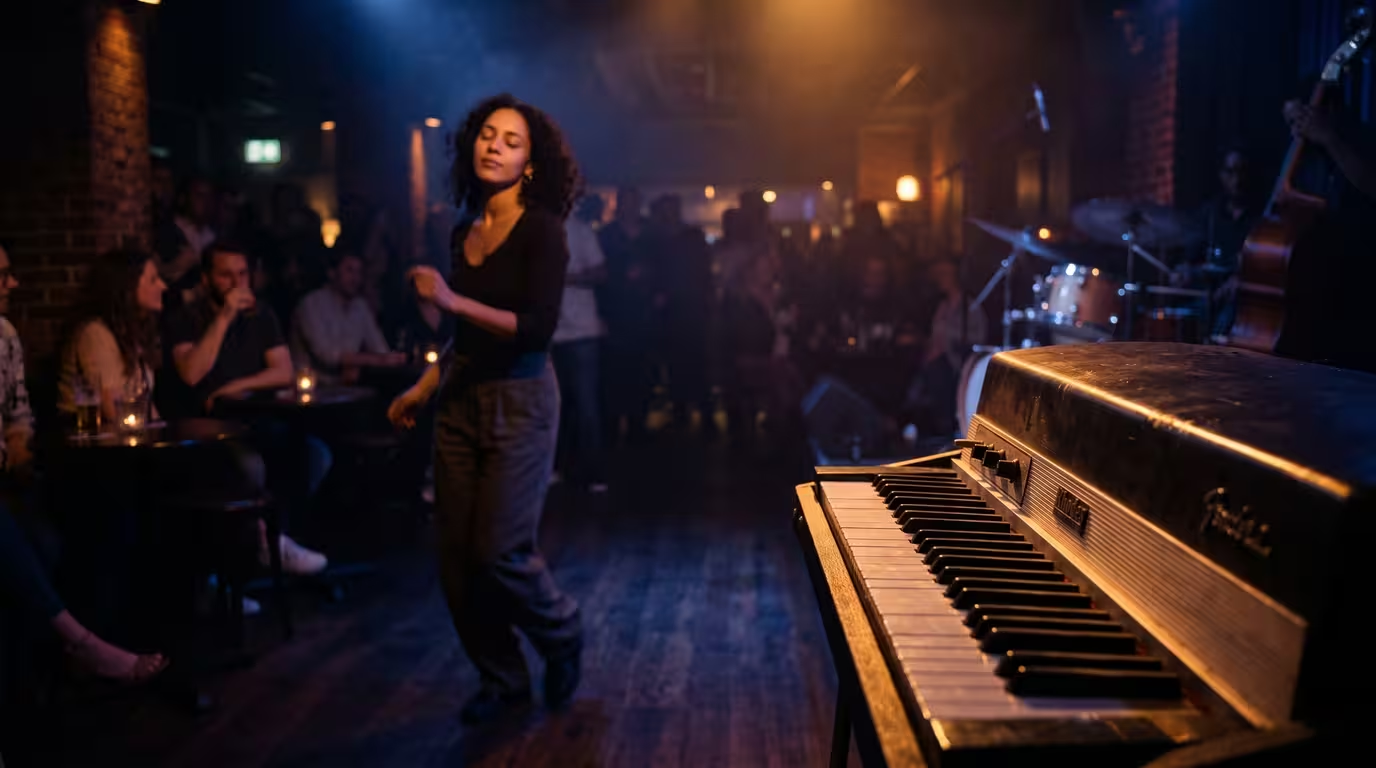
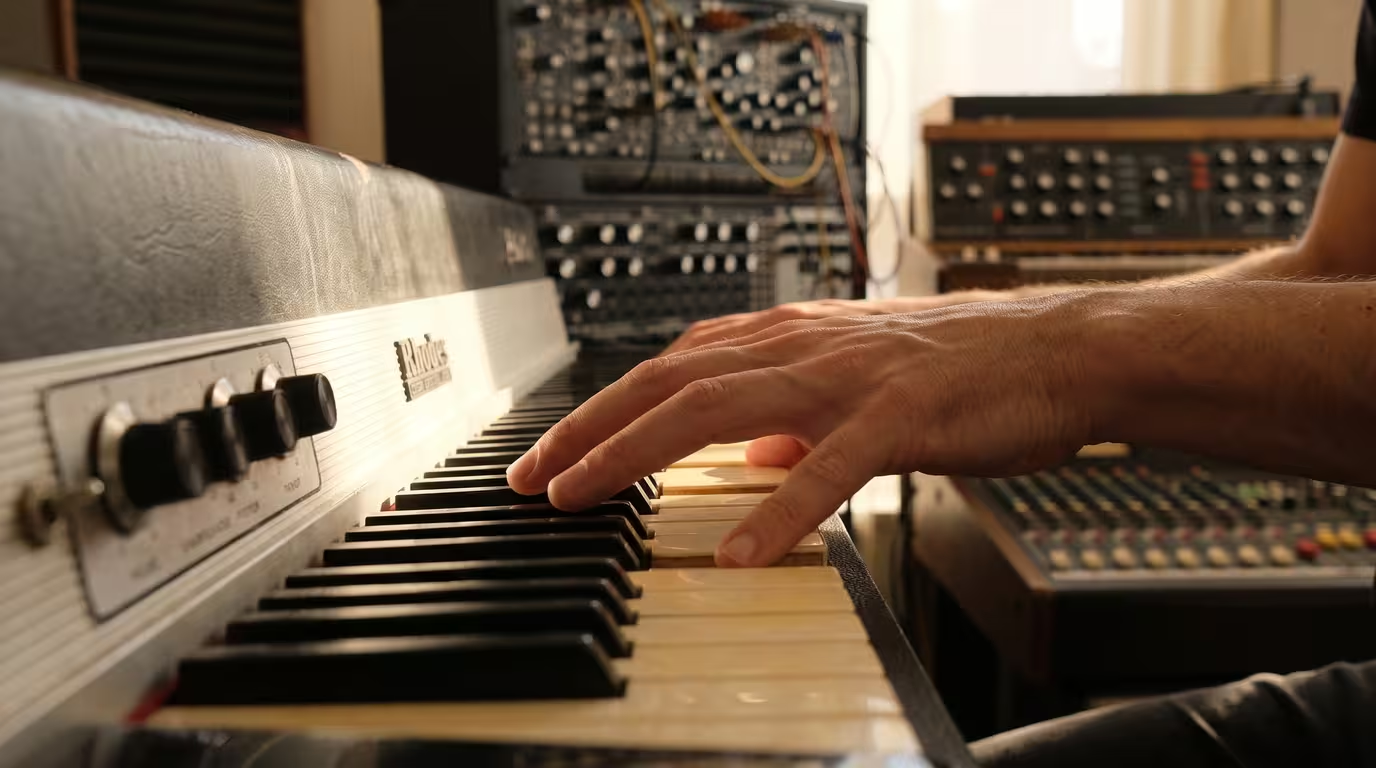
The single most defining ingredient is the chords. Where standard club house leans on simple major and minor triads, deep house reaches for extended, jazz-derived harmony: seventh, ninth and thirteenth chords, suspensions and altered tones that give a track that slightly dissonant, bittersweet glow, as Attack Magazine lays out in its breakdown of deep house voicings. Add a warm analog-style pad with a long attack, a Rhodes or electric-piano voicing, a muted or wordless vocal floating in reverb, and a little swing in the hats, and you have the recipe. The complexity is rarely about cramming notes in; it is about space, warmth and restraint. These are exactly the craft details, lush voicings, breathing pads and a groove that swings rather than stomps, that working producers obsess over, because they are what separate something genuinely deep from something merely slow.
A Jazzy Seed in a Chicago Machine
House music was born in early-1980s Chicago, in clubs like the Warehouse, where DJs such as Frankie Knuckles, often called the godfather of house, fed disco, Philly soul and European electronics through drum machines and reel-to-reel tape. Out of that scene, two tempers emerged: the raw, squelching, hypnotic world of acid house, and the lusher, warmer, more melodic world that would become deep house.
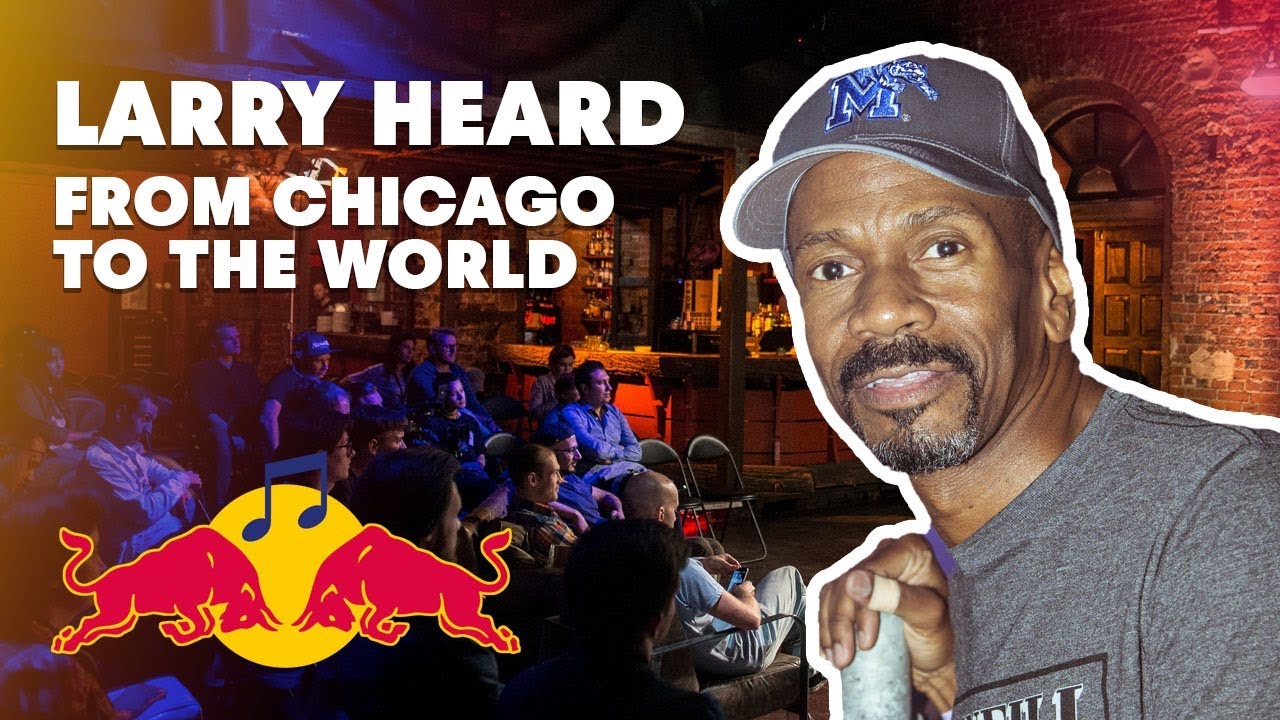
The figure most often placed at the genre's source is Larry Heard, who records as Mr. Fingers. Born on Chicago's South Side in 1960, Heard grew up on jazz and Motown and worked as a drummer in a jazz-fusion cover band before frustration with the role pushed him toward synthesizers. Within days of buying a Roland synth and a TR-909 drum machine in 1984, he had sketched several tracks that would become milestones: Mystery of Love (1985) and, most famously, Can You Feel It (1986), built on the deep bassline of a Roland Juno-60. Encyclopedic and journalistic accounts alike treat these as foundational deep house records; the writer Richie Unterberger argued that Heard's sound moved house away from its colder, machine-like tendencies and back toward the lush, soulful warmth of early disco. Can You Feel It is so pivotal that its impact on deep house has been likened to that of Derrick May's Strings of Life on Detroit techno. When Pitchfork ranked the original instrumental number 76 on its 2015 list of the best songs of the 1980s, the editor Patric Fallon wrote that the single has no hook and abandons pop structure entirely, surrendering to an endless groove.
Heard was not alone. Marshall Jefferson, who also worked in the deeper, more melodic end of house, cut Move Your Body in 1986 for Trax Records, the first house track to feature piano and an early sign that house could be euphoric and musical at once. The crucial point is that deep house grew up as the soulful, song-minded counterpoint to house's rawer, more mechanical wing.
Larry Heard on Robert Owens and Being Sampled
New York, New Jersey and the Soulful Lineage
If Chicago supplied the harmonic DNA, the East Coast supplied the soul. At New York's Paradise Garage, the resident DJ Larry Levan (born Lawrence Philpot, 1954 to 1992) spun a gospel-tinged, vocal-rich, dub-wise blend across a decade-long residency, from the club's 1977 opening to its closing party in 1987, that gave its name to garage house, the more overtly soulful, song-driven New York cousin of Chicago house. Across the river in Newark, Club Zanzibar and DJs like Tony Humphries carried a Jersey variant steeped in gospel, R&B and disco.
Out of that world came Kerri Chandler, raised in East Orange, New Jersey, in a family of jazz musicians, the son of a DJ who schooled him in soul, disco and the New York underground sound. From his breakthrough single on Atlantic at the dawn of the 1990s through the much-loved Atmosphere EP, Chandler became one of deep house's defining voices, prizing groove, space and emotional weight over commercial polish. The New York duo Masters at Work, Louie Vega and Kenny Dope, working together from 1990, pushed the soulful end further still, eventually recording with live jazz, Latin and soul musicians under the Nuyorican Soul name.
By the early 1990s the genre had a name, a network and a clear identity. In 1993 Chez Damier and Ron Trent launched Prescription Records, whose minimalist, gospel-and-jazz-inflected 12-inches refined the template; Damier once described the magic of working with Trent as an intense-versus-mellow combination. Through the 1990s and 2000s, labels such as Naked Music and a worldwide soulful-house circuit kept the sound a connoisseur's pleasure: dancefloor music for grown-ups, sophisticated but never sterile.
When Deep House Stopped Meaning Deep House
Then the name got loose. In the early-to-mid 2010s, a wave of melodic, mid-tempo, radio-friendly house was marketed as deep house, powered by crossover hits from acts like Disclosure and Duke Dumont. It was catchy, polished and enormously popular, and to many it had little to do with the soulful, jazzy original. Critics were blunt: SPIN ran a feature pitting real deep house against what it nicknamed DerpHouse, and the DJ Harvey memorably dismissed the new commercial strain as shallow house. The term drifted further as bassline-driven offshoots later branded Brazilian bass and slap house borrowed the label.
This is worth handling carefully. The complaint was never that the new music was bad, exactly; it was that a specific, historically grounded term had been stretched until it meant almost nothing. The artist and theorist Terre Thaemlitz, a longtime producer in the style, defines deep house tersely as primarily instrumental, mid-tempo music, usually between 110 and 120 beats per minute, focused on minor chords, a description the chart-topping 2010s deep house rarely fit. Meanwhile the real lineage never stopped; it simply retreated, as adventurous house always has, back to the clubs and labels that cared.
The Long Echo: Deep House Now
The classic template has proved remarkably durable. In the mid-2010s a generation of bedroom producers, the lo-fi house wave of artists like DJ Seinfeld and Ross From Friends, built tracks that sounded, in one apt description, like melancholic 1990s deep house recorded to cassette: hiss, warmth, blue chords and all. It was a love letter to exactly the sound this article has been tracing.
The originators, meanwhile, kept working. Larry Heard returned to the Mr. Fingers name with new material in the late 2010s and beyond; Kerri Chandler continues to release and tour, and in 2022 issued the album Spaces and Places, recorded inside famous clubs, among them London's Ministry of Sound, to capture their acoustics. Deep house remains the warm, jazzy, soulful, late-night side of house, the strain you reach for when you want feeling over force. Its DNA runs through lo-fi house, through the global soulful-house underground, and through every producer who decides that a seventh chord and a little space can say more than a drop ever could.
That, in the end, is what actually makes deep house deep: not a tempo or a preset, but a commitment to mood, musicality and soul that has outlasted every trend sent to replace it.
Key takeaways
• Deep house is house music's most musical, soulful and atmospheric strain, defined by lush jazz chords, warm pads, smooth sub-bass and an introspective late-night mood.
• It was born in 1980s Chicago, with Larry Heard's Mystery of Love (1985) and Can You Feel It (1986) as foundational records.
• The soulful lineage runs through New York and New Jersey garage house, from Larry Levan to Kerri Chandler and Masters at Work, and labels like Prescription.
• A 2010s pop wave co-opted the deep house name; purists rightly noted it was a different thing, while the real sound carried on underground.
• The classic template endures today, echoing through lo-fi house and the global soulful-house scene.
