Two French musicians spent nearly three decades hiding their faces behind chrome helmets, and in doing so became the most recognisable act in electronic music. Daft Punk turned looped, filtered disco into stadium-sized pop, redefined what a live electronic show could look like, and won the Grammy for Album of the Year before detonating one of their own robots in a desert and walking away. This is how Thomas Bangalter and Guy-Manuel de Homem-Christo built their reign, and why it still looms over dance music.
Blog
Daft Punk and the Robots' Reign
How two anonymous Parisians turned filtered French house into global pop and won Album of the Year before vanishing.
From an Insult to an Identity
Daft Punk were Thomas Bangalter and Guy-Manuel de Homem-Christo, two Parisians who met as schoolboys at the Lycee Carnot in 1987. Before the helmets, before the house music, they played guitar in a scrappy indie band called Darlin' with Laurent Brancowitz, who would later join Phoenix. The band was short-lived and, by Bangalter's own admission, fairly average.
Their name is the great accident of their career. Reviewing a Darlin' track in the 1 May 1993 edition of Melody Maker, the critic Dave Jennings dismissed the group's effort as a daft punky thrash. Rather than sulk, the pair adopted the insult. Darlin' folded, and that same year the two pivoted fully to drum machines and synthesizers, forming Daft Punk in Paris.
Homework and the French Touch
After a rave at EuroDisney, the duo met Stuart Macmillan of the Glasgow label Soma Quality Recordings, which released their debut single The New Wave in 1994. The raw, elastic Da Funk followed in 1995 and became an underground sensation. Virgin came calling, and in 1997 Daft Punk released their debut album, Homework.
Homework was a landmark. It fused house, techno, funk and disco into a raw, filter-swept sound, and its singles, Da Funk, Around the World and Revolution 909, colonised both clubs and MTV. Crucially, Daft Punk paired the music with auteur directors from the start: Spike Jonze shot the dog-suited Da Funk, while Michel Gondry made the hypnotic, choreographed Around the World. The duo were part of a wider French touch wave alongside Stardust, Cassius, Etienne de Crecy and Air, but they were fast becoming its biggest export.
Discovery and the Birth of the Robots
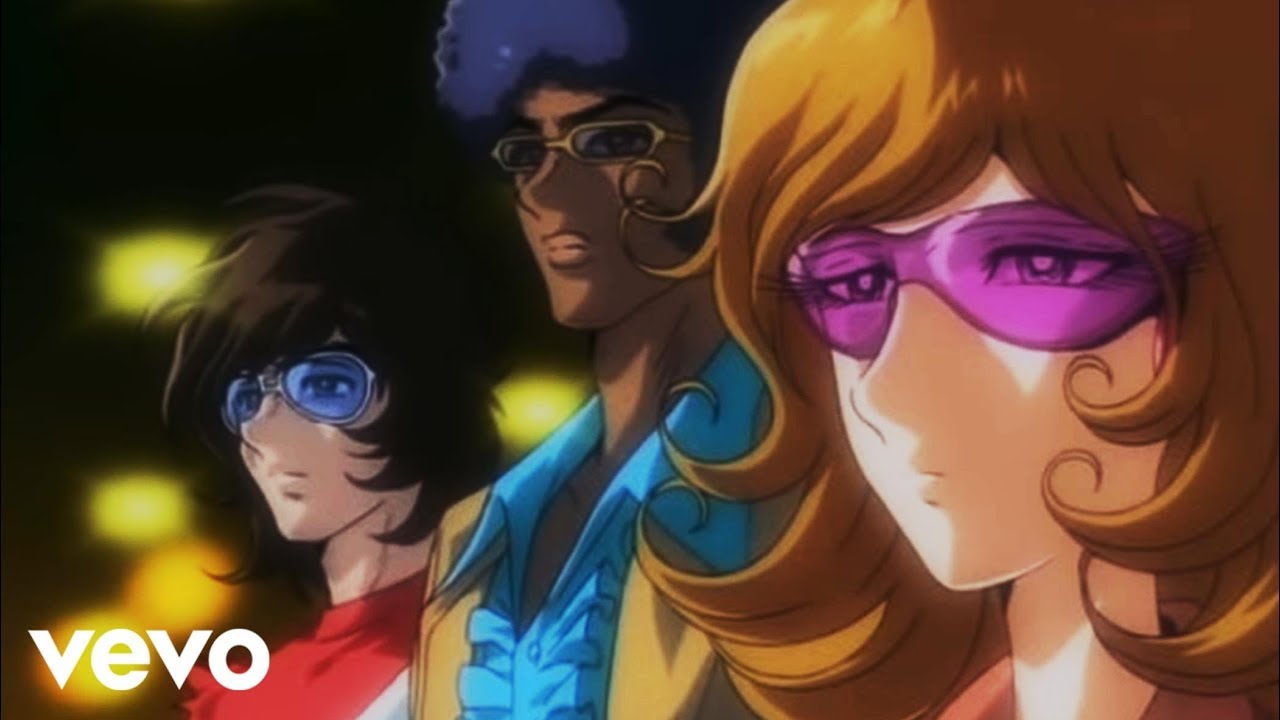
In 2001 came Discovery, a warmer, giddier, pop-facing record built on soft-rock and disco samples. One More Time, featuring the late house vocalist Romanthony, along with Digital Love, Aerodynamic and Harder, Better, Faster, Stronger, turned Daft Punk into genuine pop stars. The whole album was reborn as an anime film, Interstella 5555, made with the legendary Japanese artist Leiji Matsumoto and Toei Animation, released in 2003.
Discovery also introduced the robots. As their own playful mythology told it, a studio accident on 9 September 1999, a sampler that sparked and exploded, transformed them into androids. It was fiction, of course, and a brilliant one. The helmets, engineered by the special-effects artist Tony Gardner and his company Alterian, let the music do the talking. The anonymity was both artistic and practical: they wanted the songs, not their faces, to be famous, and they could walk down any street unrecognised.
Daft Punk - Harder, Better, Faster, Stronger
Human After All, Then Vindication
The 2005 album Human After All divided fans. Recorded in just six weeks, between 13 September and 9 November 2004 at their Daft House studio in Paris, it was harsh, repetitive and stripped-down, and many critics judged it a misstep. Then came the vindication.
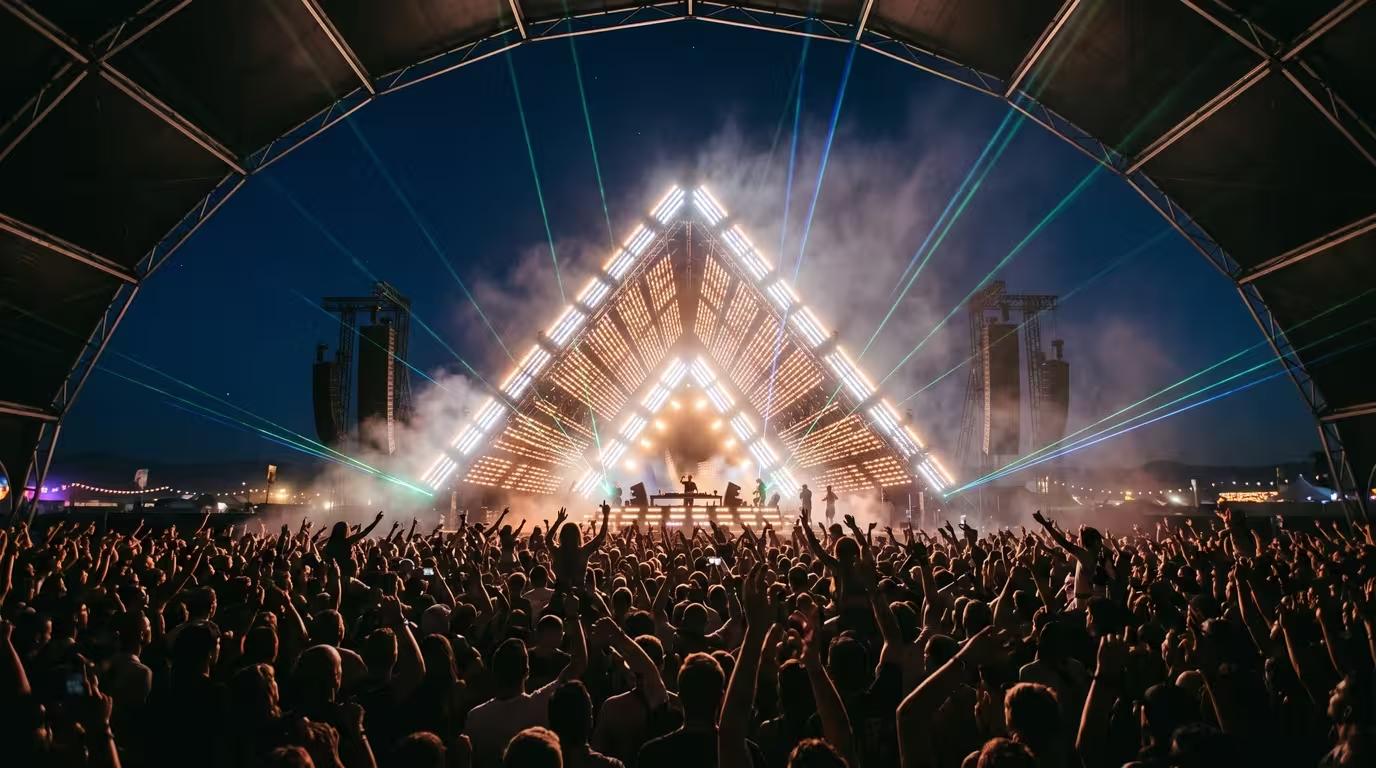
Daft Punk's 2006 return to the stage, beginning with a now-mythologised set in the Sahara tent at Coachella atop a glowing pyramid, became one of the most influential live performances in modern music. The Sahara tent was designed for 10,000 people; by the account of the duo's then-manager Pedro Winter, around 40,000 tried to get in. The promoter Goldenvoice had staked an unprecedented fee of roughly 300,000 dollars on the reclusive duo, and the gamble paid off: the son-et-lumiere spectacle is widely credited as a turning point that helped ignite the American EDM boom, demonstrating that electronic acts could headline with their own music and an arena-scale visual show. The subsequent live album, Alive 2007, won the Grammy for Best Electronic/Dance Album, and its mashups reframed Human After All's material as festival dynamite.
Tron and Random Access Memories
In 2010 Daft Punk scored Disney's Tron: Legacy, their only film score, blending an 85-piece orchestra, recorded at AIR Lyndhurst Studios in London, orchestrated by Joseph Trapanese and conducted by Gavin Greenaway, with their own electronics. Then, in 2013, came their masterpiece and farewell: Random Access Memories, released on Columbia. In a deliberate turn away from sampling, they recorded with live session legends and heroes, among them Nile Rodgers, Giorgio Moroder, Pharrell Williams, Paul Williams, Todd Edwards, Panda Bear and Julian Casablancas.
The lead single, Get Lucky, with Pharrell and Nile Rodgers, was a global smash: it peaked at number two on the US Billboard Hot 100 and became the UK's second best-selling single of 2013, crossing one million UK sales on its 69th day on release, per the Official Charts Company. At the 56th Grammy Awards in January 2014, Random Access Memories won Album of the Year, Best Dance/Electronica Album and Best Engineered Album, while Get Lucky took Record of the Year and Best Pop Duo/Group Performance, a five-Grammy night for a dance act and proof that electronic music could win the industry's top prize. When they took Album of the Year, the robots simply hugged; the collaborator Paul Williams spoke for them, recalling that two robots had called and asked him to make an album.
The Craft: Making Machines Sound Human
What made Daft Punk special was a philosophy as much as a toolkit. Their early records were built on the art of the filtered disco loop: One More Time sampled Eddie Johns' More Spell on You, and Harder, Better, Faster, Stronger was built from Edwin Birdsong's 1979 funk cut Cola Bottle Baby. They layered vocoders and talk boxes to make voices sound machine-authored, then obsessed over groove until the machines felt human. As Bangalter once framed the Random Access Memories sessions, the aim was to take vintage, heavy, great-sounding vocoder systems and talk boxes and try to make them sound as human as possible.
They were famous perfectionists and slow workers, and they treated each album as a complete conceptual and visual world rather than a collection of tracks. That is arguably their real lesson for producers: patience, and world-building. Their influence runs through pop production itself; Kanye West's Stronger sampled Harder, Better, Faster, Stronger, and the duo produced The Weeknd's Starboy and I Feel It Coming in 2016.
The Split and the Legacy
On 22 February 2021, Daft Punk announced their split with an eight-minute video titled Epilogue, excerpted from their 2006 film Electroma, in which one robot triggers the other's self-destruct and walks away into the desert. No press release, no explanation, just the dates 1993 to 2021.
Two years later, Thomas Bangalter offered a rare window. Promoting his 2023 orchestral ballet score Mythologies, performed by the Orchestre National Bordeaux Aquitaine with no electronic instruments, he told the BBC that the duo were always on the side of humanity and not on the side of technology, adding that the last thing he would want to be, in the world of 2023, is a robot, citing his unease about artificial intelligence. Anniversary reissues have kept the catalogue alive, including a Random Access Memories 10th Anniversary Edition in 2023.
Daft Punk's fingerprints are everywhere: on the EDM generation and its light-show spectacle, on how producers think about sampling, texture and warmth, and on the very idea that anonymity and world-building can be more powerful than celebrity. The robots powered down, but they still loom over everything that plugs in.
Key takeaways
• Daft Punk were Thomas Bangalter and Guy-Manuel de Homem-Christo, formed in Paris in 1993 from the ashes of the indie band Darlin'.
• Their four albums, Homework, Discovery, Human After All and Random Access Memories, trace a path from raw filter house to live-instrument pop.
• The 2006 Coachella pyramid show helped ignite the American EDM boom; Random Access Memories won Album of the Year in 2014.
• Their real legacy is world-building: treating each record as a complete aesthetic universe, and letting the music, not the faces, be the star.
