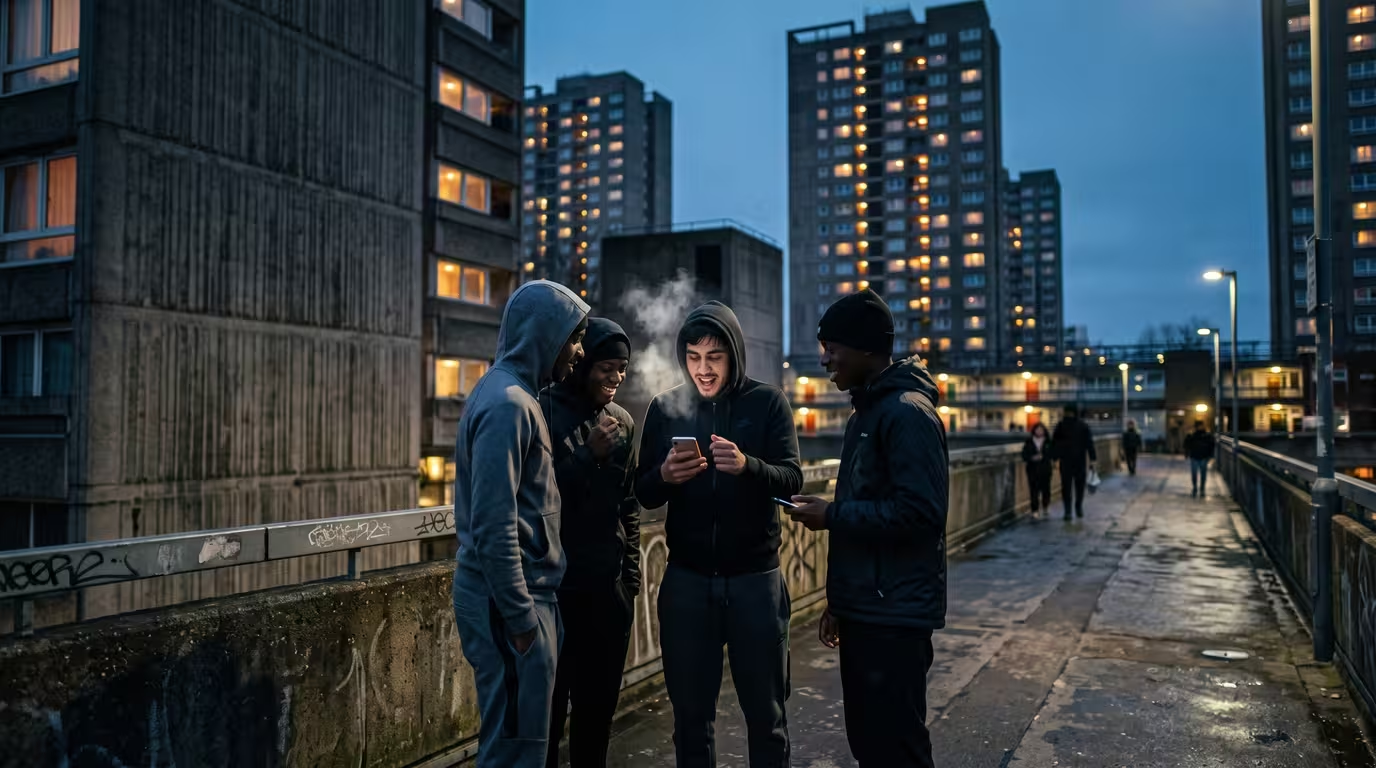
Some genres are invented in studios. Grime was invented in bedrooms, on rooftops, and over the crackle of pirate radio. Around the turn of the millennium, in the council estates of East London, a generation of teenagers took the glossy, champagne-soaked sound of UK garage, stripped out the warmth, sped up the aggression and put the MC front and centre. What emerged was darker, colder and unmistakably their own, a fiercely British answer to hip-hop that would eventually reach the Mercury Prize, the top of the charts and the Pyramid Stage at Glastonbury.
Blog
How Grime Grew From Garage
The story of East London's MC-driven mutation of UK garage, and how it became one of Britain's defining sounds.
From Champagne Garage to Cold Concrete
By the late 1990s, UK garage was a chart force, fusing soulful, R&B-flavoured vocals with skippy two-step rhythms and a glamorous, dressed-up club culture. But underneath the commercial sheen, a darker garage sound was forming, more instrumental, less vocal, with space for MCs to chat rapidly over the top. As the polished side of garage faded, the rawer end took over, led by crews and MCs rather than singers.
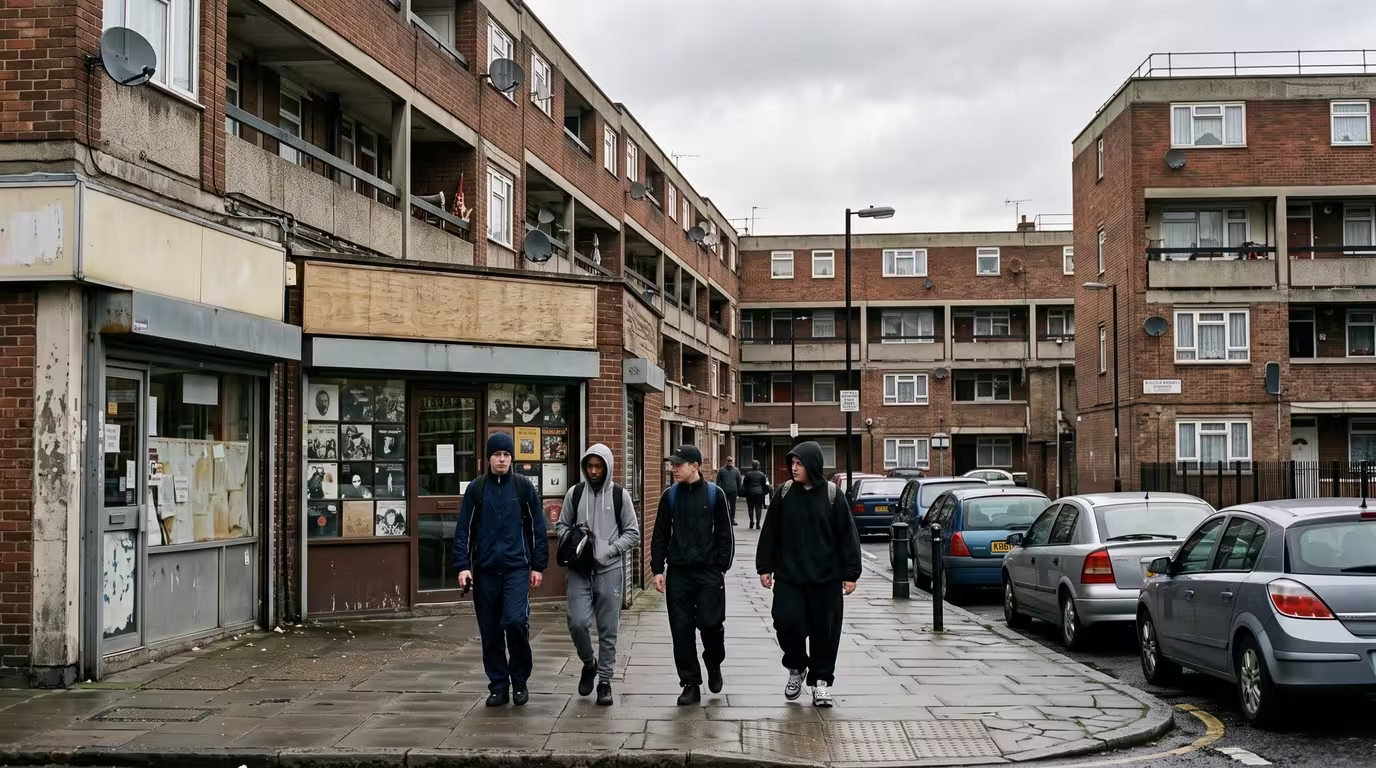
This was a working-class, multicultural East London story, rooted in boroughs like Tower Hamlets and Newham, in Bow and the wider East End. The London Museum calls East London the birthplace of grime, music made on council estates, in youth clubs and on street corners by young people narrating their own lives. Where garage sold escapism and aspiration, grime captured the cold, angry, restless energy of the streets it came from. It drew on UK garage and jungle and drum and bass, on the sound-system and MC traditions of dancehall and ragga, and on the bravado of US hip-hop, yet it sounded like none of them. As the standard reference entry notes, grime is generally considered distinct from hip-hop precisely because its roots lie in UK garage and jungle.
The Sound: 140 BPM and Ice-Cold
Sonically, grime has a signature you can feel in your chest. It tends to sit around 140 beats per minute, built from dark, sparse, angular electronic instrumentals: synth stabs, square-wave basslines, and syncopated, broken beats with an aggressive, jagged edge. The pioneer who did most to define this was Wiley (Richard Kylea Cowie), the Bow MC and producer often called the godfather of grime. He described his early style as eskibeat, or eski, a cold sound for a cold mood. His instrumental Eskimo, produced around the Christmas of 1999 or 2000 and released on white-label vinyl in July 2002, is widely cited as a landmark and an archetype for the whole style.
Early on, the music had several competing names before grime stuck: sublow, eskibeat, 8-bar, after the eight-bar verse patterns, even grimy garage. In 2004, Wiley released the single Wot Do U Call It?, a track literally interrogating what the new sound should be named. The term grime is generally thought to have come from journalists describing the music's grimy, sub-heavy texture.
Just as important as the beat is the MC. Grime is built around bars: rapid, rhythmic, distinctly London flows inflected with Cockney and Jamaican patois, delivered over instrumental riddims in 8-bar and 16-bar structures, and sharpened by the scene's culture of clashing. This is music designed for one MC, then another, passing the mic.
Built on Cheap Tech and Pirate Radio
Part of what makes grime's origin story so remarkable is how little it cost. Many of the genre's earliest classics were made not in studios but on cheap or accessible technology. Producers built tracks on FruityLoops on home PCs, and an astonishing number were made on Music 2000, a PlayStation game; Skepta's first release, Pulse Eskimo, came straight off it. The producer of Lethal Bizzle's Pow! (Forward), Dexplicit, reportedly built that instrumental in under an hour using FL Studio on a PC on the floor.
The other engine was pirate radio. Stations broadcasting illegally from tower-block rooftops, Rinse FM above all, alongside Deja Vu FM, Heat FM and others, gave MCs and DJs their first platform. Rinse FM, founded in 1994 by the DJs Slimzee and Geeneus and operating as a pirate until it won a legal licence in 2010, gave first exposure to the likes of Dizzee Rascal and Wiley. Crucially, Rinse set itself apart by spotlighting MCs over DJs, and grime was effectively born in the very flats it broadcast from. The scene was pure DIY: white-label vinyl, dubplates, mixtapes, raves and clashes, plus DVD series like Lord of the Mics and Risky Roadz, and the record shop Rhythm Division on Roman Road as a community hub.
It was crew culture, too. Wiley first tasted success in the UK garage crew Pay As U Go Cartel, whose Champagne Dance reached number 13 in April 2002, the group's only charting single, before he formed Roll Deep, an ever-shifting collective that at various points included Dizzee Rascal, Tinchy Stryder, Skepta and JME. Other foundational crews, among them More Fire Crew, N.A.S.T.Y. Crew and Ruff Sqwad, incubated a remarkable amount of talent.
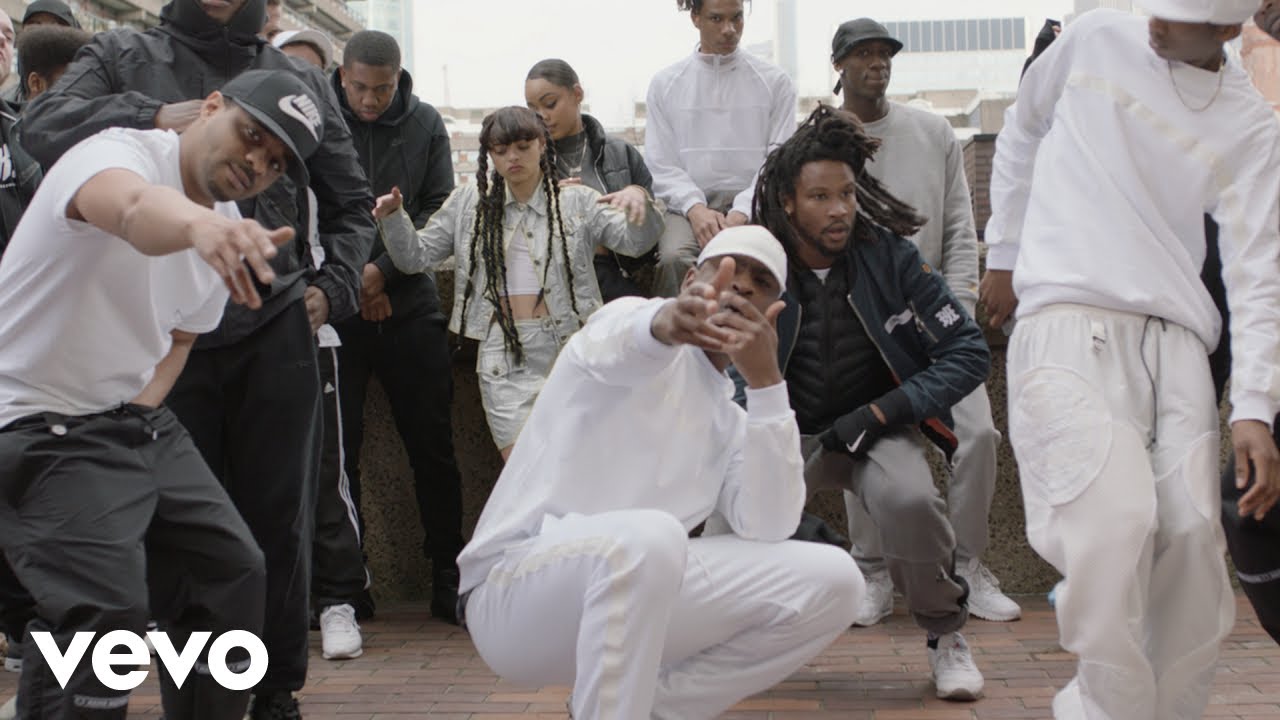
Skepta - Shutdown
Pioneers, Classics and the Breakthrough
If one record carried grime overground, it was Dizzee Rascal's debut. Born Dylan Mills and mentored by Wiley in Roll Deep, Dizzee self-produced Boy in da Corner, released on XL Recordings on 21 July 2003. Featuring the single I Luv U, it won the 2003 Mercury Prize; Dizzee, at 19, was the youngest winner to that point and only the second rapper to take it, after Ms. Dynamite the year before, beating the likes of Coldplay and Radiohead. It was the genre's breakthrough moment, proof that a teenager from Bow with a microphone could change British music.
Around him a first wave surged. Lethal Bizzle's posse cut Pow! (Forward), featuring ten other East London MCs including D Double E, Flowdan, Fumin and Jamakabi, charted at number 11 on 26 December 2004 despite being banned from many clubs and stations for the chaos it caused, an anthem so combustible that DJ booths carried signs announcing that all Lethal Bizzle tracks were banned from the venue, instrumentals included. Kano, Ghetts, D Double E, JME, Skepta and Tinchy Stryder built reputations through radio sets, clashes and white labels. In 2005, the brothers Skepta (Joseph Adenuga) and JME founded the independent label and collective Boy Better Know, which became a blueprint for grime's self-sufficient, do-it-yourself business model.
The Dip, and the Resurgence
By the late 2000s, grime hit a wall. Labels, radio and media struggled to know what to do with it, and the rise of dubstep and UK funky pushed it from the spotlight. Live events were squeezed by restrictive policing, most notoriously the Metropolitan Police's Form 696 risk-assessment form, while DJ Slimzee of Rinse FM was famously handed an ASBO banning him from rooftops. Many MCs chased radio play by pivoting to electro-pop and commercial sounds; Tinchy Stryder, Chipmunk and Tinie Tempah scored major crossover hits, and even Dizzee and Wiley landed pop number ones. Purists grumbled about grime being watered down.
Then it came roaring back, and on its own terms. The spark is widely credited to Skepta's 2014 single That's Not Me, whose video, he said when accepting a MOBO for it, cost him 80 pounds, championing a back-to-basics, independent ethos. His 2016 album Konnichiwa, released on Boy Better Know, won the 2016 Mercury Prize, beating David Bowie's Blackstar, Radiohead's A Moon Shaped Pool and The 1975; he was the first grime artist to win since Dizzee in 2003, telling the crowd there was no record label behind them, that they had just travelled the world and done it for themselves. Stormzy carried it further: after his viral Shut Up freestyle, recorded over Ruff Sqwad's Functions on the Low instrumental, his 2017 debut Gang Signs & Prayer became the first grime album to reach number one on the UK Albums Chart. In 2019 he became the first solo British rapper to headline Glastonbury, performing in a Union Jack stab vest designed by Banksy. The genre even had a political moment with the Grime4Corbyn campaign in 2017, when artists including JME and Stormzy backed Labour's Jeremy Corbyn.

Legacy: A Fiercely British Innovation
Grime now stands as one of the most important and influential British genres of the 21st century, a voice for Black British, working-class, East London youth that grew into a global cultural force. Its veterans are elder statesmen; Wiley, Kano, Ghetts and others are treated as foundational figures, and the genre's DIY-independent template reshaped how UK artists build careers. Its DNA runs through the wider UK rap landscape, including UK drill; as Boy Better Know's Jammer told Complex, without grime there would be no UK drill as it is today, no Afroswing and no UK rap in their current forms, even as those genres remain distinct from grime itself.
For producers, grime remains a fascinating discipline: a stripped, hard, roughly 140-BPM instrumental craft where space, tension and a single square-wave bassline can carry an entire track. That it was largely built by teenagers on game consoles and cheap software, broadcast from rooftops, only makes the achievement more striking. Grime grew out of the darker, MC-led end of UK garage, and turned a local East London mutation into one of Britain's defining sounds.
Key takeaways
• Grime emerged in early-2000s East London from the dark, MC-led end of UK garage, drawing on jungle, dancehall and hip-hop.
• Its signature is a roughly 140-BPM, dark, sparse, electronic sound built around the MC, often made on cheap tech and spread via pirate radio.
• Wiley's eskibeat helped define the sound; Dizzee Rascal's Boy in da Corner won the 2003 Mercury Prize and broke grime overground.
• After a late-2000s dip and a crossover-to-pop period, Skepta and Stormzy led a 2010s resurgence on independent terms.
• Today grime is one of Britain's most influential genres, shaping UK rap and drill while remaining distinctly its own thing.
