Every genre has an origin story, but few can be traced so cleanly to one restless figure. Grime, the jagged, 140-BPM sound that roared out of East London in the early 2000s and eventually conquered the world, has a founder who is both its architect and its most exasperating character. His name is Wiley, and the story of grime is, to a striking degree, the story of a man who built a scene and then spent two decades refusing the rewards it offered him.

Blog
Wiley and the Birth of Grime
How a restless Bow MC built a genre from icy instrumentals, then kept walking away from what he made.
The Boy From Bow
Wiley was born Richard Kylea Cowie Jr. on 19 January 1979 in Bow, East London, into a family of Trinidadian and Antiguan descent. Music was in the house from the start: his father, Richard Cowie Senior, was a working reggae musician in the 1980s who put his son behind a drum kit and played him early hip-hop like the Sugarhill Gang. That grounding, rhythm first and records second, shaped everything that followed.
As a teenager he moved through East London's rave, jungle and hardcore scenes, then into UK garage, absorbing the culture of pirate radio, dubplates and crews. His first taste of the charts came with the UK garage collective Pay As U Go Cartel, whose single Champagne Dance peaked at number 13 on the UK Singles Chart in April 2002, the crew's only charting hit. By the time it landed Wiley was already restless, chasing something colder and stranger than garage's champagne-and-sunshine mood.
Eskibeat: Inventing a Sound
The something colder became eskibeat. Around the turn of the millennium Wiley began building instrumentals that stripped garage down to a skeleton: sparse, synthetic square-wave basslines, sci-fi bleeps, and drums that hit like ice cracking. He called it eski, and the tracks carried the theme in their names, from Ice Rink and Igloo to Snowman, Avalanche, Colder and Morgue.
The keystone was Eskimo, produced around Christmas 1999 or 2000 and released on 12-inch white label in July 2002. It is widely regarded as one of the earliest and most influential grime beats ever made, a game-changer assembled from a few minimal drum hits, artificial synth stabs and what sounded like a hollow metal pole rolling around a yard. Much of this music was made cheaply, at home, on basic software; grime's magic number of 140 BPM was, as Wiley later noted in his autobiography, simply the default tempo in the freeware studio FruityLoops.
Wiley has always been candid about where the chill came from. Sometimes, he once explained of the naming, he just felt cold-hearted, cold at that time toward his family and toward everyone. Asked to explain eskibeat to Spin in 2005, he pinned it to the world around him: the music reflects what is going on in society, he said, where everyone is angry at the world and at each other without quite knowing why.
Crucially, he pressed these riddims as instrumentals and let other MCs spit over them. They became free tools, building blocks that an entire first generation of grime artists used to make their names.

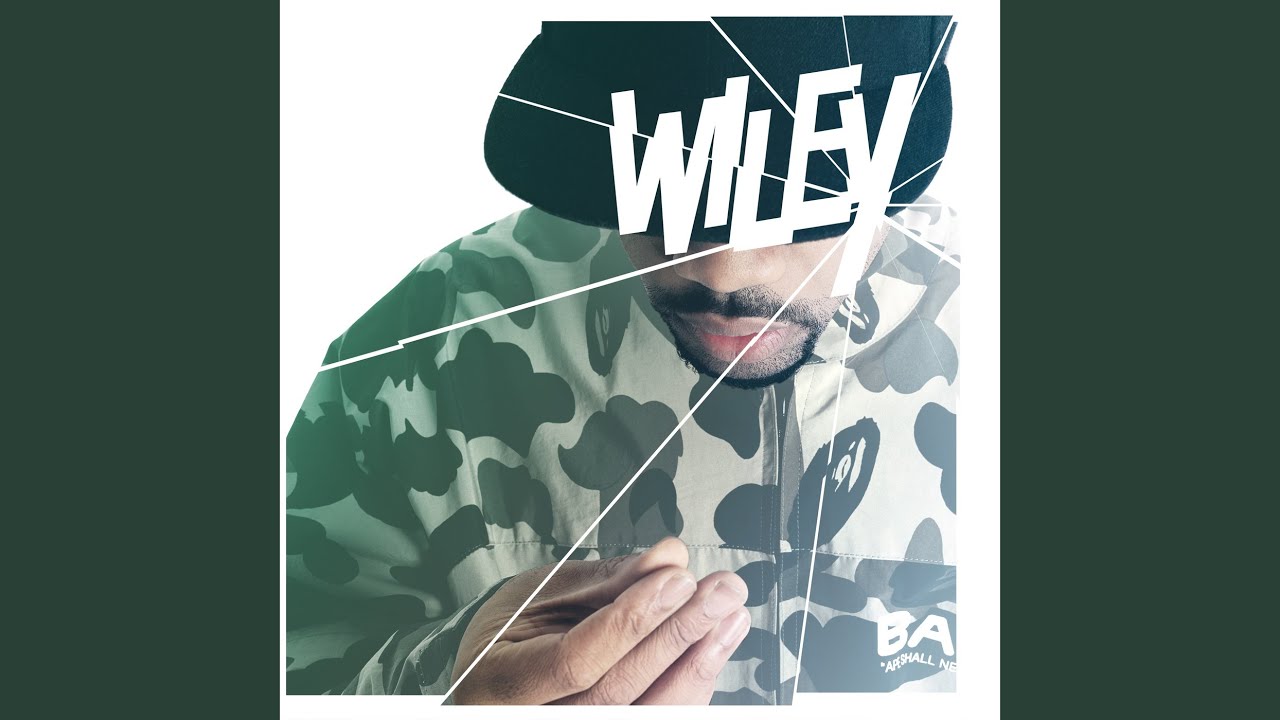
Wiley - Wot Do U Call It?
Roll Deep and the Talent Factory
If eskibeat was the sound, Roll Deep was the machine. Wiley founded the crew in 2001, shortly before Pay As U Go dissolved, and it became one of the most consequential incubators in British music. The roster changed constantly, at its peak swelling toward nearly twenty members, but the alumni list reads like a grime hall of fame: Dizzee Rascal, Tinchy Stryder, Skepta, JME, Jammer, Trim, Flowdan, Scratchy, DJ Target and the producer Danny Weed all passed through.
Wiley ran it like a foreman and a mentor. He held court on the pirate stations Rinse FM and Deja Vu FM, where MCs got the uncensored hours of airtime they needed to sharpen their bars. In 2002 he founded Eskimo Dance, the chaotic live rave that became grime's defining club night. He sold his own white labels to shops and out of his car. He was, by every account, a compulsive worker, a man who treated productivity itself as a strategy.
The Records
In 2004 Wiley released his debut single Wot Do U Call It?, a vocal version of his Igloo riddim that argued, half-seriously, about what to even name this music. It reached number 31 on the UK chart. His debut album, Treddin' on Thin Ice, followed on XL Recordings in April 2004, earning strong reviews as a critical landmark even as it sold modestly.
Around this period came the rupture that would shadow him for two decades: his falling-out with Dizzee Rascal, his former protege. The estrangement is usually traced to a violent incident in Ayia Napa, Cyprus, in the summer of 2003, during which Dizzee, then a teenager, was hospitalised with multiple stab wounds; the two barely spoke for two decades, reconciling only in October 2023 when Dizzee brought Wiley onstage at a show in Dubai. Dizzee's solo debut went on to win the Mercury Prize, and the pair became grime's most famous cold war.
Wiley's own commercial phase arrived later and, characteristically, on his own terms. Wearing My Rolex reached number two in 2008; Never Be Your Woman, with Emeli Sande, hit number eight in 2010; and Heatwave, featuring Ms D, gave him his first solo UK number one in 2012. He would later disown some of that pop material as too commercial. Then, in 2017, came Godfather, finally embracing the nickname he had spent years rejecting. Released on his own CTA imprint, it was hailed as a return to form and became his highest-charting album at number nine.
The Restlessness
The through-line of Wiley's career is a mercurial refusal to be packaged. He has walked away from record deals, feuded publicly and given music away for free. In July 2010, after sacking his manager John Woolf during a label dispute, he simply dumped eleven zip files of unreleased material, over 200 tracks, onto social media. In 2013, booked to play Glastonbury, he arrived, complained bitterly about the fee and the mud, dismissed the festival and its farm in blunt terms, and left without performing.
Read one way, it is self-sabotage. Read another, it is a genuine artist's allergy to being managed. Both readings are true, and both help explain why grime's founding father spent so much of his career adjacent to, rather than atop, the success he engineered for others.
The Controversy
That complicated story took a serious and damaging turn in July 2020. On 24 July, Wiley posted a series of antisemitic messages and videos on social media that were widely and rightly condemned. He was banned from the major platforms; his manager cut ties; and the Metropolitan Police investigated, though the case was closed on jurisdictional grounds because he was abroad at the time. He apologised to Sky News for generalising but did not fully retract the comments, and further antisemitic posts followed in 2021.
The consequences reached the establishment that had honoured him. Wiley had been appointed MBE in the 2018 New Year Honours, his appointment formally dated 30 December 2017, for services to music. On 23 February 2024, following a years-long campaign, the Honours Forfeiture Committee stripped him of the honour for bringing the honours system into disrepute. The episode is an unavoidable part of any honest account of him: stated plainly, it neither erases the music nor excuses the conduct.
The Legacy
Set the ledger side by side and the scale of the achievement is still enormous. Wiley effectively wrote grime's sonic vocabulary, the icy, minimal, 140-BPM template that everyone after him either used or answered. He built the infrastructure, too: the crew, the rave, the radio sets, the white labels. And he gave away the tools, mentoring a generation that includes Dizzee Rascal, Skepta, JME, Tinchy Stryder and Chip. When grime went global a decade later, it stood on foundations he had laid in a Bow bedroom.
There is a lesson buried in his method that still speaks to producers: making instrumentals as open tools for other artists to build on, and treating relentless output as a strategy, turned one person's beats into a whole scene's launchpad. It is a genuinely interesting model, even if the man who invented it could never quite decide whether he wanted the credit.
Key takeaways
• Wiley, born Richard Kylea Cowie Jr. in Bow in 1979, is the producer and MC whose eskibeat instrumentals gave grime its foundational sound.
• His Eskimo riddim and its icy sequels, made cheaply at 140 BPM, became free tools that launched a generation of MCs.
• Through Roll Deep, Eskimo Dance and pirate radio, he built the scene's infrastructure and mentored Dizzee Rascal, Skepta, JME and more.
• His hits ran from Wot Do U Call It? to the number one Heatwave and the acclaimed 2017 album Godfather.
• His 2020 antisemitic posts led to platform bans, a police investigation and, in 2024, the loss of his MBE, a serious stain on an outsized legacy.
