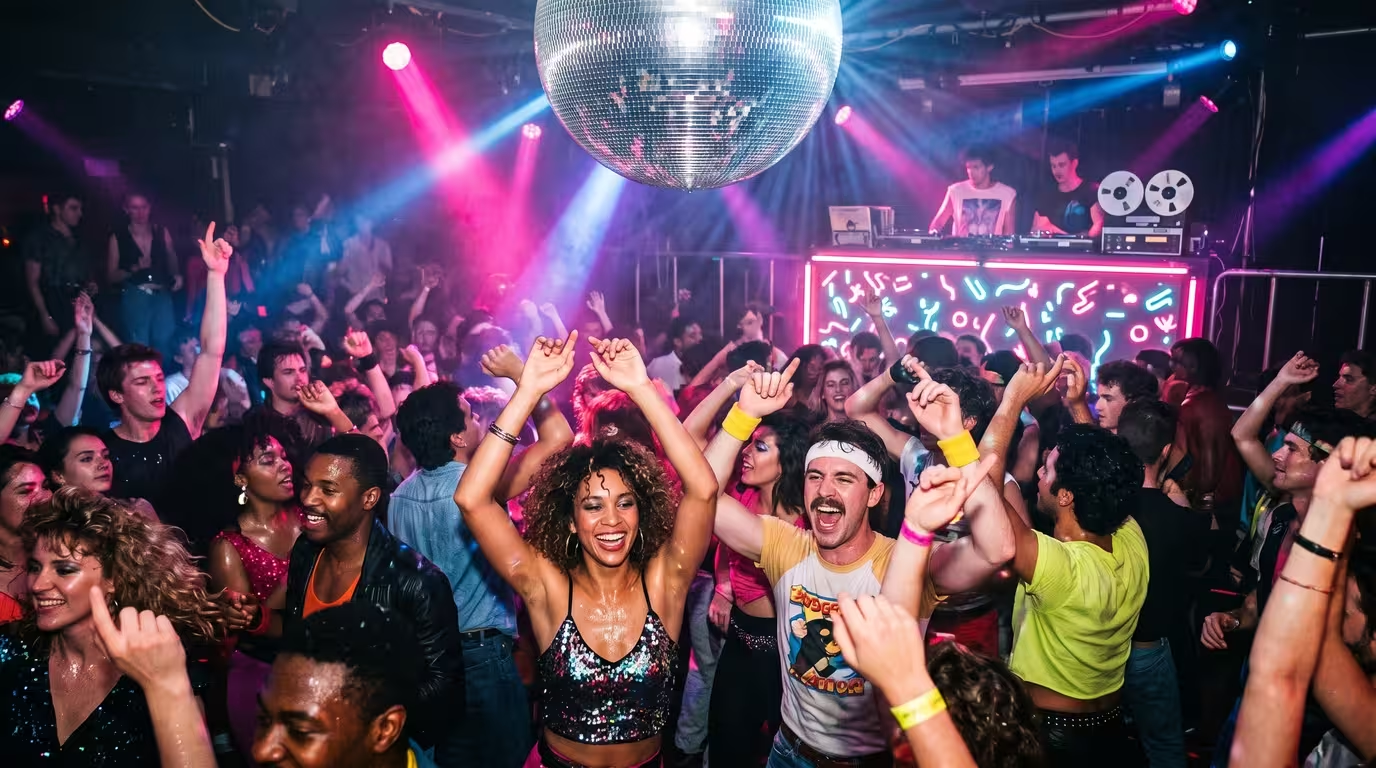
There is a particular sound that turns a dark room into a chapel of joy: a kick drum hammering four to the floor, hissing offbeat hi-hats, and a synthesizer bass that leaps up an octave and slams back down, over and over, faster than your pulse should allow. That is hi-NRG, the fast, electronic, unapologetically camp strain of disco that gay clubs built, loved and carried through their darkest decade. It is one of dance music's most joyful inventions and one of its most under-credited.
Blog
Hi-NRG and the Sound of the Clubs
How the fast, synth-driven disco of gay dancefloors rewired pop, and never stopped pulsing.
What Hi-NRG Actually Is
Hi-NRG, pronounced high energy, is a genre of uptempo disco and electronic dance music that emerged in the late 1970s and peaked in the 1980s. As the reference books define it, it is built from a fast tempo, staccato hi-hats over a four-on-the-floor kick, reverberated and intense vocals and, above all, pulsating, sequenced octave basslines. The tempo generally runs from 120 to 140 BPM and usually lands around 127, faster and harder than the orchestral disco it grew from.
The signature is that bassline. Where classic disco leaned on live bass guitar and strings, hi-NRG handed the groove to a synthesizer and a sequencer: a relentless, machine-tight pattern alternating a resonant note with a dampened one, jumping octaves to drive the beat forward. The producer and DJ Ian Levine, one of the sound's architects, once described hi-NRG simply as melodic, straightforward dance music that is not too funky. Add soaring female or falsetto vocals, big melodramatic hooks and key changes engineered for maximum euphoria, and you have music with one purpose: forward propulsion.
From Disco to the Machine
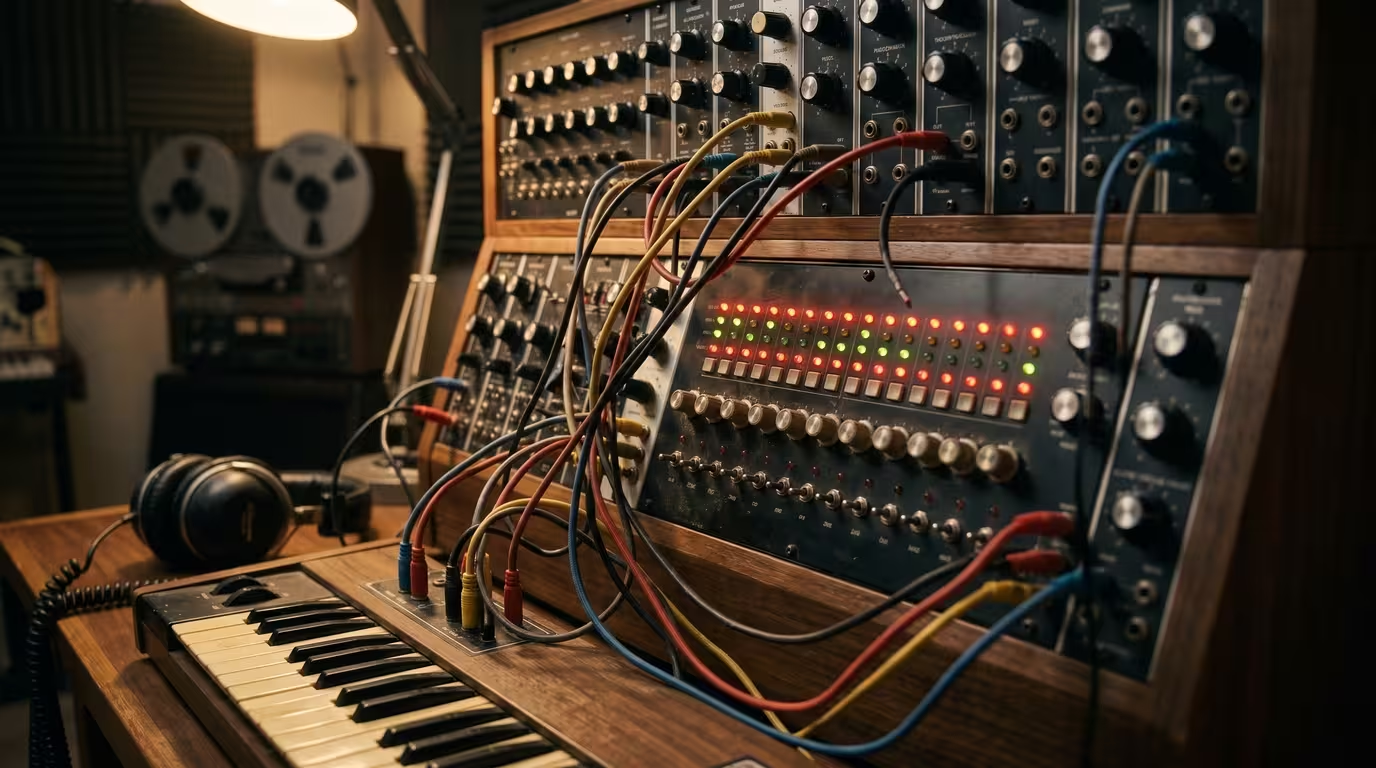
Every history of hi-NRG runs back through one record. In 1977, Giorgio Moroder and Pete Bellotte closed Donna Summer's album I Remember Yesterday with I Feel Love, a track meant to sound like the future. Instead of an orchestra, they used a Moog modular synthesizer borrowed from the classical composer Eberhard Schoener, with Schoener's assistant Robby Wedel showing them how to lock every element to a click track; the only human on the rhythm was the drummer Keith Forsey. The result was a fully electronic, pulsing bassline that had never been heard on a dancefloor before.
The most famous endorsement is real, and worth quoting carefully. As chronicled by Mixmag, Brian Eno, then working with David Bowie in Berlin, burst in after hearing it and declared that he had heard the sound of the future, that this was it and there was no need to look further, and that the single was going to change the sound of club music for the next fifteen years. He was, if anything, conservative. I Feel Love showed that dance music could be made by machines, and hi-NRG is what happened when the clubs accelerated and electrified that template.
Donna Summer - I Feel Love
The Name and the Scene
Summer herself described I Feel Love as having a high-energy vibe, and over the next few years DJs, especially in gay clubs, adopted high energy as shorthand for records above a certain BPM. The term crystallised into a genre name with Evelyn Thomas's High Energy, released in April 1984 on Record Shack and co-written and co-produced by Ian Levine and Fiachra Trench. It spent a week atop the Billboard Dance Club Songs chart in September 1984, Thomas's only number one there, reached number five in the UK, and held number one in West Germany for four weeks.
But the music was already alive on two coasts. In San Francisco, the Trocadero Transfer, opened in December 1977, ran until dawn with the DJ Bobby Viteritti driving an almost entirely electronic peak-time sound. The city's key figure was Patrick Cowley, a synthesist who had founded the Electronic Music Lab at City College. Cowley played keyboards on Sylvester's 1978 album Step II, transforming the singer's mid-tempo gospel idea You Make Me Feel (Mighty Real) into a shimmering electronic anthem, and cut a legendary sixteen-minute remix of I Feel Love. His own singles Menergy, which spent two weeks at number one on the Billboard dance chart in 1981, and Megatron Man, number two the same year, defined what locals called the San Francisco Sound; he co-founded Megatone Records in 1981.
Sylvester deserves his own line. An openly gay, gender-nonconforming Black star who came up through the Cockettes, he sang in a fierce falsetto and refused to hide any part of himself. Mighty Real, recognised by the US Library of Congress in its National Recording Registry essay, peaked at number eight on the UK Singles Chart in October 1978 and became a siren call of queer pride at a time when visibility was dangerous.
In New York, the members-only gay club The Saint opened in 1980 and set a rigorous standard for the sound. And in London, hi-NRG became a national obsession. Heaven, the city's gay superclub, opened in 1979 with Ian Levine as its first resident DJ; he stayed through almost the entire decade, modelling the club on The Saint and championing the hardest, fastest imports.
The Hit Factory Years
By the mid-1980s, hi-NRG had a roster of stars and a production line. From New York, Bobby Bobby O Orlando, one of the genre's founding producers, churned out dense, cowbell-and-sequencer classics: Passion for The Flirts, a string of singles for Divine, and the original 1984 version of the Pet Shop Boys' West End Girls on his Bobcat imprint, years before its polished 1986 remake topped the charts. In London, Ian Levine and Fiachra Trench wrote Miquel Brown's So Many Men, So Little Time (1983), which reached number two on the US dance chart, and Thomas's High Energy.
Then a young British trio took the sound overground. Stock Aitken Waterman started in hi-NRG, with Divine's You Think You're a Man, a UK number 16 in July 1984, and Hazell Dean's Whatever I Do (Wherever I Go), a UK number four, before scoring their first UK number one with Dead or Alive's You Spin Me Round (Like a Record). Released in November 1984, it took seventeen weeks to reach the top, arriving there in March 1985. From there SAW poured the hi-NRG pulse into mainstream pop, through Bananarama, Rick Astley and Kylie Minogue, via their PWL hit factory.
The Crisis, Held With Care
Hi-NRG's story cannot be told without the epidemic that tore through the community that made it. Patrick Cowley died on 12 November 1982, at the age of 32, one of the earliest notable deaths of AIDS-related illness. Sylvester died on 16 December 1988, at the age of 41; he had become one of the first public figures to speak openly about dying of AIDS, and he left his future royalties to two San Francisco charities, the AIDS Emergency Fund and Project Open Hand. Many more, among them DJs, singers, dancers and label owners, were lost. The scene did not stop; the music took on the weight of memory and defiance, and the clubs kept the beat going for the people who could no longer dance in them.
The Legacy That Keeps Pulsing
Hi-NRG's influence runs far wider than its cult reputation suggests. It ran in parallel with Italo disco, the Europe-made cousin it constantly overlapped with, and fed directly into Eurobeat, Eurodance and freestyle. Its machine-tight basslines and drum-machine grooves also point straight at house and techno; reference guides describe hi-NRG as a predecessor to both, and Chicago's founding DJs, including Ron Hardy at the Music Box, spun Italo and Euro-synth imports alongside disco as house took shape.
The music has also been lovingly rediscovered. The San Francisco label Dark Entries, working with Honey Soundsystem, has reissued Patrick Cowley's archival material, including instrumental soundtracks he recorded between the early 1970s and 1982, with proceeds going to the San Francisco AIDS Foundation. And the hi-NRG pulse keeps resurfacing in modern pop, from a wave of disco-literate records to artists who nod openly to its euphoria.
For producers, there is a craft lesson hiding in all that glitter: the octave-jumping bass and the relentless sequenced groove are a masterclass in doing a lot with a little, and they still reward close study. But the deeper point is simpler. Hi-NRG was joyful, defiant, machine-driven music born of a community that needed a place to be free, and its energy still powers the clubs.
Key takeaways
• Hi-NRG is fast electronic disco, roughly 120 to 140 BPM and often around 127, defined by a sequenced, octave-jumping synth bassline.
• It grew from Moroder's I Feel Love (1977) and was named after Evelyn Thomas's High Energy (1984).
• It was created and sustained by gay clubs in San Francisco, New York and London, with Patrick Cowley, Sylvester and Ian Levine central.
• The AIDS crisis devastated the scene; Cowley in 1982 and Sylvester in 1988 were among the losses.
• Its DNA lives on in house, Italo, Eurodance, freestyle and modern pop.
