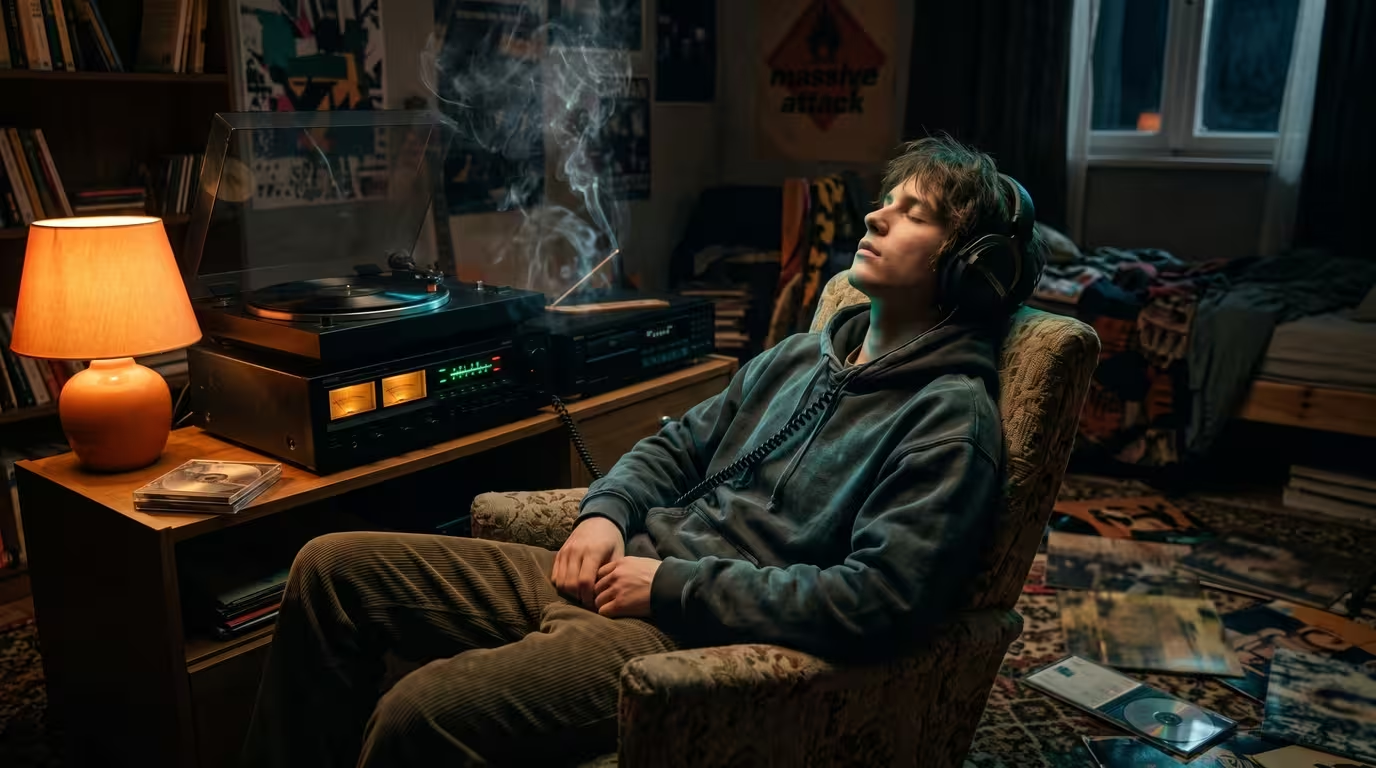
Late at night, with the clubs emptied and the comedown setting in, a different kind of electronic music was waiting at home. It used the same drum machines and samplers as the rave, but it asked you to sit down, not stand up, to put on headphones and pay attention. This is the world of intelligent dance music, the cerebral, experimental strain of electronica that grew out of dance culture and then deliberately walked away from the dancefloor. At its centre stood a small label from a battered northern English steel city: Warp Records.
Blog
IDM and the Warp Records Sound
How intelligent dance music took rave's machines off the dancefloor and into the headphones.
What Intelligent Dance Music Actually Means
Intelligent dance music, almost always shortened to IDM, is a style of electronic music that emerged in the early 1990s, built from the tools and rhythms of techno, acid house, ambient and breakbeat but reassembled for the head rather than the hips. Where club tracks chase a steady, functional pulse, IDM prizes intricate and broken beat programming, unconventional song structures, abstract sound design, and a heavy emphasis on melody, texture and mood. It was, in the words used at the time, music better suited to home listening than dancing.
The genre never had a rulebook; that was rather the point. As the standard reference entry on intelligent dance music puts it, the style was defined by idiosyncratic experimentation rather than specific genre constraints. It treated the electronic producer as an auteur, an album artist with a personal vision, rather than an anonymous supplier of twelve-inch singles. The other names that floated around in 1992 and 1993 tell you everything about the project: armchair techno, electronic listening music, intelligent techno, electronica. This was rave's machinery turned inward.
Sheffield, Bleeps and the Birth of Warp
Warp Records was founded in Sheffield, England, in 1989 by the record-shop employees Steve Beckett and Rob Mitchell together with the producer Robert Gordon. It grew out of a shop called FON and a desire to release dance music made by local Sheffield musicians. Its first record, in 1989, was Track With No Name by Gordon's group Forgemasters, pressed in a tiny run and funded through a government enterprise grant for unemployed young people.
In its first couple of years, Warp was the standard-bearer for bleep techno, a stark, sub-bass-heavy, distinctly British answer to American house and techno, full of minimal synth bleeps and rumbling low end. Early Warp singles by LFO, Nightmares on Wax, Sweet Exorcist and Tricky Disco caught the ear of the influential BBC DJ John Peel and even reached the charts; LFO's debut single LFO peaked at number 12 on the UK Singles Chart in July 1990. Crucially, Beckett conceived Warp as a northern independent in the lineage of Factory Records, splitting profits with artists and, unusually for dance music, prioritising albums and long careers over disposable club hits.

Artificial Intelligence: Music for the Armchair
The turning point came on 6 July 1992, when Warp released the compilation Artificial Intelligence. Subtitled electronic listening music from Warp, it was the first record in a series consciously designed to be heard at home. The cover said it all: an android slumped in an armchair in front of a hi-fi, with the sleeves of Kraftwerk's Autobahn and Pink Floyd's The Dark Side of the Moon lying on the floor beside it. The interior sleeve invited the listener in directly, asking whether they were sitting comfortably and explaining that the record was for long journeys, quiet nights and club-drowsy dawns, to be heard with an open mind.
Beckett later explained the strategy plainly: you could sit down and listen to it the way you would a Kraftwerk or Pink Floyd album, which is exactly why those sleeves ended up on the cover, to get it into people's heads that they were not supposed to dance to it. The tracklist was a who's-who in disguise: Aphex Twin appeared as The Dice Man, Richie Hawtin as UP!, B12 as Musicology, the Black Dog camp as I.A.O., alongside Autechre, Speedy J and the Orb's Alex Paterson. The series that followed gave several of these artists their first full-length albums and effectively drew the blueprint for the genre. As Pitchfork's Ben Cardew later observed, with IDM the starting point is easy to finger: it emerged from Artificial Intelligence.
The Most Controversial Three Letters in Electronica
Here is the irony at the heart of the story: almost nobody involved liked the name. The term intelligent dance music is traced to a US-based email mailing list, the IDM list, created in 1993. According to the music writers who have documented it, the list was started by Alan Parry with Brian Behlendorf, the system administrator of the Hyperreal.org server; its first message, sent on 1 August 1993, carried a subject line asking whether dumb people could enjoy IDM too. The list was chartered to discuss the kind of inward-looking electronic music found on Warp's Artificial Intelligence and on Rephlex, and its founders picked the word intelligent because it had already appeared on Artificial Intelligence and because it connoted something beyond just music for dancing.
The problem was obvious from the first day, baked into that very subject line. If some dance music is intelligent, what does that make the rest of it? The artists bristled. Aphex Twin's Richard D. James, in a September 1997 interview, called the label really nasty to everyone else's music, saying it amounted to declaring one kind of music intelligent and everything else stupid. Autechre's Sean Booth dismissed the whole framing as silly, adding that he was not a particularly intelligent person himself. Critics agreed it was clumsy: Simon Reynolds called it, ironically, kind of a stupid name. And yet it stuck. As one critic noted around the time of Aphex Twin's 2014 comeback, the term is widely reviled but still commonly used. Aphex Twin's own label preferred its own coinage entirely: braindance.
The Auteurs: Aphex Twin, Autechre, Boards of Canada
If IDM has a defining figure, it is Richard D. James. His debut album as Aphex Twin, Selected Ambient Works 85-92, released on 9 November 1992 through Apollo, an imprint of Belgium's R&S Records, collected tracks he had recorded to cassette as a teenager and is now routinely cited as one of the greatest electronic records ever made; in 2012, Fact named it the greatest album of the 1990s. He followed it with the drill-influenced Richard D. James Album (1996) and the single Windowlicker (1999), whose Chris Cunningham-directed video became one of the most famous in the genre. With Grant Wilson-Claridge, James also co-founded Rephlex Records in Cornwall around 1991, the label that coined braindance and ran in parallel to Warp throughout the decade.
If Aphex was IDM's pop star, Autechre were its restless theorists. The Rochdale duo of Sean Booth and Rob Brown featured on Artificial Intelligence, then released their debut LP Incunabula on Warp in 1993, followed by Amber (1994) and the harder, more mechanical Tri Repetae (1995). Over time their music grew steadily more abstract and algorithmic, pushing the form toward pure sound design.
The third pillar arrived later and softer. Boards of Canada, the Scottish brothers Michael Sandison and Marcus Eoin, released Music Has the Right to Children jointly on Warp and Skam in 1998. Built from detuned vintage synths, degraded analogue tape, found sounds and half-remembered samples, it conjured a hazy, nostalgic melancholy that has shaped countless producers since.
Aphex Twin - Windowlicker

Drill'n'bass, the Wider Family and the Warp Look
Around these figures swirled a whole ecosystem. Squarepusher, the jazz-schooled bassist Tom Jenkinson, took the breakbeat to delirious extremes on Feed Me Weird Things (1996, Rephlex) and his first Warp album Hard Normal Daddy (1997), helping pioneer the hyper-fast, chopped-up subgenre nicknamed drill'n'bass alongside Aphex and Mike Paradinas. Paradinas, recording as Mu-Ziq, founded Planet Mu in 1995, a label that would carry the experimental torch from IDM through to footwork. The Black Dog, whose members would split off as Plaid, along with B12 and others, filled out a scene that prized craft, melody and machine-music invention.
Warp also looked unlike anything else, thanks to the Sheffield design studio The Designers Republic, who created the label's globe logo, its distinctive purple packaging and many of its sleeves. Their bold, futuristic, faux-corporate aesthetic became the visual shorthand for the whole movement, proof that Warp was selling art objects, not disposable club tools.
Legacy: How the Headphones Won
IDM's influence vastly outgrew its awkward name. It helped legitimise the idea that electronic music could be serious album art, made by named artists for close, active listening. Its DNA runs through glitch, modern experimental beats and bedroom production everywhere. When Warp signed the Los Angeles producer Flying Lotus in the mid-2000s, releasing Los Angeles (2008) and later albums while he built his own Brainfeeder imprint, it was a direct line from the armchair of 1992 to the LA beat scene. The reverence for Aphex Twin, Autechre and Boards of Canada has only grown, and Warp remains one of the most respected independent labels in the world.
For producers, this is fertile ground: a tradition obsessed with rhythm, texture and sound design, where the craft itself is the reward. That is the lasting achievement of intelligent dance music. It took dance music's machines off the dancefloor, treated the producer as an artist, and proved electronic music could live just as richly in the headphones as in the club.
Key takeaways
• IDM is cerebral, experimental, home-listening electronica that grew from dance music but was made for active attention, not the dancefloor.
• Warp Records, founded in Sheffield in 1989, crystallised the sound with its 1992 compilation Artificial Intelligence, electronic listening music for the armchair.
• The term intelligent dance music came from a 1993 email list and was rejected by key artists as elitist; Aphex Twin preferred braindance.
• Aphex Twin, Autechre and Boards of Canada became the genre's defining auteurs, with Squarepusher, Mu-Ziq and others expanding it.
• IDM's legacy endures in glitch, experimental beats and labels like Brainfeeder, and in Warp's continuing status as a revered home for art-minded electronica.
