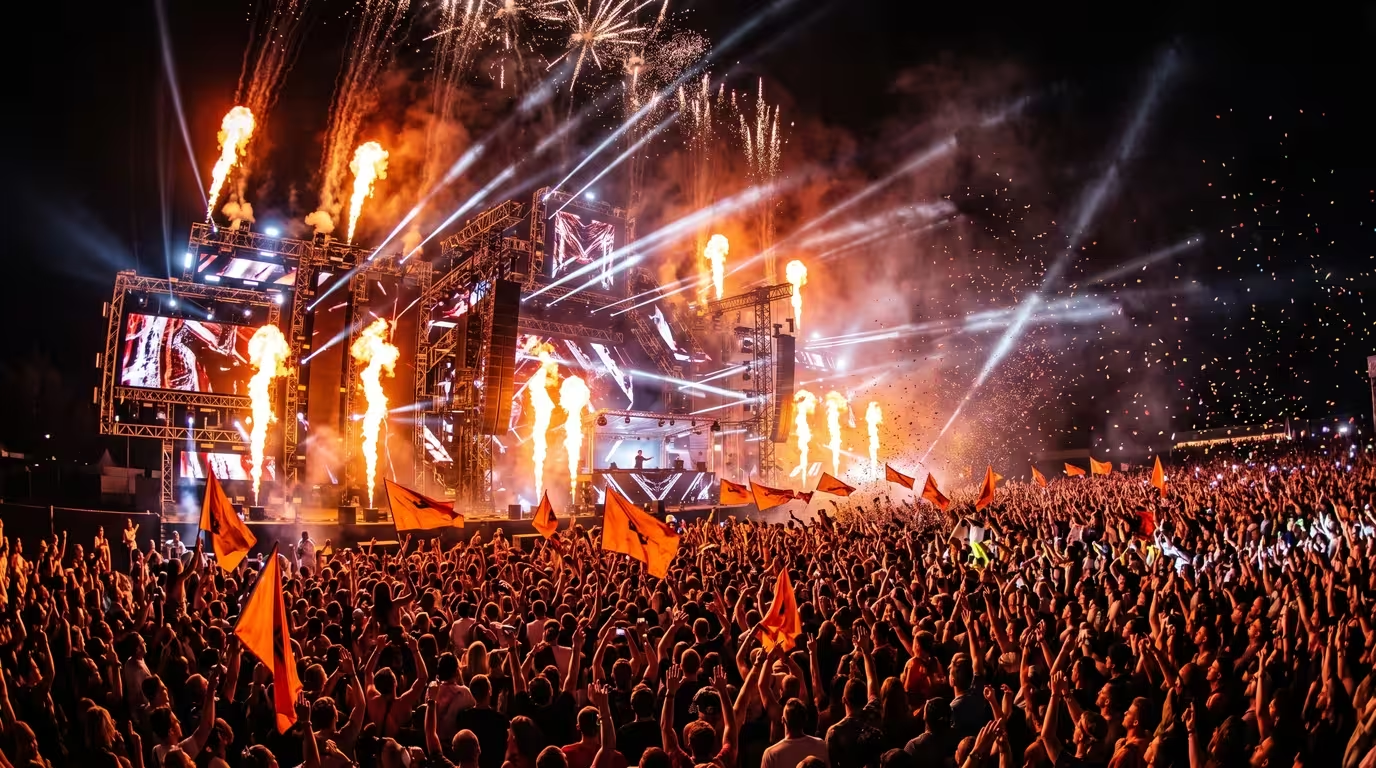
There is a moment at a hardstyle festival that explains the whole genre in about ninety seconds. The music stops dead. A single kick drum lands, distorted, enormous, more felt than heard, and tens of thousands of people answer it in unison. This is the Dutch hard-dance sound that grew out of gabber and hard trance around the turn of the millennium and went on to build one of the most spectacular and devoted festival cultures in all of dance music.
Blog
The Story of Hardstyle
How a Dutch hard-dance sound built one of the most devoted festival empires in electronic music.
What Hardstyle Actually Is
Strip hardstyle to its skeleton and you find two elements doing almost all the work: a powerful, overdriven kick drum and a reverse bass, an offbeat bass tone that sits in the gaps between the kicks. That call-and-response between kick and reverse bass is the genre's fingerprint, a groove no other style swings quite the same way. According to the genre's standard reference entry, early hardstyle was typically written around 140 BPM, while modern hardstyle sits closer to 150, and producers exploit the long, sustained tail of the kick to play actual basslines out of the drum itself.
On top of that engine sit screeching synths, pitched and chopped vocal shouts, long builds and stadium-sized drops. What makes hardstyle distinctive is the emotional split running through it. On one side is euphoric hardstyle, melodic, uplifting and almost trance-like in its big breakdowns. On the other is raw hardstyle, darker and more aggressive, closer to the brutality of its hardcore ancestors. Hardstyle lives in the tension between those two poles, somewhere between gabber's violence and trance's euphoria.
Out of Gabber and Hard Trance
To understand where hardstyle came from, you have to start with gabber. In the early 1990s, Rotterdam and Amsterdam produced a furious strain of hardcore techno, all relentless tempos, distorted kicks and roared vocals, that became, as some have described it, the Netherlands' first homegrown youth subculture, complete with shaved heads, tracksuits and the Thunderdome raves.
Around 1999 to 2002, as the hardcore hype cooled, Dutch producers began slowing the tempo, softening the kick and folding in melody and groove borrowed from hard trance and hard house. The result was something new. The exact first hardstyle track is impossible to pin down, but the people usually credited with shaping the sound are gabber and hard-dance veterans: Dov Elkabas, better known as The Prophet, alongside DJ Zany, Lady Dana, DJ Isaac, Pavo and others. The Prophet, a Dreamteam member and genuine gabber pioneer, is widely called the godfather of hardstyle, and in 2002 he founded Scantraxx, which became one of the most important hardstyle labels of all time. Fusion Records emerged in the same window. Early Italian producers played a part too, which is partly why the sound was never purely Dutch, though the Netherlands was unmistakably its capital.
How Q-dance Built an Empire
If artists made the music, one company turned it into a movement. Q-dance, founded in 1999 near Amsterdam and originally called Qlass Elite, threw what is generally credited as the first hardstyle event, Qlubtempo, in Zaandam in 2000. In 2002, after its events proved a hit, Q-dance trademarked the term hardstyle itself, on the 4th of July.
From there came the cathedrals. Qlimax, the legendary indoor spectacle, ran for 24 years from 2000 and settled into the GelreDome stadium in Arnhem from 2003, where it became famous for a yearly theme, a secret line-up and a light, laser and pyrotechnic show that turned a football stadium into another dimension. Then in 2003 came the flagship, Defqon.1, which debuted at the beach in Almere before relocating in 2011 to the grounds beside Walibi Holland in Biddinghuizen, expanding into the multi-day camping weekend it is today. It has grown into the largest harder-styles festival on earth: in 2023 it drew 250,000 visitors from 110 nationalities across four days and ranked number 17 in DJ Mag's Top 100 Festivals, with its colour-coded stages, its synchronised Power Hour, and the gigantic closing Endshow.
Defqon.1 Weekend Festival 2016 Aftermovie

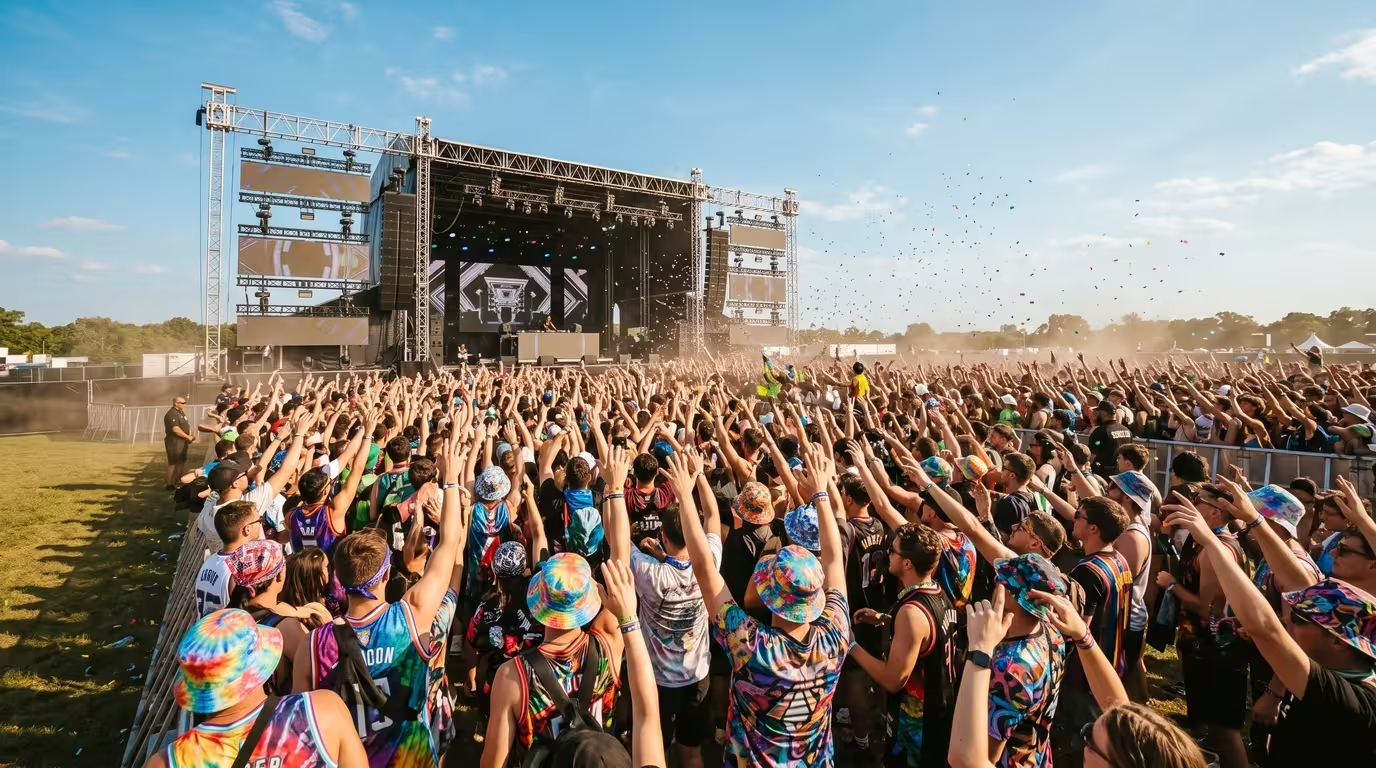
What separates these events from a normal festival is the devotion. A VICE feature on Defqon.1 described a crowd that comes from all over the world to worship this particularly aggressive, bare-knuckled form of dance music. Every edition gets its own official anthem; the crowd calls itself Warriors; the whole thing has the feel of a ritual. And the model spread, to Belgium with events like Reverze, across the wider Dutch and Belgian ecosystem of Decibel, Intents Festival and Dominator, and to Australia, which became a major hardstyle market in its own right.
The Euphoric Golden Era and the Raw Split
The mid-2000s nu-style era leaned on reverse bass and screeches, but the genre's commercial peak arrived with euphoric melodic hardstyle around 2009 to 2013, and it had a clear figurehead. Willem Rebergen, Headhunterz, discovered hardstyle at Qlimax in 2003, signed to Scantraxx, and became the biggest star the genre has produced. His melodic anthems made him a household name in the scene; he created the Qlimax 2007 anthem The Power of the Mind and the Defqon.1 2009 anthem Scrap Attack, and his 2012 track Dragonborn, inspired by the video game Skyrim, became a defining hardstyle anthem. In 2013 he launched his own label, HARD with STYLE, before crossing over toward mainstream EDM, to the dismay of some fans, and later returning to the harder styles.
He was not alone. Wildstylez (Joram Metekohy) and Noisecontrollers (Bas Oskam) joined Headhunterz on the colossal 2012 Defqon.1 anthem World of Madness. Brennan Heart (Fabian Bohn) built his own I AM HARDSTYLE brand and radio show. And the brothers Wouter and Sjoerd Janssen, better known as Showtek, started in hardstyle around 2003 with raver anthems like FTS before leaving the genre in 2012 to conquer mainstream EDM, then returning to hardstyle in 2023.
As euphoric hardstyle boomed, a counter-movement formed. Rawstyle emerged from around 2008 and took off in the early 2010s: darker, harder, melody stripped back in favour of distorted raw kicks, screeches and ominous atmospheres, pulling the genre back toward its hardcore roots. Artists like Radical Redemption, Warface, E-Force, Adaro and B-Front codified it, and the two camps, euphoric and raw, have defined the genre's internal conversation ever since.
Where Hardstyle Stands Now
The modern scene is healthy and global. Duos like Sub Zero Project, made up of Thomas Velderman and Nigel Coppen, the youngest Qlimax anthem makers in history, and the veteran D-Block & S-te-Fan headline the biggest stages and rack up tens of millions of streams; their collaboration Darkest Hour (The Clock), released in 2019, was voted the number one hardstyle track of the year in Q-dance's Top 100. Acts such as Sound Rush, Devin Wild and the frenchcore-leaning Sefa keep pushing outward, while hardstyle kicks and edits have become a recurring feature on social media and in gym playlists.
The empire has reshaped itself, though. In 2024 Q-dance staged the final edition of Qlimax, The Final Prophecy, before 27,500 fans at the GelreDome after 24 years, citing rising costs, including a proposed Dutch VAT increase from 9 to 21 percent, and creative limits. The founder Wouter Tavecchio explained the calculus simply: if the team does not creatively feel that next year will be better than this year, they stop. Even so, he said that thanks to Defqon.1, financially speaking 2024 was Q-dance's best year ever. The Australian edition of Defqon.1 ended after the 2018 event in Sydney, at which two young attendees died; the state premier at the time vowed to shut the event down, and the venue subsequently withdrew its support.
Yet the through-line holds. Hardstyle remains the Dutch hard-dance sound built on a distorted kick and a reverse bass, forever balancing euphoria against aggression, a genre that grew out of gabber and hard trance and turned itself into a spectacle and a family. For producers and DJs, it is also one of the most demanding crafts in electronic music: getting a hardstyle kick to sing while it punches is a dark art all its own. That, as much as the fireworks, is why the harder-styles community keeps coming home.
Key takeaways
• Hardstyle is a Dutch hard-dance genre built on a distorted kick and reverse bass, around 150 BPM, split between euphoric and raw camps.
• It emerged in the Netherlands roughly between 1999 and 2002 as gabber and hardcore producers slowed down and added hard-trance melody.
• The Prophet is widely called its godfather and founded the key label Scantraxx in 2002.
• Q-dance built the festival empire, from Qlubtempo to Qlimax and Defqon.1, and trademarked hardstyle in 2002.
• Headhunterz defined the euphoric golden era; rawstyle emerged as the darker counterweight from the early 2010s.
• The scene remains global and devoted today, even as Q-dance retired Qlimax in 2024 and Defqon.1 anchors the brand.
