Few sounds in electronic music announce themselves as bluntly as a gabber kick: a Roland TR-909 bass drum overdriven so hard it stops being a thud and becomes a tonal, almost melodic blast, hammering at speeds no drummer could play. That kick is the heart of gabber, the fast, distorted, deliberately confrontational hardcore sound that erupted from Rotterdam in the early 1990s. It was working-class, anti-snob and proudly ugly, and it grew into one of the most original youth subcultures Europe has produced.
Blog
Gabber and the Rotterdam Hardcore Sound
How a port city's fast, distorted kick drum became the Netherlands' loudest rave rebellion.
What Gabber Actually Is
Gabber is a style of hardcore techno that took shape in the Netherlands in the early 1990s, derived from house, techno, acid house and new beat but pushed far past all of them. The tempo sits roughly between 150 and 190-plus BPM, and the defining feature is the kick: producers fed a 909 bass drum through distortion and overdrive until it clipped into a square wave, producing that recognisable melodic, pummelling tone. Over the top came screeching hoover synths, dark minor-key stabs, pitched samples and shouted or roared vocals, often lifted from films.
The standard reference entry on gabber sums up the recipe as a relentless mix of superfast BPMs, distorted kickdrums and roared vocals. The rawness was the point. Where Amsterdam's house clubs prized melody and cool, Rotterdam wanted speed, aggression and volume, a sound for sweating rather than posing.
The Name and the City
The word gabber comes from Amsterdam Bargoens street slang, ultimately from the Hebrew chaver, meaning friend or mate, borrowed into Dutch through Yiddish. The story goes that an Amsterdam DJ dismissed the hard Rotterdam crowd as just a bunch of gabbers having fun, and the insult was worn as a badge. Paul Elstak famously had a phrase etched into the run-out groove of the first Euromasters record, declaring that being a gabber is no disgrace.
That cheekiness was bound up with a genuine rivalry. Gabber was Rotterdam's gritty, port-city answer to Amsterdam's house scene, which Rotterdammers saw as snobbish and soft. Rotterdam, flattened in the Second World War, rebuilt in concrete, a city of cranes and manual labour, liked its music hard. At the club Parkzicht, where DJ Rob had been spinning since 1989, DJs pushed tempos and distortion harder as the night wore on, and by 1992 they had arrived at gabber. As crowds swelled, parties moved to bigger spaces like the Energiehal.
Labels, Anthems and the Godfathers
The first distorted hardcore track is widely credited to Germany, not the Netherlands: We Have Arrived by Mescalinum United, an alias of Frankfurt's Marc Acardipane, co-founder of the pioneering Planet Core Productions label, released in 1990. In a lecture for the Red Bull Music Academy, Acardipane recalled that the distorted sound was partly an accident of cheap mixers with no headroom. The Dutch took that blueprint and ran.
In April 1992, Paul Elstak founded Rotterdam Records, the first Dutch label dedicated to the sound, launching with Euromasters' Amsterdam Waar Lech Dat Dan?, roughly Amsterdam, where's that then?, its sleeve showing Rotterdam's Euromast tower urinating on the capital. The same year, Rotterdam Termination Source released Poing, whose bouncing hook and overdriven 909 topped the charts in the Netherlands and Denmark and, according to the Official Charts Company, peaked at number 27 in the UK in November 1992. Up in Amsterdam, Mokum Records arrived in 1993, founded by Freddy B as a tongue-in-cheek answer to Rotterdam Records, and became home to DJs like The Prophet (Dov Elkabas) and DJ Dano. The American producer Lenny Dee's Industrial Strength Records connected the scene to New York. Other key names piled up fast: Neophyte, Buzz Fuzz, 3 Steps Ahead, the Dreamteam.
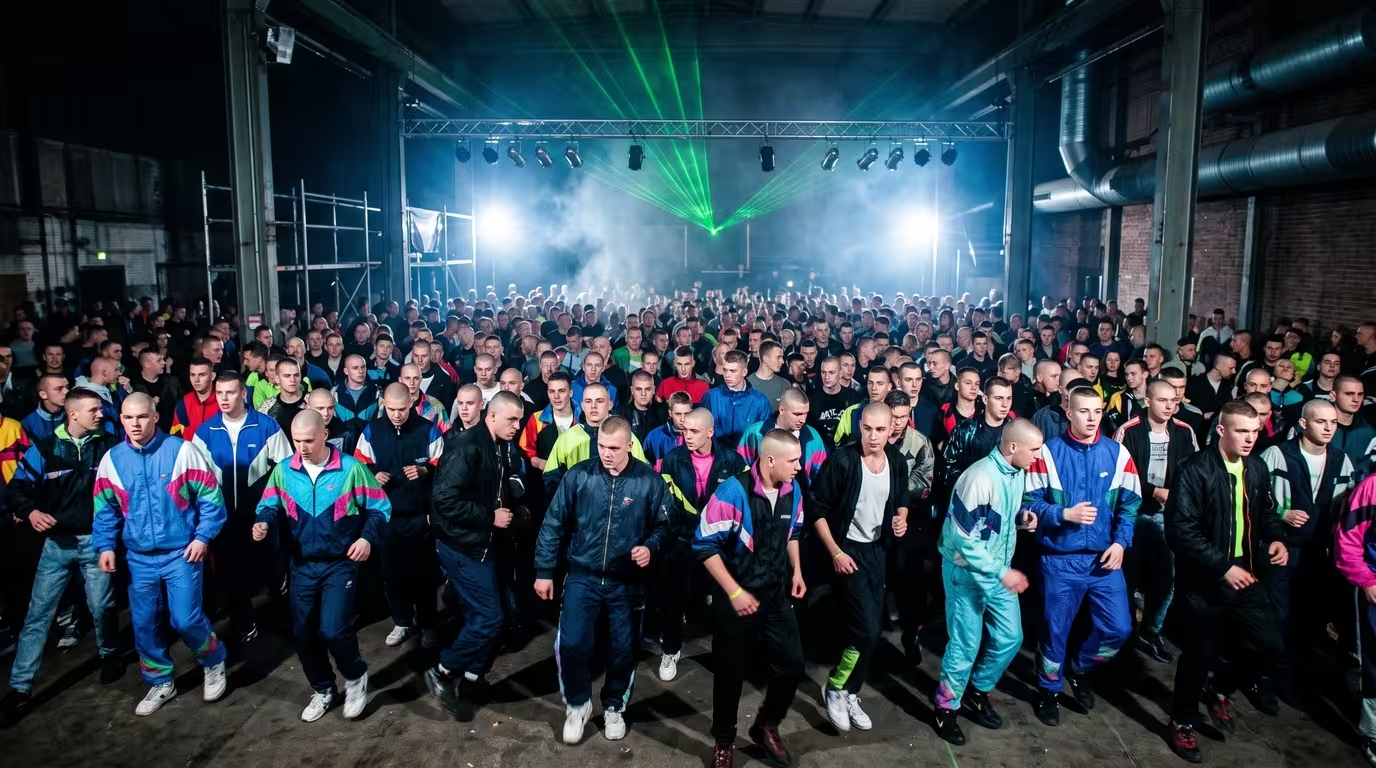
Then came the brand that defined it all. In 1992 the Dutch company ID&T launched Thunderdome, a series of mega-raves and compilation CDs fronted by a skull-faced wizard mascot and named after Mad Max. Thunderdome I, held on 3 October 1992 at the Thialf ice arena in Heerenveen, Friesland, drew over 30,000 people, and the CD series sold massively, turning gabber into a commercial juggernaut.
Thunderdome: 25 Years of Hardcore

The Subculture: Heads, Aussies and Hakken
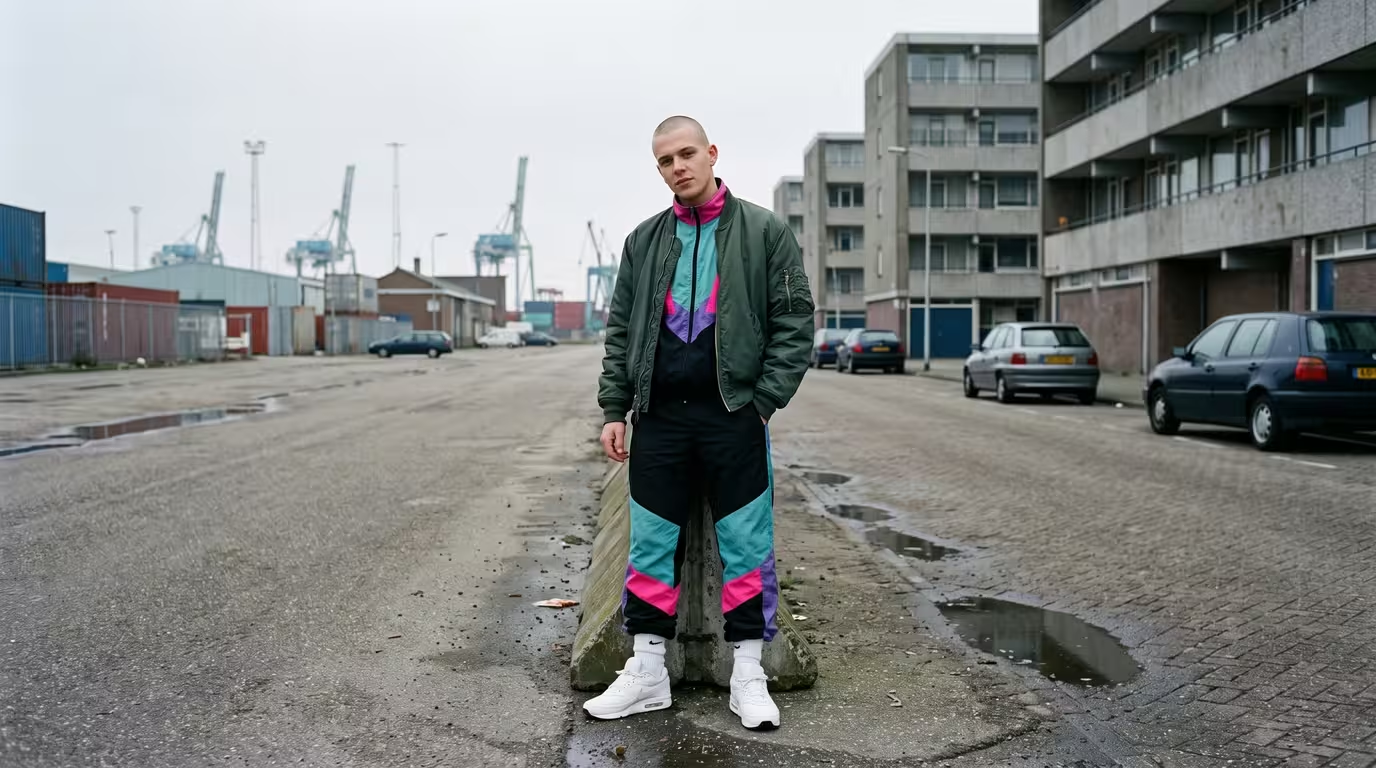
Gabber was never only music. It was a complete youth identity with its own uniform and dance. Men shaved their heads; women often shaved the sides and temples and braided the rest. The clothes were bright, branded sportswear: tracksuits from the Italian label Australian by L'Alpina, prized as Aussies, the more colourful Cavello, Nike Air Max sneakers built to survive an all-night stomp, and bomber jackets. As Dazed has noted, this hyper-modern, machine-made look mirrored the music's own artificiality.
The dance was hakken, fast, stamping footwork done to 170 to 200 BPM, its roots traced to the bouncing of Feyenoord football supporters in Rotterdam's stands. The camaraderie was the whole idea: gabbers were, by the word's very meaning, mates.
The Skinhead Confusion
The shaved-head look drew lazy and unfair comparisons to skinheads, and a small far-right fringe, plus a German neo-Nazi minority, did latch on at the edges. But the scene itself was overwhelmingly about unity and gabber friendship, and it pushed back hard. Mokum Records printed an anti-fascist, anti-racist message on its sleeves, artists released explicitly anti-racist tracks such as DJ Chosen Few's Chosen Anthem (Against Racism), and some of the scene's pioneers, including producers of colour, embodied a culture that was largely inclusive rather than political. The media stigma was real; the racism was a fringe the scene actively rejected.
Peak, Parody and Collapse
By the mid-1990s gabber was mainstream Dutch culture; a 1997 Billboard feature called the movement Holland's first homegrown youth culture. Around 1995, Paul Elstak and others swerved toward happy hardcore, a melodic, uplifting, pitched-vocal offshoot, and scored real chart hits: Elstak's Rainbow in the Sky and Luv U More both climbed high on the Dutch charts, while Technohead's I Wanna Be A Hippy sold 50,000 copies in the Netherlands and hit number one in Austria, Flanders, Germany and the Netherlands.
Success became the problem. As the scene exploded, it was commercialised, plastered across advertising, and then mocked. Parody acts like Hakkuhbar, whose Gabbertje topped the Dutch charts in 1996, turned gabbers into a national joke. As DJ Mag recounts, the scene veteran Rob Fabrie remembered that when those parody records came out, gabbers were being laughed at, and it created a lot of anger. Overexposure, hostile press and parody hollowed it out; by the turn of the millennium the original gabber wave had collapsed and the music retreated underground, rebranding simply as hardcore.
The Legacy: Hardstyle and the Harder Styles
Gabber did not die, it mutated, and seeded an entire family of harder dance styles. Out of the late-1990s Dutch hardcore scene came hardstyle: slower, early on around 140 BPM and later about 150, built on an overdriven kick and a signature off-beat reverse bass, trading some of gabber's chaos for melody and festival-sized euphoria. The event company Q-dance, founded in 1999, helped codify it, registering hardstyle as a trademark on 4 July 2002 and launching the festival Defqon.1 in June 2003 at Almere. The Prophet, a gabber original, is often called a godfather of the genre.
Meanwhile pure hardcore endured and multiplied, into frenchcore, terror, uptempo and modern industrial strains, and its institutions only grew. Thunderdome relaunched for its 25th anniversary in October 2017 with 40,000 ravers, and its 2019 edition drew a record 50,000; Masters of Hardcore and Dominator remain pillars of a Dutch harder-styles festival culture that now draws crowds from dozens of countries. Gabber itself has had repeated revivals, championed by a new generation of DJs and even feted by fashion designers, and it now sits on the Netherlands' list of Intangible Cultural Heritage.
It is, in the end, one of the most extreme corners of the producer's craft, a genre where the entire emotional weight rests on how a single kick drum is distorted, tuned and driven. From a Rotterdam club to festival mainstages worldwide, gabber proved that the hardest, fastest, most uncompromising idea can outlast every joke made at its expense.
Key takeaways
• Gabber is fast, roughly 150 to 190-plus BPM, distorted hardcore techno built around an overdriven 909 kick, born in Rotterdam in the early 1990s.
• The name comes from Yiddish and Hebrew via Amsterdam slang, meaning friend, fitting for a scene built on working-class camaraderie.
• Key pillars: Rotterdam Records and Paul Elstak, Mokum Records, ID&T's Thunderdome, and anthems like Poing.
• It was a full subculture of shaved heads, Aussie tracksuits, Air Max, bomber jackets and the hakken dance.
• After a mid-90s peak it collapsed under commercialisation and parody, then seeded hardstyle and the modern harder-styles scene.
