Techno was born in Detroit as machine music made by Black kids dreaming of the future. By the end of the 1980s, as Europe repackaged that sound and sold it back to the world, one collective decided the music needed a defence. Underground Resistance answered in balaclavas, with sirens, strings and manifestos etched into vinyl, a label that behaved like a paramilitary cell and insisted that dance music could mean something. This is the story of how they kept techno radical.
Blog
Underground Resistance and Techno's Rebellion
How a masked Detroit collective turned techno into a weapon and refused to let the music forget where it came from.
A Label for a Movement
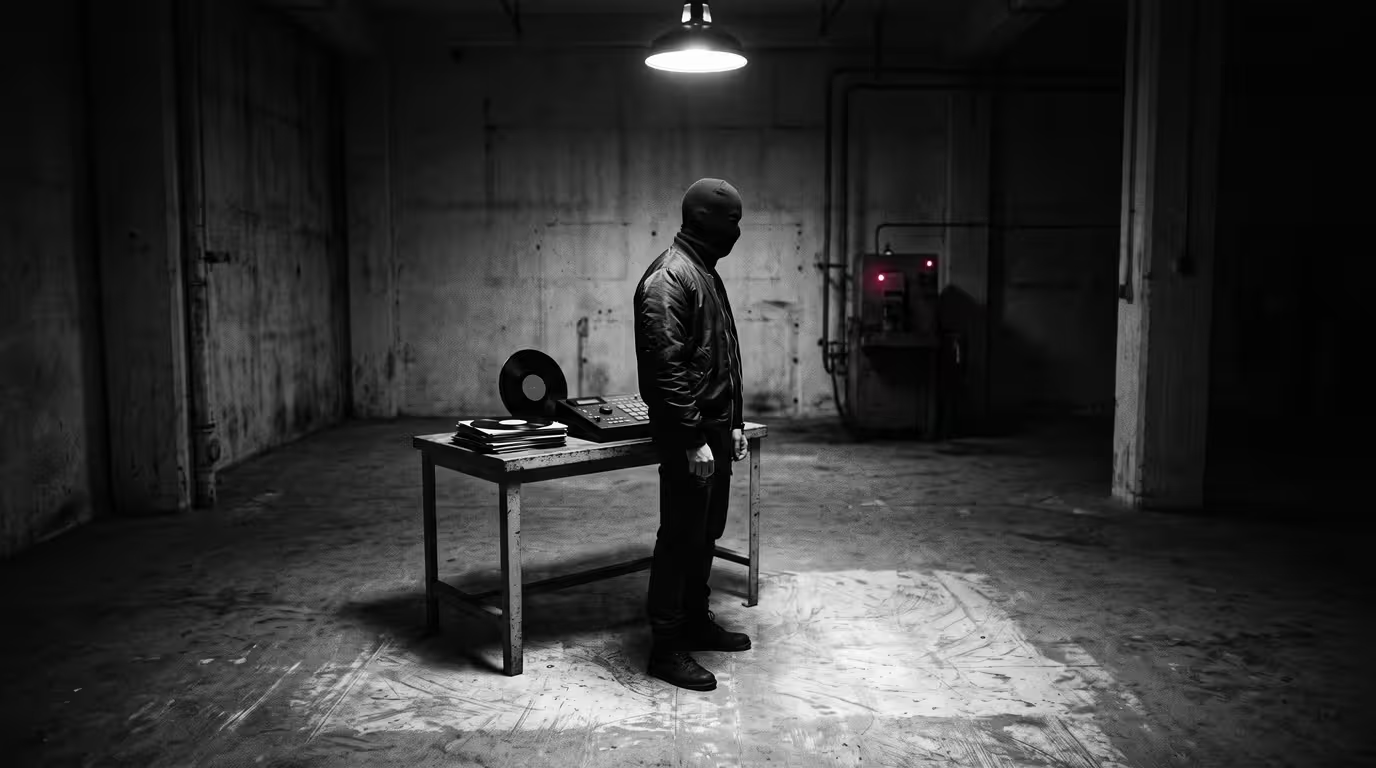
Underground Resistance was founded in Detroit in 1989 by Mad Mike Banks and Jeff Mills, and joined shortly after by Robert Hood, who served as the collective's self-styled minister of information. From the start, UR was less a record label than a cause. Its members appeared masked, in ski masks, bandanas and black combat gear, refused most interviews and photographs, and buried their identities behind a plain UR logo and a rotating cast of aliases. The anonymity was the argument: a rejection of the superstar-DJ celebrity machine and, as the collective framed it, a way to make the music the message rather than the maker.
Their manifesto laid it out plainly. Underground Resistance, it declared, is a label for a movement, a movement that wants change by sonic revolution. It urged listeners to help combat the mediocre audio and visual programming being fed to the inhabitants of Earth, and signed off with a call to wreak havoc on the programmers. This was techno reframed as insurgency: the programmed masses versus the free underground.
The Detroit That Made Them
To understand UR you have to understand the city. Detroit had been the engine of American industry, but the collapse and outsourcing of the auto industry, decades of white flight and disinvestment hollowed out a majority-Black city. The mechanical pulse of techno, its assembly-line rhythms and cold metallic textures, was the sound of that landscape reimagined, not mourned.
The first wave came from the Belleville Three: Juan Atkins, Derrick May and Kevin Saunderson, three friends who fused Kraftwerk and funk into something new and, crucially, built their own labels in Metroplex, Transmat and KMS. UR represented a harder, more overtly political second wave. Banks himself was a former studio musician who had played bass and guitar in Parliament and Funkadelic circles and released records with the group Members of the House; Mills was the lightning-fingered radio DJ known as the Wizard. They took the DIY blueprint of the pioneers and armoured it with ideology, drawing on Black political traditions and the cosmic imagination that would come to be called Afrofuturism. Detroit's legendary radio selector The Electrifying Mojo, who spun Prince, the B-52s and Kraftwerk in one uncategorisable stream, was a shared origin point for the whole scene.
The Sound: Sirens, Strings and Machine Funk
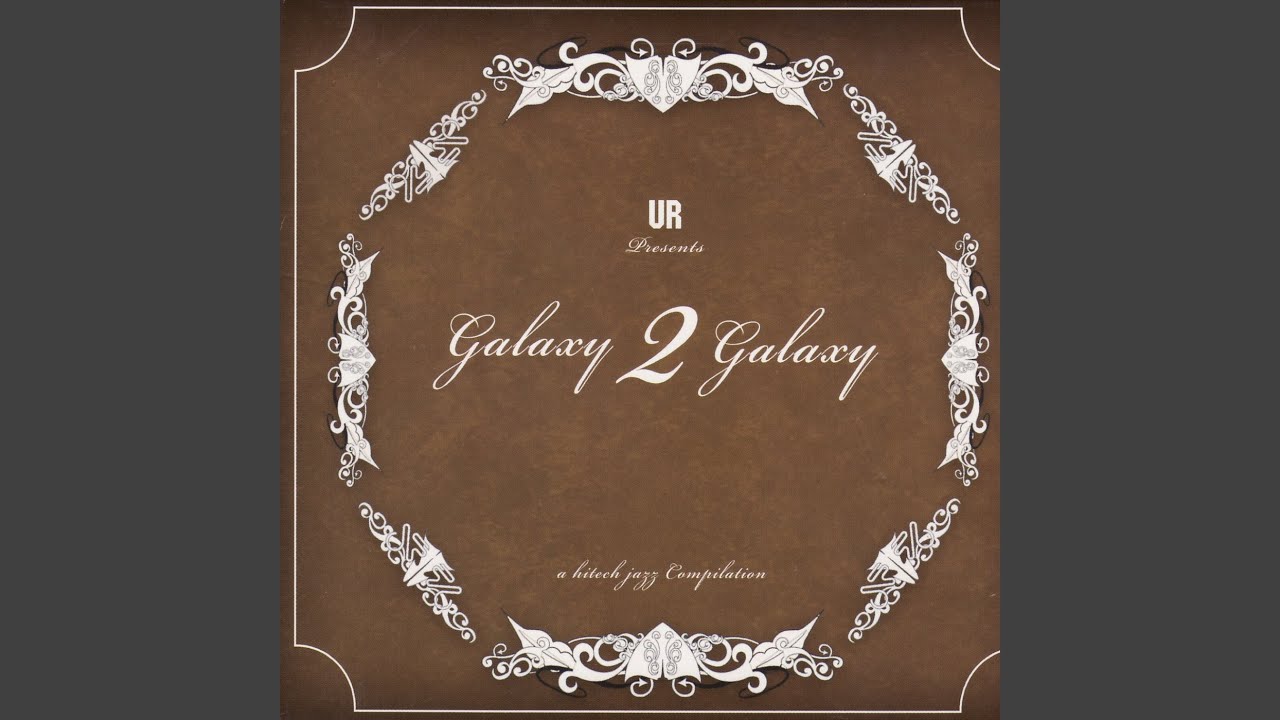
UR's music was hard, fast and stripped, but rarely cold. Early salvos like The Theory (1990) and the Riot EP (1991) weaponised acid squelch and siren stabs; Nation 2 Nation (1991) and The Final Frontier (1991) became anthems. But the collective's genius was pairing militancy with beauty. Jupiter Jazz, part of 1992's World 2 World and made after the original trio split, floats gorgeous keys over acid tweaks. That strand blossomed into Hi-Tech Jazz, released under the Galaxy 2 Galaxy alias in 1993, a euphoric fusion of live-sounding jazz and techno that remains one of Detroit's most beloved records.
The collective also spun off entire universes. As X-101 and X-102, the trio made conceptual techno; the X-102 album Discovers The Rings Of Saturn (1992) is a track-by-track voyage through the Saturnian system. Under the alias The Martian, Banks ran the Red Planet series from the early 1990s, deep space-funk pressed on red vinyl. Banks also cut harder, wilder sides as Mad Mike, including Death Star.
Galaxy 2 Galaxy - Hi-Tech Jazz

The Politics Pressed Into the Wax
UR made its stance literal. Messages were scratched into the runout grooves and printed on sleeves; the 1992 release Message to the Majors carried a blunt anti-major-label etching in its runout. The record's label text was more raw still, dedicating the release to Malice Green, a 35-year-old unemployed Black steelworker beaten to death by plainclothes Detroit officers on 5 November 1992 in a killing ruled to be caused by blunt-force trauma to the head, and addressing the officers responsible directly. This was not decoration. It was a running argument against the commercialisation of techno, against major-label extraction, and against the erasure of the music's Black Detroit origins as it was rebranded for European dancefloors.
That argument had a dark comedy sequel. In 1999, the UR affiliate DJ Rolando (Rolando Rocha, also known as The Aztec Mystic) released Knights of the Jaguar, a string-drenched anthem that became the biggest-selling record UR had ever released. Sony, which by contemporaneous accounts first attempted to license the track and then commissioned a near-identical trance cover for the German market, found itself in a public fight. UR, characteristically, skipped the courts for a direct-action campaign, rallying fans to protest the majors. Amid the backlash Sony withdrew the promo; a later version billed as Jaguar nonetheless reached number 43 on the UK Singles Chart in October 2000. The details remain contested, and UR denies ever receiving a licensing request, but the outcome cemented UR's legend: an inner-city independent that stared down a global corporation and won.
Submerge: Keeping It in Detroit
UR's most durable achievement may be infrastructural. In 1992 Banks co-founded Submerge, a distribution hub, with Christa Robinson, built to keep ownership, distribution and profits inside Detroit and in Black hands. Submerge became the pipeline that carried a constellation of Detroit labels to the world without a major's involvement.
Its headquarters at 3000 East Grand Boulevard, a former union hall UR acquired in 2002, now houses the Somewhere in Detroit record store and Exhibit 3000, billed as the world's first techno museum, a small shrine of drum machines and rare pressings that pilgrims travel across the world to see. It is the physical embodiment of UR's thesis: own your masters, control your distribution, mentor the next generation, stay home.
The label's roster carried the philosophy outward. Drexciya, the duo of James Stinson and Gerald Donald, released Aquatic Invasion on UR in 1995 and built one of techno's greatest myth systems: an underwater nation descended from African women thrown from slave ships, the Middle Passage reimagined as an origin story rather than only a wound.
The Berlin Axis and the Long Legacy
When Jeff Mills and Robert Hood left in 1992 to pursue solo careers, Mills founding Axis Records and Hood founding M-Plant and effectively inventing minimal techno with 1994's Minimal Nation, UR's reach only grew. UR's music had already helped forge the Detroit-Berlin axis: under the alias X-101, the collective delivered the very first release on Berlin's Tresor label in 1991, a bond that would shape European techno for decades.
Banks, meanwhile, became a mentor and civic figure, a presence around the first Detroit Electronic Music Festival in 2000, a supporter of the local scene, and a quiet philanthropist who folded earnings back into community and youth projects. The collective still operates, releasing new EPs in 2022 and helping inspire a new institution: the Underground Music Academy, founded by the UR affiliate Waajeed, which opened a physical home on East Grand Boulevard to teach production and DJing rooted in Detroit's Black electronic legacy.
For DJs and producers today, UR's model reads almost like a manual: own your work, build your own infrastructure, refuse the terms that do not serve you. Underground Resistance never asked to be liked by the mainstream. They asked the music to remember where it came from and what it was for, and, faceless and fierce, they made sure it never forgot.
Key takeaways
• Underground Resistance, founded in Detroit in 1989 by Mad Mike Banks and Jeff Mills with Robert Hood, turned techno into an anti-corporate, anonymous, militant movement.
• Their masks, aliases and vinyl-etched manifestos were a deliberate political statement against celebrity and commercialisation.
• Landmark records span hard militancy, from Riot to Nation 2 Nation, and luminous machine-jazz like Jupiter Jazz and Hi-Tech Jazz.
• Submerge, founded in 1992, kept distribution, ownership and profits in Detroit; Exhibit 3000 preserves the story.
• From the Tresor connection to Drexciya's Afrofuturism to today's Underground Music Academy, UR remains the conscience of techno.
