You can already beatmatch, phrase, EQ, and pull off a clean transition — but the moment you switch from a deep house record to a drum & bass tune, the rules quietly change. Genre doesn't just decide what you play; it dictates how you mix it. This article focuses on the practical, genre-specific mixing approach for each major style: how long you blend, how much you lean on EQ, filters and FX, where in the track you mix, and how much harmonic mixing matters. For what each genre actually is, see the Electronic Genre Reference; for tempos, see BPM Ranges by Genre; for the techniques themselves, see the dedicated articles on beatmatching, EQ and bass swaps, filters, transitions, looping and FX.
The One Principle Behind Everything
There is a single idea that explains almost every genre-specific habit in this article: a genre's musical characteristics are reflected in the way DJs mix it. As Pioneer DJ's overview of genre mixing puts it, a fast genre gets fast mixing and a smooth genre gets smooth mixing — a chilled house set full of scratching and cutting would just feel weird. Nobody legislated these conventions — they grew organically out of how the music is built and what crowds expect.
The biggest fault line runs between club and underground dance genres (house, techno, trance) and song-based or open-format genres (hip-hop, pop, big-room EDM). Club tracks are built to be mixed: they open and close with long, drum-led, DJ-friendly intros and outros, they're groove-based, and they typically present one main musical idea with variations every 8 or 16 bars. That construction invites long, seamless, layered blends. Song-based tracks are the opposite — they often start with a vocal on the first beat, have little or no mixable intro, and are recognisable records the crowd came to hear. That pushes the DJ toward shorter mixes, quick cuts, and showmanship.
Treat everything below as widely-recognised tendencies, not laws. Individual DJ styles vary enormously, and the conventions exist precisely so good DJs can break them at the right moment.
House and Techno: The Long, Seamless Blend
House and techno are the home of the extended, layered blend, and the reason is structural: their tracks are engineered with long mixable intros and outros (commonly 32 bars or more of drum-led material) so two records can be woven together for long stretches.
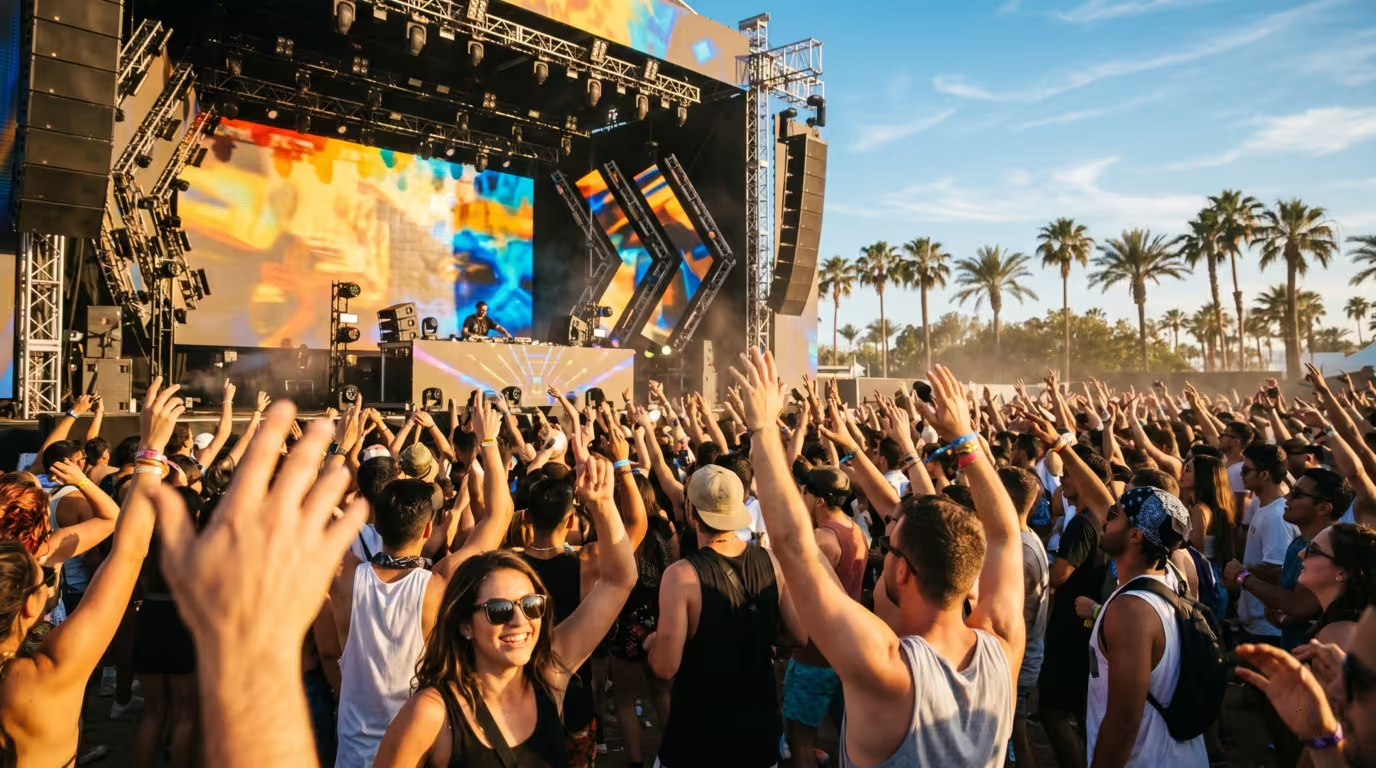
House (Deep, Tech, Progressive)
In its classic form, house is groove-based and medium-intensity — and it's mixed the same way. There's usually one main idea per track with variations arriving every 8 to 16 bars, so DJs time their key moves — introducing the next track, swapping the bass, peaking an effect — to those 8- or 16-bar phrase boundaries. The defining technical move is the EQ bass swap: bring the incoming track in with its low EQ killed, then at a phrase boundary cut the bass on the outgoing track while simultaneously bringing it up on the new one, so only one bassline ever dominates the low end.
Blend lengths are long. A typical house transition runs anywhere from 16 to 64 bars, and deep and progressive house — slower and more textural — sit at the longer end, with blends of 32 to 64 bars or more as pads, percussion and atmospheres layer gorgeously over each other. Deep house bass is sub-heavy and physically felt, so a clean bass swap is non-negotiable, but it can ramp more gradually than in punchier styles. Harmonic mixing matters more as tracks get more melodic and vocal: the more upfront the synths and vocals, the more a key clash will be heard. Tech house tightens all of this up — the groove is sacred, percussion from two tracks can layer pleasantly, and quick cuts at phrase changes plus short vocal loops are common. FX use is generally restrained and rises with the BPM and intensity of the sub-style.
Techno
Techno mixing builds on the house template by adding more — more speed, more tracks, more loops, more layering. The goal is to hypnotise the floor: sets feel like a single evolving machine where it's hard to tell where one track ends and the next begins. Long, hypnotic transitions, tension and release stretched over many bars, and the blending of percussive and textural elements are the signature. Because vocals and big melodic statements are sparser, there's less to clash, so harmonic mixing is less critical than in house or trance — texture and frequency management matter more. Extended intros and outros let you create slow, progressive, seamless blends, and FX (filters, delays, reverbs, and dedicated FX units like the RMX-1000) are the primary means of adding flair. Pioneer DJ notes that, led by Richie Hawtin around the late 1990s and early 2000s, techno DJs were early adopters of new DJ technology like FX, loops, controllers, digital vinyl systems (DVS) and software. This is the rolling, continuous mix: layered loops, gradual filtering, and a relentless forward drive.
Trance, Progressive and Melodic: Mixing the Breakdown
Trance, progressive house and melodic house/techno share a love of long-form expression and emotional melody, and their signature mixing move is built right into the music: the breakdown.
Trance tracks (typically around 125 to 140 BPM — check BPM Ranges by Genre) are built around evolving motifs, long drum-free breakdowns and dramatic drops, with extended DJ-friendly arrangements that leave plenty of scope for long blends of 32, 64 or more bars. The classic technique is the breakdown swap: start the incoming track's beat underneath the outgoing track's breakdown, so that when the breakdown resolves you've already arrived at the new track's drop and the crowd experiences the release as one earned moment. Because trance foregrounds melody and harmony, harmonic mixing is close to essential — a clash in a trance breakdown is painfully obvious — and EQ is used surgically and subtly, with clean bass swaps, gentle filtering and a touch of reverb to make breakdowns feel epic. The cardinal sin is cutting a breakdown short and stealing the payoff from the crowd; the genre rewards patience and telling a story. Progressive house is the slow-burn cousin — long tracks that evolve by adding and removing layers, with DJs stacking complementary parts (tops from one track over the bass of another) and using EQ and filters so the mids don't fight. Melodic house and techno follow the same lineage: polished, functional blends that centre one track at a time so each melody gets breathing room.
Drum & Bass, Dubstep and Bass Music: Mixing Around the Drop
Drum & bass, dubstep, UK garage and the wider bass-music world mostly trace back to Jamaican soundsystem culture, and they share a logic of rolling energy and big moments rather than endless seamless blends. Two cultural moves define this lineage: the double drop and the rewind/reload.
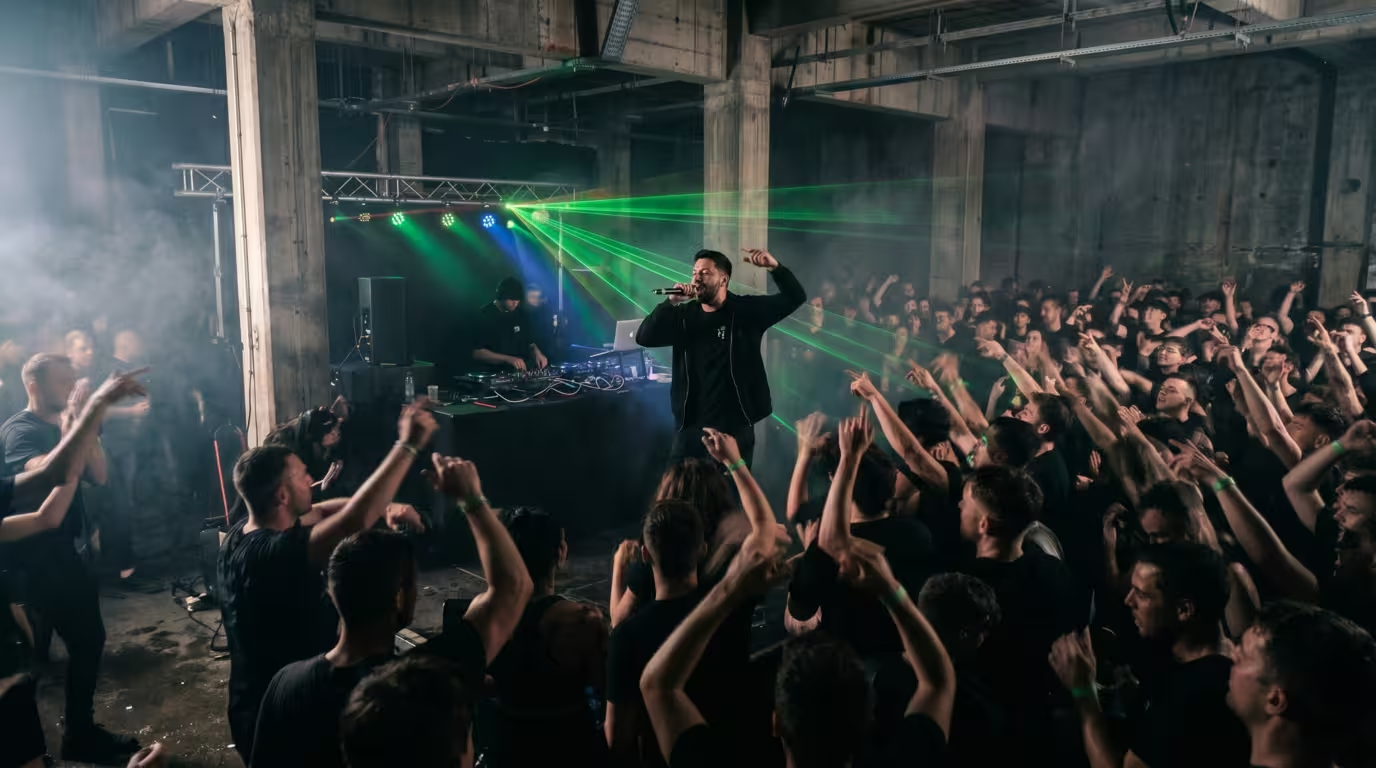
Drum and Bass
At roughly 170 to 180 BPM, drum and bass is engineered for speed and impact, which encourages decisive transitions of 8 or 16 bars rather than the minutes-long blends of house. That said, DnB DJs do blend long over sparse intros and breakdowns; the fast tempo simply means the punchier, more energetic style is on the table too. Bass management is the critical skill — basslines almost never sit well together, so the universal rule is one bassline at a time: keep the new track's bass out until the old one has dropped away. The signature flourish is the double drop, aligning two tunes so their drops detonate simultaneously for a single explosive peak — a move whose best-known exponent is Andy C, known for fast three-turntable mixing and a signature style of dropping two records' basslines at the same time. And the rewind (or reload/wheel-up) is pure soundsystem culture: spinning a track back to restart it in response to a huge crowd reaction. As DJ TechTools' history of the rewind notes, the genres that wear their Jamaican soundsystem roots most proudly — jungle, garage, reggae, dubstep, grime and bass — all feature reloads, while you are remarkably unlikely to hear a rewind from a techno, trance, deep house or tech house DJ. An MC often shapes the energy and calls the reload.
Dubstep and Bass Music
Dubstep sits around 140 BPM but, with the kick and snare pulled wide apart, it feels more like 70 — the half-time feel (see Half-Time and Double-Time Explained). Whatever the sub-style, tracks are arranged around drops, and the job in the booth is to make those drops land with maximum weight via bold, decisive transitions. DJs keep the mix uncluttered to give the enormous sub-bass room to breathe, rarely ride a blend for too long, and use the beatless intros common in the genre to build tension and clear space before the next drop. As with DnB, FX add flourishes rather than reshaping tracks, and rewinds and spinbacks are part of the culture — a DJ needs a feel for when the crowd has earned a reload.
Hip-Hop, R&B and Open Format: Cuts, Scratches and the Song
Here the approach flips completely. House and techno DJs have it relatively easy by comparison: hip-hop and R&B tracks have no DJ-friendly intros and outros, are packed with vocals and melody, and span a much wider BPM range. But the contrast is the point — audiences know these records, so they get to hear and appreciate how the DJ manipulates familiar music.
The result is short, sharp, often theatrical mixing. As PulseDJ describes it, a hip-hop set needs faster, sharper mixing: because the vocals often start on the first beat there are no long intros, so cut mixing or very short blends are common, and you might use hot cues to jump straight to the chorus or a recognisable break. DJs lean on cuts, vinyl stops, backspins and the classic hip-hop arsenal of cutting and scratching — techniques pioneered by the genre's 1970s originators like Kool Herc, Grandmaster Flash and Grand Wizard Theodore. Modern tools help bridge the gaps: a short intro or outro can be looped into a beatmatching tool, an echo applied liberally to smooth a transition, and hot cues used to jump straight to a chorus or recognisable section. Acapellas and quick mashups are staples. Because tracks often live at very different tempos, cross-BPM moves matter (see Mixing Across Different BPMs). The guiding philosophy is to play more of the song — the crowd came for the records, so transitions are brief and the music does the talking. Open-format DJing extends this to anything goes, demanding the technique of a turntablist, the library of a crate-digger, and the sequencing to please a room across styles.
Trap, Festival EDM and Big Room: Big Moments
Big-room and festival EDM (commonly 126 to 132 BPM) and festival trap (built around a 140 BPM grid with a half-time feel) are engineered around huge builds, emphatic drops and soaring choruses. Where house and techno prize incremental hypnosis, an EDM set stage-manages energy in waves: transitions are planned to land on, or set up, the next payoff rather than to run two full tracks in parallel for long. Because the records are so focused on the drop, harmonic mixing and managing each track's hook really matter — big leads and vocals clash if you layer too much, so the play is to highlight one element at a time. FX are central rather than garnish: noise sweeps, reverbs, filters and echoes are used to make each climax hit harder, and double drops and quick cuts on the build are common. Tracks have long breakdowns and tense builds, so the work is in knowing exactly where they fall and timing the incoming drop to the outgoing build's peak. Subtlety is not the goal here — impact is.
Here is the genre-by-genre approach at a glance:
| Genre | Typical blend style | Key technique |
|---|---|---|
| House (deep/tech/prog) | Long, seamless (16–64 bars) | EQ bass swap on the phrase |
| Techno | Long, hypnotic, layered | Looping + filtering, rolling mix |
| Trance / progressive | Long, emotional | Mix on the breakdown, harmonic mixing |
| Drum & bass | Punchy, 8–16 bars | Double drop, one bassline, reload |
| Dubstep / bass | Short, drop-focused | Build to the drop, rewinds, half-time |
| Hip-hop / open format | Short cuts, quick blends | Cutting, scratching, acapellas, hot cues |
| Trap / big room / EDM | Drop-to-drop, planned | FX builds, double drops, energy waves |
How to Adapt and Transfer Your Skills
The reassuring truth is that the core skills are universal — beatmatching, phrasing, EQ control, reading a track's structure and managing the low end apply everywhere. What changes is how you apply them. Harmonic mixing earns its keep on long melodic blends (house, trance, melodic techno) and matters far less on short percussive cuts (hip-hop, two stripped techno tools); a key clash is brutal over 32 bars but invisible over a fast cut. Beatmatching by ear is the cultural norm in underground house and techno, while sync, hot cues and beat jumps carry less stigma in newer, CDJ-native styles like tech house and big room.
To move between genres well, study the DJs you respect in that genre — listen to how much of each track they play and where they transition — and learn the genre's culture, not just its tempo. A few quick rules of thumb: in club genres, find the mix-in and mix-out zones and let blends breathe; in song-based genres, get to the good part and keep transitions tight; in bass music, protect the low end and save the rewind for when it's earned. Well-produced, ready-made tracks help here — they're arranged with clean, DJ-friendly intros, outros and clearly defined drops, which makes them forgiving to mix while you're learning a new genre's habits. Match your mixing style to the genre and the crowd in front of you, and the technique follows.
Key takeaways
• Genre dictates mixing style: smooth, built-to-mix dance tracks get long blends; recognisable, song-based records get short cuts.
• House and techno favour long, layered, seamless blends driven by EQ bass swaps and filtering over many bars.
• Trance and progressive mix on the long breakdown, where harmonic mixing matters most.
• Drum & bass and dubstep centre on the drop, with double drops, one-bassline-at-a-time discipline and culturally earned rewinds.
• Hip-hop and open format favour quick cuts, scratching and acapellas because the crowd wants to hear the songs.
• Core skills (beatmatch, EQ, phrasing) are universal — you just apply them differently per genre and crowd.
Ready-made, exclusive EDM tracks with full rights — released as your own.
