Once you can beatmatch cleanly and structure a set, the skill that actually separates a memorable night from a forgettable one is reading the crowd. It is the live craft of watching the people in front of you, interpreting what they are telling you with their bodies, and adjusting your selection and energy in real time so the floor stays with you. Every other DJ skill is a tool; reading the crowd is the judgment that decides how and when to use it. This article goes deep on that skill — the signals, the responses, and the balance between giving people what they want and leading them somewhere.
What reading the crowd really is
Reading the crowd means observing how an audience responds to your music and continuously adjusting track selection, energy, tempo and direction based on what you see and feel. It is so central that the Wikipedia entry on the disc jockey defines a DJ performance by two features: the technical skill of mixing, and the ability to choose the most fitting records — exactly what people mean by reading the crowd. Many DJ educators go further: DJ TechTools calls reading a dance floor the single most important DJ skill, arguing that a DJ with mediocre technical ability who reads the room well will out-perform a technically flawless DJ who ignores it.
The most useful mental model is a feedback loop, or a conversation. You play a record; the crowd answers with movement, noise and attention; you read that answer and decide what to say next. Bill Brewster and Frank Broughton, authors of the definitive DJ history Last Night a DJ Saved My Life, describe the job as controlling the relationship between the music and hundreds of people — a craft whose real medium, they argue, is emotion, because the DJ is effectively playing the feelings of a roomful of people. This is the difference between a DJ who runs a pre-planned set regardless of the room and one who responds: the first performs at an audience, the second plays for and with the crowd in front of them. Norman Cook (Fatboy Slim) has made the same point — a good DJ keeps watching the crowd, reading whether it is working and communicating with them, while a bad one stares down at the gear all night, just executing the set they rehearsed at home.
It helps to think of the floor not as many individuals but as a single organism with one shared energy. The smart move is to zoom out, sense the total energy in the room, and work with that rather than chasing the one person going wild near the booth.

The signals to read
Reading the crowd is mostly pattern recognition built from specific, observable cues. Beginners watch faces; experienced DJs watch the whole body and the whole room — feet, posture, where people are standing, and which direction they are facing.
Positive signals — it's working
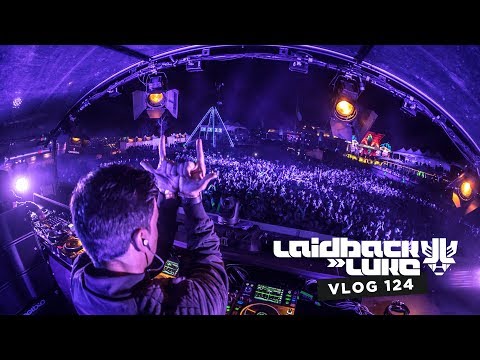
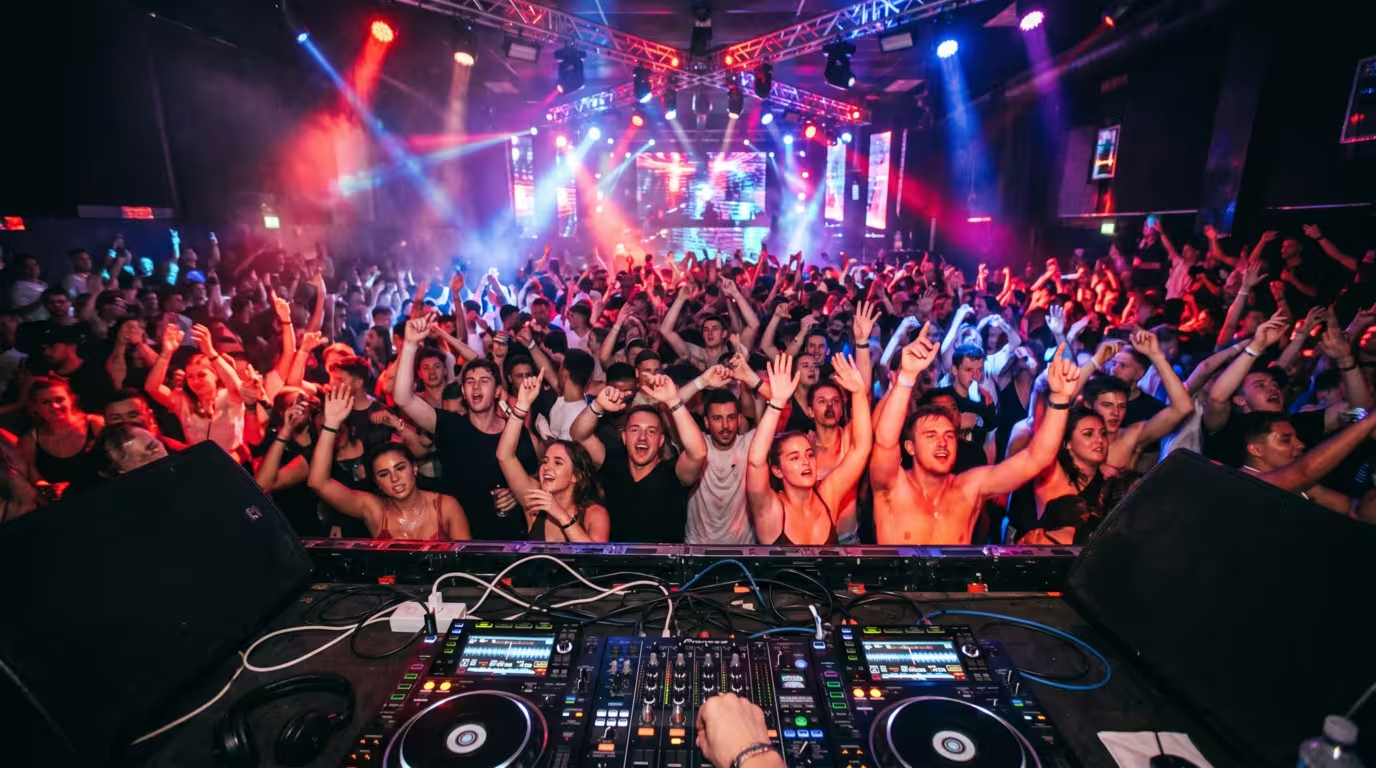
When your selection is landing, the room tells you. The classic green lights include the floor filling up, people dancing harder and more continuously, hands going in the air, cheering or screaming on a drop, and people singing along to a vocal. Watch for bodies turning to face the booth or the speakers, friends pulling friends onto the floor, and phones coming out to film a moment — all signs of engagement. Subtler early tells matter too: nodding heads, tapping feet, relaxed smiles and people drifting toward the dancefloor are, as Digital DJ Tips notes, people practically willing you to play something they're into. A migration toward the speakers means the room is locked in.
Negative signals — you're losing them
The warning signs are roughly the mirror image: the floor thinning or emptying, people drifting to the bar or bathroom, heads dropping to phones, arms crossed, conversations starting to overpower the music, people standing still or sitting down, and a flat, muted reaction to a track you expected to land. As Thomann's guest guide notes, a flat atmosphere often shows up less in people leaving the building and more in bored faces and eyes fixed on phones. One isolated negative reaction means little; a cluster of them arriving together is your cue to act.
The table below is a quick reference, not a rulebook — context always modifies meaning.
| Signal on the floor | Likely meaning | Typical response |
|---|---|---|
| Floor filling, hands up, singing | Selection and energy are landing | Stay in the vein; build gradually |
| People drifting to bar / on phones | Energy dropped or you lost the thread | Re-engage with something familiar |
| Dancing hard then thinning out | You pushed too hard or fast; fatigue | Ease back to a groove, don't go harder |
| Dead reaction to a "big" track | Wrong track for this room or moment | Mix out early into a safer floor-filler |
The subtler reads
Beyond moment-to-moment cues, you are reading the room's character: the rough age and demographic, how people are dressed, whether they came to dance or to talk, and how they react to specific genres and tempos. You are also gauging which kind of crowd this is — one that wants familiar hits and instant gratification, or one that wants a journey and trusts you to take them on it. And you are always reading energy against the clock: the same record lands completely differently at midnight than at 5am.
How to respond to what you see
Reading is only half the skill; the response is the other half.
When it's working, ride it. The near-universal advice is more of the same — when you find a good vein, stay in it and build on it rather than breaking the spell. Don't yank the energy sideways the moment you're winning. Build gradually toward your peaks rather than blowing your biggest records too early (the energy-arc thinking covered in our Building a DJ Set article applies directly here).
When you're losing them, diagnose before you react. The most important — and most counter-intuitive — insight in crowd reading is that an emptying floor usually does not mean you should play something harder or bigger. More often it means you pushed too hard, too fast, or went too deep or too weird, and the room burned out or disconnected. DJ TechTools is explicit on this: when a floor starts to empty after going well, you have probably worn people out with too much intensity, so you should give the crowd a breather before ramping back up — and not climb as fast the second time. The instinct to rescue a fading floor by escalating often finishes the job of clearing it. The fix is frequently to ease back into something groovier, warmer and more accessible — re-establish a comfortable pocket, then rebuild. The opposite diagnosis also happens: if the room is dragging and bored at a flat, low energy, you lift it. The skill is reading which way to adjust.
Test the water. When a room is busy and the energy is good but you want to know if you can take it somewhere, drop a track to gauge the reaction — sandwiched between things you know are working — and watch closely. If it lands, you've found new room to grow. If it doesn't, have an exit plan: a pre-set cue point or a safe floor-filler loaded on the other deck so you can mix out within a phrase rather than riding a dud to the end.
Rescue a dying floor with a known crowd-pleaser to draw people back, then rebuild trust before you experiment again. Crossfader founder Jamie Hartley describes the pro version of this: when a run is starting to wear thin, think ahead and reach for a wild-card track they wouldn't expect — not a total genre swerve, but a throwback or a cool edit, something that grabs their attention again. All of this depends on having a deep, flexible, well-organised library you can navigate by muscle memory — the prepared-but-improvised approach we cover in Building a DJ Set.
Reading before you ever press play
Crowd reading starts long before your first track. Beforehand, research the gig: the venue and its capacity, the event type, the likely demographic, who plays there and what works, your slot in the night, and the promoter's brief. Speak to the promoter or resident DJs, and study the venue's social media and past events. DJ TechTools recommends treating a venue you can visit like field research — go as a punter and watch for hours.
On the night, arrive early and observe. The DJ Revolution advises getting there at least 20 to 30 minutes early to read the crowd and acclimatise to the environment. Then comes the opening read: as you start, gauge who is actually there, what the previous DJ left you, and how warm the room already is. If you're inheriting momentum, don't give the room whiplash by switching the vibe completely. Which read you prioritise depends on your slot — the warm-up, peak-time and closing crafts each demand a different opening posture, as covered in our Warm-Up, Peak-Time, and Closing Sets article.
Then never stop. The single most repeated practical tip in all of crowd reading is to keep your head up. New DJs get Serato face — eyes glued to the laptop or CDJs all night — which both blinds you to the floor and creates a feeling of disconnection. Master your gear by touch so your eyes are free for the room. As Crossfader tutor Lawrence James points out, it is easy to spend half the night staring at your screen, but if you are not looking at the crowd you have no real idea what is happening in the room — sometimes you have to force yourself to look up.
The "what do I play next?" decision
Every transition is a decision, and on a reactive night the floor casts the deciding vote. The what-do-I-play-next question is answered by reading whether you need to match the current energy, build it, or rescue it — and then reaching into your library for the right option. This is why crowd reading and track selection are inseparable, and why a flexible set beats a rigid playlist: you prepare options and choose live. Honey Dijon described this fluid, responsive approach in a 2024 DJ Mag interview, explaining that she might move from a deep house track to techno to Italo-disco, because for her it is about storytelling, emotion and tension — you play differently at two in the morning than at six, differently when you are building, changing or switching a room, and the crowd itself changes across the night. Reading the crowd is what tells you which of those moves the moment calls for.
Serving the floor vs. staying true to your sound
This is the genuine tension at the heart of DJing, and there is no formula — only judgment. On one side is pure pandering: becoming a human jukebox who plays only the obvious hits and every request, with no identity of your own. On the other is the DJ who ignores the room entirely and clears it for the sake of their art. Digital DJ Tips opens its crowd-reading guide with exactly the second failure: a respected techno headliner who emptied a room down to just the bar staff while resolutely ploughing through a set he had clearly planned in advance, as the party room next door swelled with two rooms' worth of dancers. He had every chance to read the crowd and simply chose not to.
The healthy middle ground is to lead, not to obey or to ignore. Great DJs guide a crowd on a journey the crowd enjoys — they serve the floor and express themselves. The mechanism is trust: you give people enough of what they came for to show you understand the brief, and that earned trust buys you the freedom to take risks and introduce the unfamiliar later. Push your own taste too hard, too early, especially with a mixed crowd, and the room pulls back. Reading the crowd is what lets you calibrate that trade-off in real time — how far you can stretch them, and when. Requests are one input into this balance, but only one; the skill of fielding them gracefully without becoming a jukebox is its own topic, covered in our forthcoming Handling Requests article.
Different rooms, different reads
The principles are universal but the application changes sharply with context. Reading a crowd well means knowing what working even looks like in the room you're in.
| Context | Crowd character | How the read shifts |
|---|---|---|
| Underground club | Heads who want a journey and credibility | More patience; reward trust with depth and risk |
| Commercial club / bar | Mixed, social, want familiarity | Lean accessible; energy and recognisable hooks |
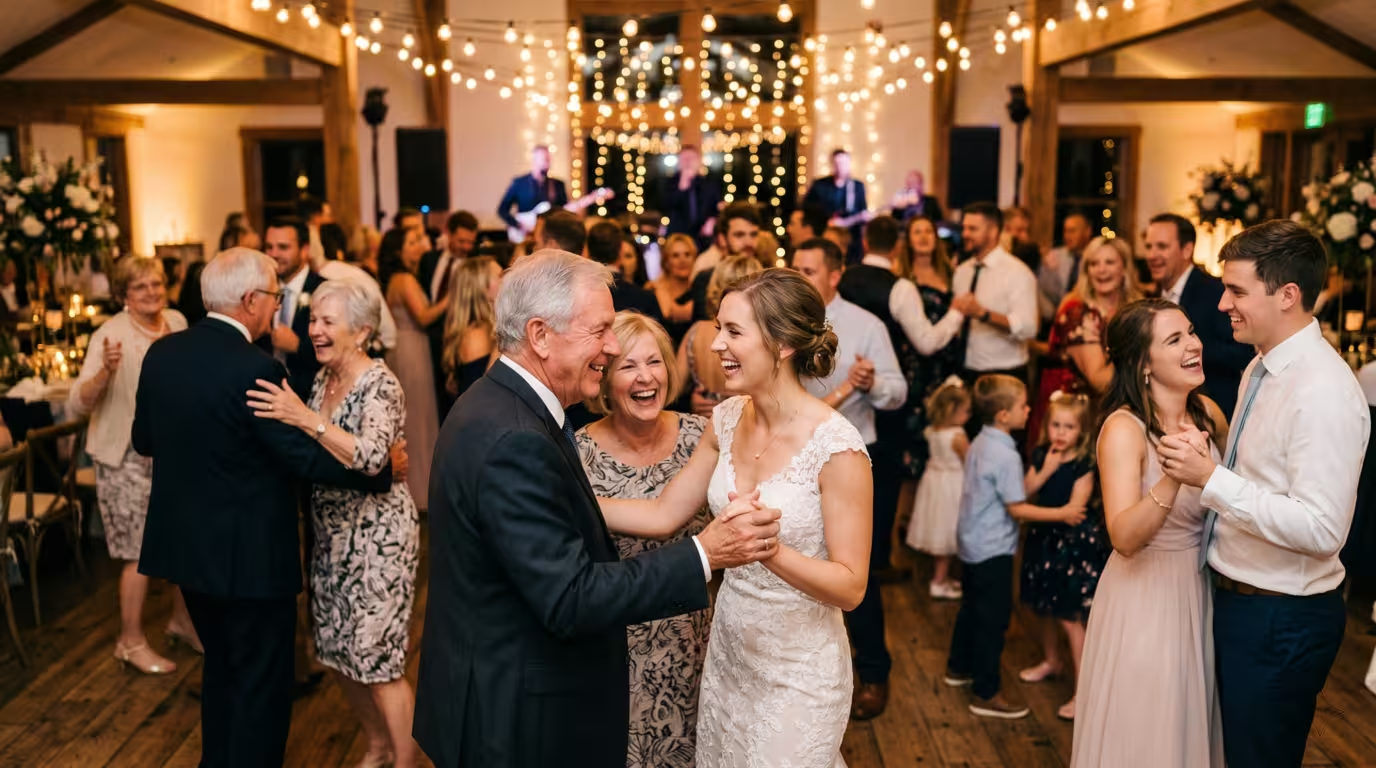
| Wedding / private party | Multi-generational, request-heavy | Inclusivity over niche brilliance; protect key moments |
| Festival / big stage | Large, diverse, high-energy | Bigger, clearer moments; broad appeal, strong peaks |
Within any room, also read tourists versus locals versus dedicated fans, and the early versus late crowd. Wedding reading in particular demands extra sensitivity — you're uniting several generations and musical tastes, and success comes from inclusivity rather than showing off. A dark, sweaty club will move more readily than a trendy bar where half the room is seated and eating; trying to force the wrong vibe for the room ends badly.
Developing the skill — and the common mistakes
Reading the crowd is experiential; no one is born doing it, and it sharpens with every gig. The fastest way to develop it: play out as much as possible, ideally starting with smaller, forgiving rooms; watch the floor constantly; study how experienced DJs handle a room when you're out; record your sets and review where the energy lifted and sagged; build a deep, well-organised library and learn your reliable crowd-pleasers; and cultivate plain people-watching and empathy. Crucially, don't take an empty floor personally — diagnose it. And learn to trust the floor over your plan when the two disagree.
The classic mistakes are worth naming so you can catch yourself:
• Rigidly sticking to a pre-planned set and ploughing through it as the room empties.
• Burying your head in the gear and never looking up.
• Panicking and escalating when an emptying floor actually calls for easing back (or vice versa).
• Pandering completely — playing only the obvious and every request — until you have no identity.
• Playing for yourself or to impress other DJs rather than for the crowd.
• Skipping the homework: not researching the gig, the slot or the room.
• Over-reacting to every bit of movement — in big venues people drift to the bar and back, and treating normal flow as failure makes you wreck a floor that was fine.
Ultimately the goal is the one Norman Cook names as the essence of the craft: a real communication with the crowd, going on a journey together. Master that conversation and the music, as more than one veteran has said, almost plays itself.
Key takeaways
• Reading the crowd is the live skill of watching the floor and adapting in real time; it is widely considered one of the two defining DJ skills alongside selection.
• Learn the signals: a full floor, hands up, singing and bodies facing you are green lights; thinning floors, phones, the bar and crossed arms are warnings.
• The counter-intuitive rule: an emptying floor usually means you pushed too hard or too weird — ease back into a groove rather than going harder.
• Keep your head up, master your gear by touch, and never stop observing; research the gig and room before you arrive.
• Serve the floor and your sound — earn trust, then lead the crowd on a journey rather than pandering or ignoring them.
• The read changes by context; the skill itself only comes with playing out, reviewing, and experience.
Ready-made, exclusive EDM tracks with full rights — released as your own.
