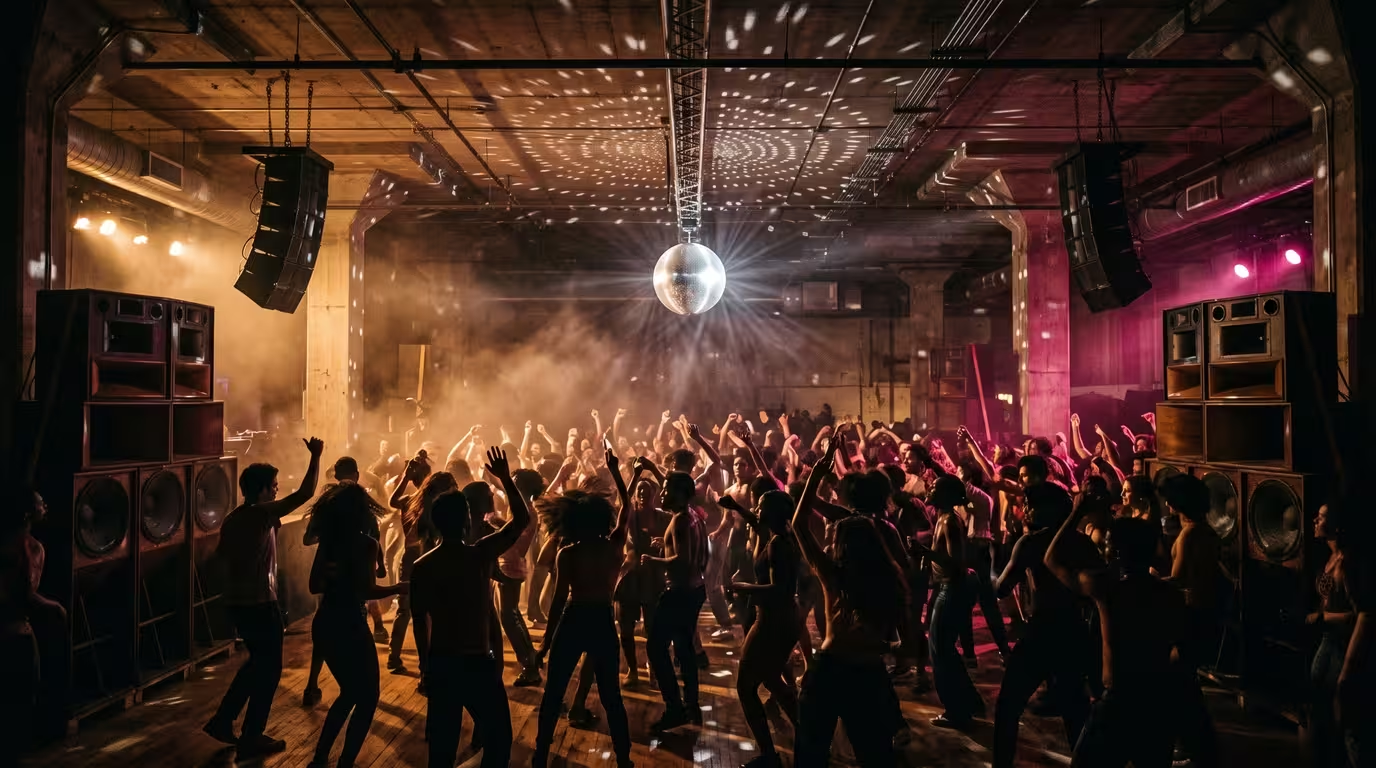
Some rooms are remembered for who passed through them. A few are remembered for what they made possible. For exactly one decade, from 1977 to 1987, a former parking garage on King Street in downtown Manhattan was the second kind of room, and the man in its booth, Larry Levan, is still the name most invoked when DJs argue about who the greatest ever was. He did not win that title with flawless beatmatching. He won it by treating a night as a story and a room as an instrument.
Blog
Larry Levan and the Paradise Garage
How a Brooklyn kid in a converted parking garage turned DJing into an art form and gave garage its name.
The Brooklyn Kid Who Heard Something Else
Larry Levan was born Lawrence Philpot on 20 July 1954 in Brooklyn, New York. His parents never married, and as a teenager he took the surname of his mother, Minnie Levan, a dressmaker who filled the house with blues, jazz and gospel. He was a frail child, born with a congenital heart condition and prone to asthma, but sharp, and drawn early to Harlem's Black ball culture, where he first met a fellow young dressmaker who would become his lifelong best friend: Frankie Knuckles.
The two teenagers came up together inside the early-1970s New York underground. They were regulars at David Mancuso's Loft, the invitation-only, no-alcohol party where the sound system was treated as something close to sacred, and they did odd jobs, decorating, blowing up balloons and setting out the buffet, at Nicky Siano's club The Gallery, watching Siano work three turntables and learning what a record could do to a crowd. Levan got his first real residency almost by accident, at the gay bathhouse the Continental Baths, when the resident DJ walked out one Memorial Day weekend and the manager handed him the night. Between Mancuso's audiophile idealism and Siano's flamboyant drama, Levan assembled a philosophy: sound as a physical, near-spiritual experience, and the DJ as its master of ceremonies.
A Club Built Around a DJ
In 1977, the promoter Michael Brody, who had already employed Levan at an earlier club, Reade Street, opened a new venue in a disused parking garage at 84 King Street, with financial backing from his former partner Mel Cheren, co-founder of West End Records. The Paradise Garage took its name and its ramp-lined shape from the building's past life, and it was, unusually, designed around what its DJ wanted. As the story is often told, Levan and the sound engineer Richard Long designed the sound system first, and the dance floor was built to fit it.
The opening was a shambles. The club began in early 1977 with a run of construction parties in a smaller room while renovations dragged on, and its official launch came in January 1978. A blizzard stranded sound equipment at an airport and left members freezing outside on a bitter night; some never returned, and by Cheren's account the club did not become the place people remember until around 1980. When it did, it became something without precedent.
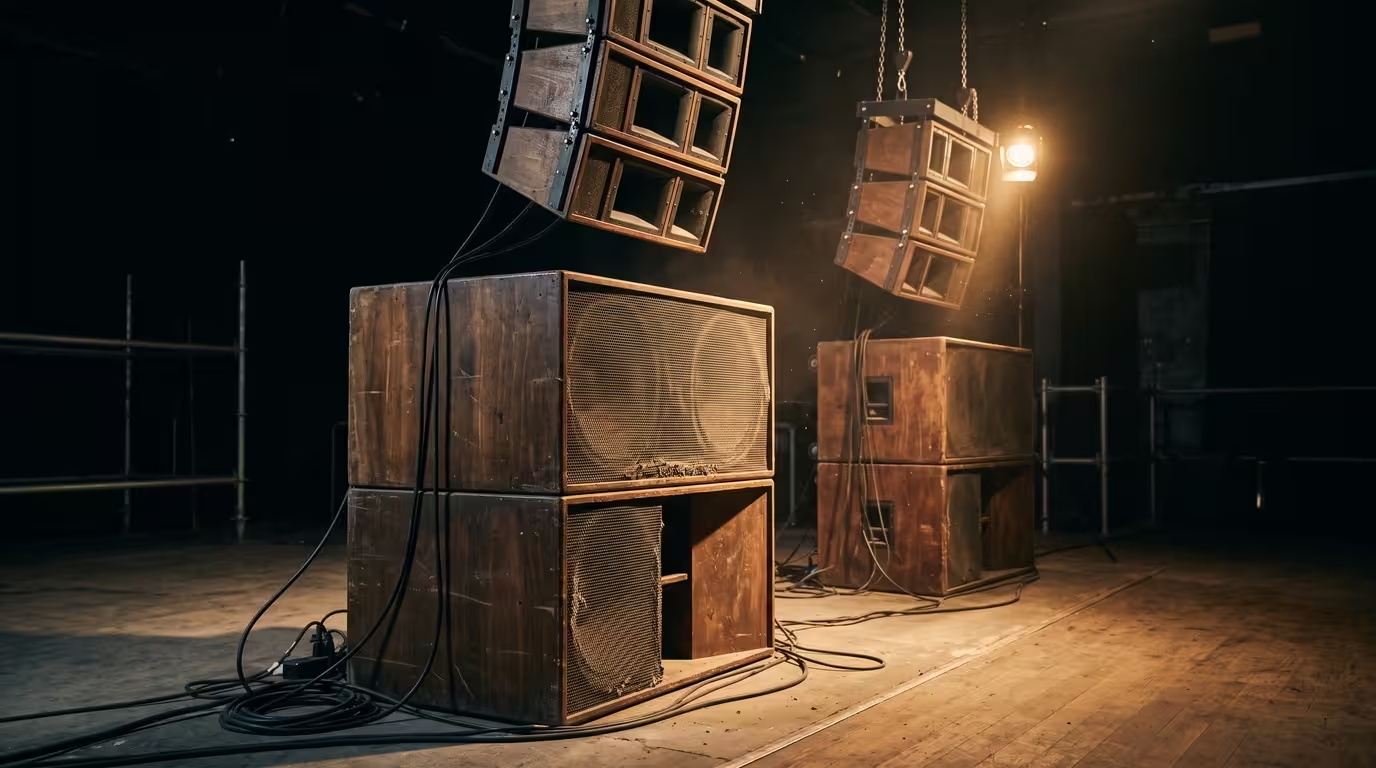
The Garage was members-only and served no alcohol, just water, fruit and punch, so the dancing could run until noon. Its crowd was mostly Black and Latino, and largely gay, and it built a culture of devotion so intense that regulars called Saturday nights Saturday Mass. In an era of prejudice, and then of the AIDS crisis that would tear through that same community, the room was a sanctuary. Richard Long's system, with its ceiling tweeter arrays, corner-stacked full-range cabinets and the custom sub-bass horn nicknamed the Levan Horn, set the template that modern club systems still follow; as the DJ Kenny Carpenter told Red Bull Music Academy, Richard Long was simply the best sound-system designer ever. Levan tuned it obsessively, treating the crossover and EQ as instruments and the whole room as something to be played.
The Craft: Programming Over Perfection
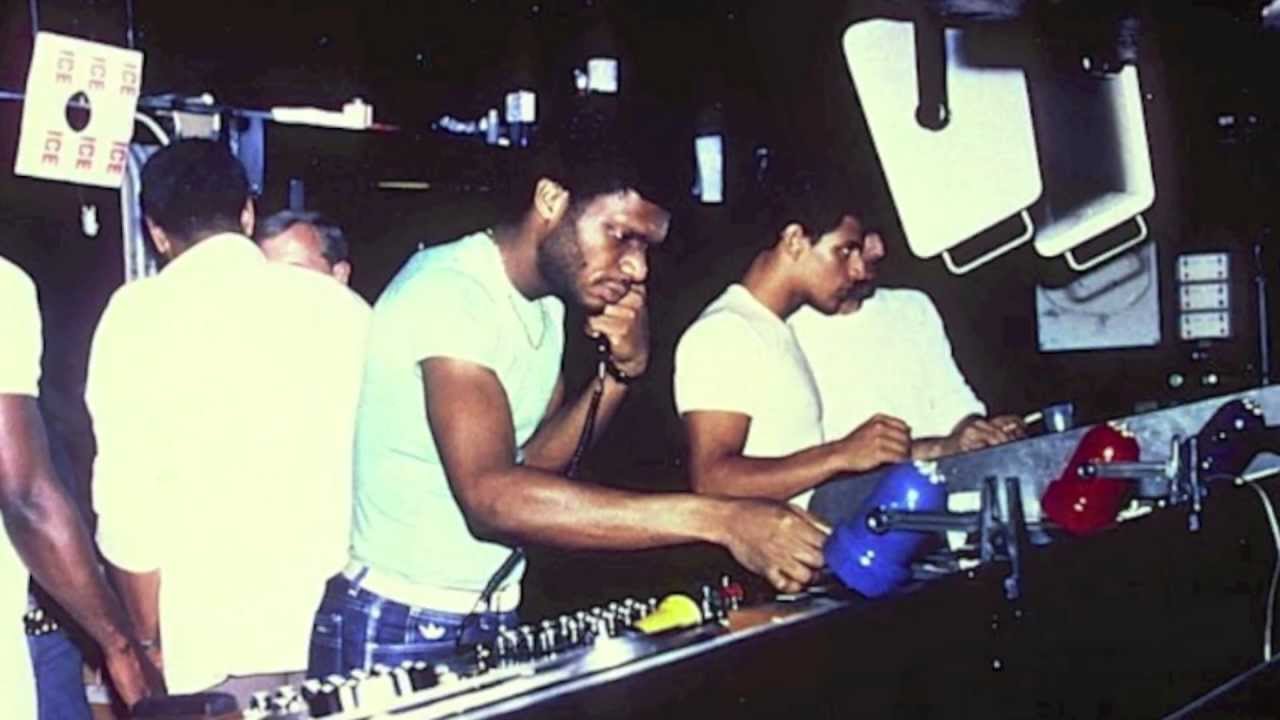
What made Levan extraordinary was not technique in the narrow sense. He was famously indifferent to beatmatching; several people who watched him have said he would let a record run out, or play the same record twice, or drop a ballad or a strange electronic oddity at the peak of the night when the floor was screaming for more. Beatmatching, in a Levan set, was a fringe benefit, never the point.
The point was programming: drama, storytelling, emotional control. His selections were gloriously genre-blind, taking in Philadelphia soul and gospel, disco and funk, new wave and synthpop, dub, African records, rock, early hip-hop and the emerging sound of Chicago house. He controlled the lights, the sound and reportedly even the room temperature to shape a mood, and he was ubiquitous, cleaning the mirror ball on a ladder mid-party, running onto the floor to adjust a speaker. He would break a record he believed in over and over until, in effect, he had programmed his crowd to love it; lines formed at record shops the next morning for what he had played the night before. His friend and peer Francois Kevorkian captured the mystique in one line to DJ History: you have to un-learn everything you have ever experienced about clubs to understand the Paradise Garage.
The Remixes and the Peech Boys
Levan carried the dance floor into the studio. As a remixer and producer he became one of the defining architects of the 12-inch single, and his credits are documented across the era's key records: Taana Gardner's slow, hypnotic Heartbeat (West End, 1981); the Larry Levan mix of Loose Joints' Is It All Over My Face?, the Arthur Russell project, on West End in 1980; Class Action's Weekend and Instant Funk's I Got My Mind Made Up; Inner Life's Ain't No Mountain High Enough; and his lush, dub-inflected reworkings of Gwen Guthrie's material, including the Padlock special mixes cut with Sly and Robbie.
His most influential production was with his own group, the Peech Boys, later the NYC Peech Boys. Their 1982 single Don't Make Me Wait, released on West End and co-produced with Michael de Benedictus, is a landmark: gospel-tinged vocals and tinkling piano over dubwise bass, echoing space and a sudden vocal-only drop. It is one of the first dance records to fully absorb the dub aesthetic, using delay, silence and space as rhythm, and its DNA runs straight into house music.
NYC Peech Boys - Don't Make Me Wait
How a Club Named a Genre
The Garage's influence was so complete that it named a sound. The soulful, gospel-inflected, song-driven New York dance music that grew out of the club, heavier on live instruments, big vocals and R&B feeling than the leaner drum-machine tracks coming out of Chicago, became known simply as garage, after the room. Mel Cheren framed the contrast memorably: the music Levan played, like the Salsoul Orchestra and MFSB, was made by orchestras and live musicians, and when the kids in Chicago wanted to start recording they could not afford that, so they used computers at home and stripped it down. House, as Cheren put it, is garage on a budget.
It is a neat parallel with Levan's oldest friend. When Levan reportedly passed on an offer to move to Chicago, Frankie Knuckles took it, and his residency at the Warehouse gave house its name in exactly the same way. The two teenagers from the New York underground ended up as the twin naming points of modern dance music culture. Decades later, British producers borrowed the garage name for a faster, more syncopated sound, UK garage, that evolved into something quite different and in turn fed grime and dubstep, but the word still traces back to King Street.
The Closing, and the Loss
The Garage could not last. As the AIDS epidemic devastated its community and the building's lease came under pressure, Brody, himself now living with AIDS, chose not to seek a new home for the club. The Paradise Garage held its legendary closing party in September 1987, an emotional marathon that felt to its members like the end of an era. Michael Brody died of AIDS-related illness weeks later, in 1987.
The closure devastated Levan, who understood that few owners would tolerate his eccentricities and his deepening struggles with drugs. He had grown dependent on heroin and PCP through the mid-1980s, and in his final years he sold records to survive; friends quietly bought them back. There was, briefly, a sense of a comeback: a 1991 stint helping to tune the sound system at London's Ministry of Sound, and a celebrated 1992 tour of Japan with Francois Kevorkian, whose accounts describe Levan's final sets there as nostalgic, bittersweet and knowing. Not long after returning to New York, Larry Levan died on 8 November 1992, aged 38, of heart failure caused by endocarditis.
Why the Room on King Street Still Matters
Larry Levan was inducted into the Dance Music Hall of Fame in September 2004, in its inaugural class alongside figures including David Mancuso, Tee Scott, Giorgio Moroder and Tom Moulton. In 2013, the former Garage patron and DJ Frankie Cruz launched a petition to co-name the block of King Street between Varick and Hudson Larry Levan Way; the following year, on 11 May 2014, a Red Bull Music Academy street party at 84 King Street, with Francois Kevorkian, David DePino and Joey Llanos, drew a reported 20,000 people and thousands of signatures behind the cause, though the block was never formally co-named by the city. The annual reunion events around his July birthday keep the memory alive, and his mixes and productions have been steadily reissued and compiled. His fingerprints are on virtually every DJ who followed: David Morales, who filled in for him at the Garage; Danny Tenaglia and Junior Vasquez, both Garage acolytes; Francois Kevorkian, Danny Krivit, Joe Claussell and countless others who have said outright that they became DJs because of him.
There is a lesson in all of it that outlasts the myth, and it is the most useful thing a DJ or producer can learn: a set is a narrative, a room is an instrument, and programming, the art of moving people through an emotional arc, matters far more than technical perfection. Larry Levan proved that a great record in the right moment can rearrange a life. A converted garage on King Street, and the man in its booth, invented the modern idea of what a night out could be, and we are all still dancing inside it.
Key takeaways
• Larry Levan, born Lawrence Philpot in 1954 and died in 1992, was the resident DJ of the Paradise Garage and is widely regarded as one of the most influential DJs ever.
• The Paradise Garage at 84 King Street, run by Michael Brody with a legendary Richard Long sound system, ran from 1977 to its closing party in September 1987.
• Levan's genius was programming and drama over beatmatching, with genre-blind sets that treated the room as an instrument.
• As a producer and remixer, from the Peech Boys' Don't Make Me Wait to Taana Gardner's Heartbeat, he helped invent the modern remix and the garage sound.
• The club gave garage its name, mirroring how Frankie Knuckles' Warehouse named house; Levan's influence runs through generations of DJs worldwide.
