Starting your own club night is one of the most direct ways for a DJ to stop waiting for bookings and build a platform of their own. Instead of begging promoters for slots, you become the resident, curate the sound, choose the guests and grow a crowd that follows you. It is also real work and a genuine financial gamble — so this guide treats it as both a creative project and a small business, walking you through concept, venue, lineup, promotion, money, the night itself, and how to turn a one-off into something that lasts.
Why start your own night
If you wait for a promoter to hand you your first proper crowd, you might wait a long time. Running your own night flips that: you control the lineup, the music policy and the vibe, and you can book yourself every time. It is also one of the fastest routes to being taken seriously — when people see you running a successful event, venues, promoters and collaborators notice the initiative. This makes your-own-night a recognised path both to getting DJ gigs and to becoming a resident; a night you run is, by definition, your own residency and your strongest bargaining chip when other promoters consider booking you.
There is a community dimension, too. Many of dance music's most loved nights — and a lot of queer, BIPOC and underground events — began precisely because someone wanted a space the existing scene wasn't providing. NYC nightlife host Shannon Dawson describes promoting as a way to showcase hugely talented members of her community who might not otherwise get the shine they deserve, and as a pathway to mentorship. But be clear-eyed: this is a business with risk attached. As John Barclay, owner of Brooklyn's Bossa Nova Civic Club and Paragon, told Pirate.com, the vast majority of nightlife is deeply un-glamorous and blue-collar — in practice mostly broken toilets, malfunctioning equipment and the odd artist tantrum. You take on costs and you can lose money. Do it because you love it, not because you expect to get rich quickly.
Build the concept and brand first
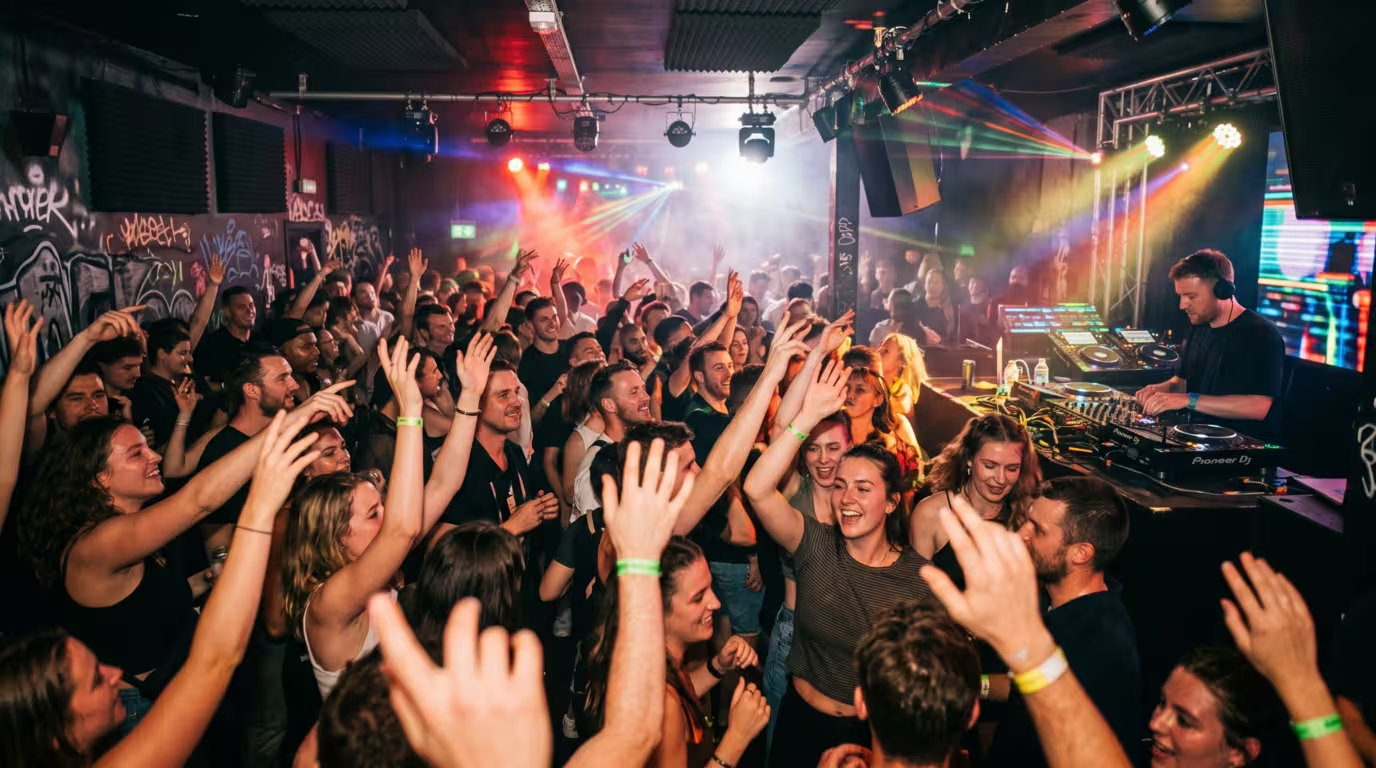
Before you ring a single venue, define what your night actually is. A clear concept — a strong, memorable name, a defined musical identity, and a target crowd — is the foundation of everything you'll later promote. As one Manchester promoter panel put it, the clearer your identity, the easier you are to remember. Don't over-complicate the message. People rarely turn up for a genre label alone; they come for a whole experience, so nail the tone, the visuals and the feeling as well as the sound.
This is the night's brand, and it deserves the same care as your personal DJ brand. Pick a name, a logo and a consistent visual style that work on both a printed flyer and an Instagram story, and keep it coherent everywhere. You don't need to spend big — one experienced promoter warned against putting your last hundred pounds into it, advising you to wait until you have a bit more money behind you. The point of differentiation matters: in a busy scene, ask what makes your night different from everything else on that night. Find your unique angle and the kind of people who were waiting for someone to do exactly that thing.
Finding and dealing with a venue
Finding the right room is often the hardest single step. Choose a venue that fits your concept, your sound and — crucially — the size of crowd you can realistically pull. The most common beginner mistake is dreaming too big: 40 people in a 50-capacity bar feels like a party, while the same 40 in a 200-capacity room feels like a failure. Start small and affordable. Venues tend to keep Fridays and Saturdays for proven nights, so new promoters usually start midweek, on a Sunday or in a quieter slot — and that's fine, because a packed small night beats an empty big one every time.
Understand what the venue actually wants, because it shapes your whole deal: the venue's primary interest is bar revenue. As the entertainment promoter tradition has long worked, venues earn from a share of revenues — a percentage of the admission fees (the door) and/or the food and drink sales. That is why a busy bar matters more to the room owner than your door take. The main deal structures look like this.
| Deal type | How it works |
|---|---|
| Bar deal | Venue gives the room cheap or free in exchange for bar takings; lowest risk for you |
| Door split | You and the venue share ticket/cover income on an agreed percentage |
| Venue hire | You pay a fixed fee for the room regardless of turnout; highest risk |
| Guarantee / minimum | Venue is happy if bar takings hit an agreed figure, or you top up the difference |
For a first night, a bar deal or a low, fixed room cost is far safer than committing to a big hire fee or a bar minimum you might not hit. Negotiate to limit your risk. Establish clearly who provides and pays for what — sound system, bar staff, security, sometimes some promotion — and who handles the DJ, the flyers and the door. Above all, build a genuine relationship with the venue: be easy to work with, never rude to staff, and you'll get asked back. Relationships with venues and the wider scene are a large part of running a smooth night.
The lineup as programming and promotion
Your lineup is both the programme and a promotional tool. Typically you'll resident the night yourself and add guests. Guests bring their own followings, which is exactly why a well-chosen booking can fill a room — but don't blow the budget on a big name too early. The classic error is splurging on a headliner you can't afford in the hope of a packed house, then watching half your "definitely coming" crowd no-show.
Balance cost against draw. Rising, affordable, local talent who reliably bring people are worth more to a young night than an expensive name who doesn't. Phil Morse, founder of Digital DJ Tips and a long-time Manchester promoter, advises going for promising newcomers and negotiating hard: tell the agent honestly what you can pay, pitch the appeal of a small but credible club, and remember that a refusal this week is often followed by a phone call a couple of weeks later. When you do book guests, pay fairly, agree a set fee rather than a vague promise to pay more if it goes well, and put the basics in writing — see how to book guest DJs and what they charge and standard DJ contract practice for the detail. One more truth from the same school: your DJs don't need to be famous, but they do need to read and respond to the crowd you worked so hard to get through the door.
Promotion and marketing: filling the room
This is the heart of the job, and the hard part. As the Digital DJ Tips team bluntly note, you can throw the best party in the world but none of it matters if nobody comes — getting people into the club, they say, is a black art. Promotion for a club night is multi-channel, but its engine is personal and relationship-driven, a point reinforced across RA's feature interviewing promoters worldwide on the craft of throwing a party. You don't just post a flyer and hope — you invite, you hustle, and you build a community.
The channels
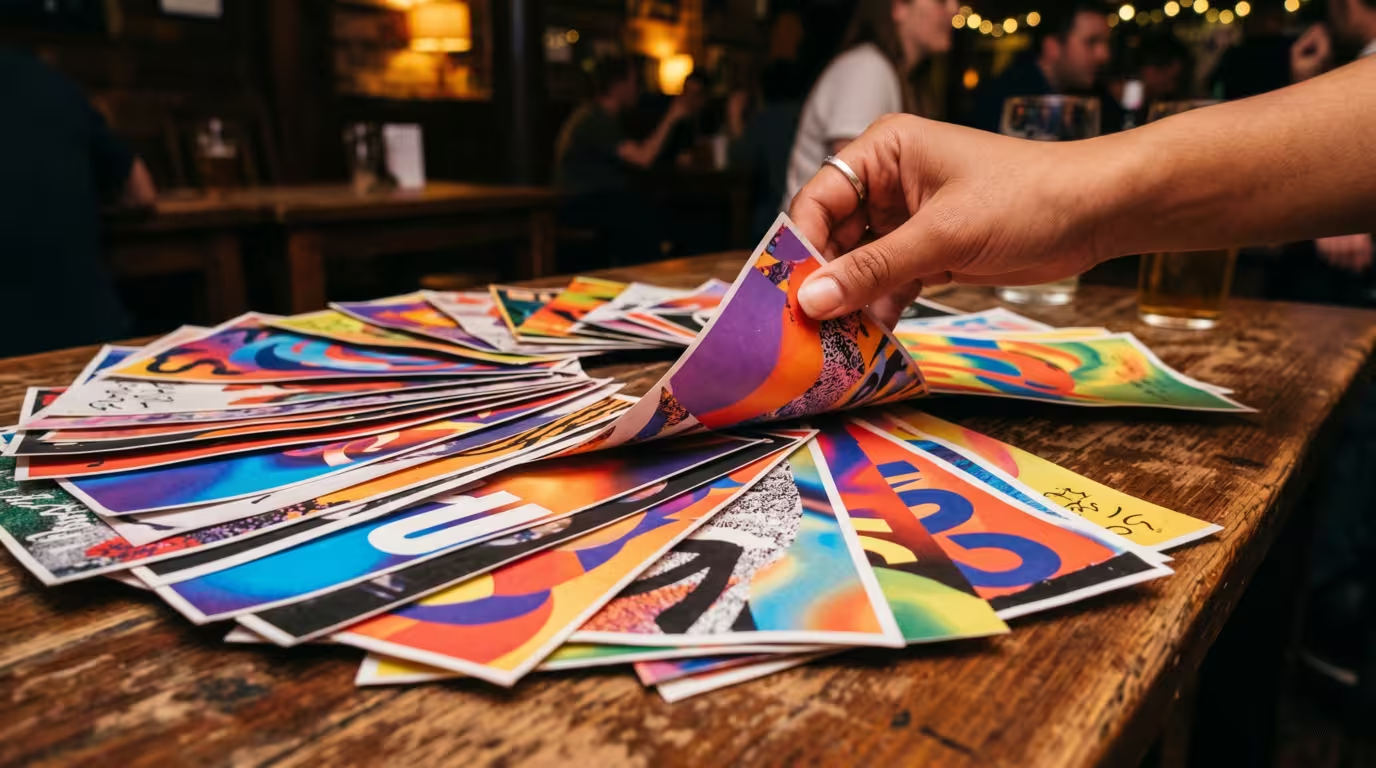
Flyers and posters remain a staple. The flyer has advertised music concerts, nightclub appearances and festivals for decades as a low-cost form of mass marketing; today you'll run both physical flyers and digital versions across your feeds. Social media is your main digital channel — event content, video, consistent posting and a countdown to the night. For the detailed how-to of social tactics, lean on your platform strategy and treat the night like its own mini-brand with a recognisable look.
Event listings and pages are standard and expected. On Resident Advisor, listing an event is free, must be approved, and reaches a large, self-selecting electronic-music audience; RA also auto-notifies followers of your promoter page by email and push when you post a new event, and its attending count provides public social proof. Facebook events and local what's-on listings do similar work. Build an email/mailing list from day one — when people buy a ticket they can opt in, giving you a direct line to invite them to the next one.
Then leverage everyone's audiences. Your guests, your residents, the venue and your own network should all be sharing — that multiplication is most of your reach. Tap local press, blogs and scene pages. And use ticketing and presales.
| Channel | What it does |
|---|---|
| Word of mouth / personal invites | Most powerful; you and your team personally bring people |
| Flyers & posters | Cheap, tangible reach in the right neighbourhoods and venues |
| Social media | Event content, video, countdowns; builds anticipation |
| Listings (RA, Facebook, local) | Discovery + social proof + automated reminders |
| Presale tickets | Build momentum, gauge demand and reduce your financial risk |
Why word of mouth wins
The single most effective channel is a friend telling a friend. There is no better endorsement than a friend vouching to their friends, as one San Francisco promoter put it — his advice was to make every punter your friend. Identify the people you actually want in the room and invite them personally; recruit a small street team or crew of friends who each bring people. New York nightlife expert C. Nez Byrd reckons that an open invitation typically converts at only around 10 to 20% attendance — so you must invite far more people than the number you need, actively keep growing that audience, and keep promoting almost every day, not just the week of the event.
Presales and momentum
Advance and early-bird tickets, sold through a ticketing platform, do three jobs at once. They build momentum and a sense of occasion; they let you gauge demand before the night; and they reduce your financial risk by turning interest into guaranteed cash before you pay your costs. As Mixmag advises, get a listing up early and start selling advance tickets from the word go, which also lets you gauge how many people are coming and earn a little before the big night. Platforms such as Skiddle, DICE, Eventbrite and Resident Advisor all handle event ticketing for nightlife; DICE, founded in London in 2014, is an app-based ticketer that, per Wikipedia, gained popularity for its strong stance against scalping, while RA is built specifically around the electronic-music community. A modest early-bird tier sold to your keenest fans rewards loyalty and creates the "sold out in two days" buzz that pulls in the fence-sitters.
The door, the money and the economics
Run the numbers before you commit, even if it's just two sheets of paper — one for cash flow (when money comes in and goes out, including DJ deposits paid before the night) and one for rough profit and loss. Income is mainly the door charge or tickets, plus possibly a cut of the bar depending on your deal. Costs are the venue (if any), guest DJ fees, promotion and flyers, security and sundries. The venue deal shapes everything: a bar deal can mean almost no room cost, while a hire fee or bar minimum puts real money at stake.
Be honest about the most important reality: early nights often just break even or lose a little. The goal at the start is building the night and the crowd, not instant profit. Manage a budget, keep costs low, lean on presales to gauge demand and de-risk, and never put yourself in financial danger you can't absorb. Barclay's encouraging version is that all you really need is a couple hundred dollars and a dream — but it comes with his firm rule attached: start small and scale up, because most of his favourite raves and club nights began in small bars and cafes before growing into events with queues around the block. Promoters carry the financial risk in this game; respect it.
Running the night
On the night you are no longer just the DJ — you're the promoter and host. Sort the practical things early: a clear door and guest-list system, sensible cash handling (one accountable person on the money), a sound check, and a quick brief so everyone knows their job. Work with the venue staff and security rather than against them; good door staff and a manager who understands what you're doing are, in the words of one veteran, invaluable.
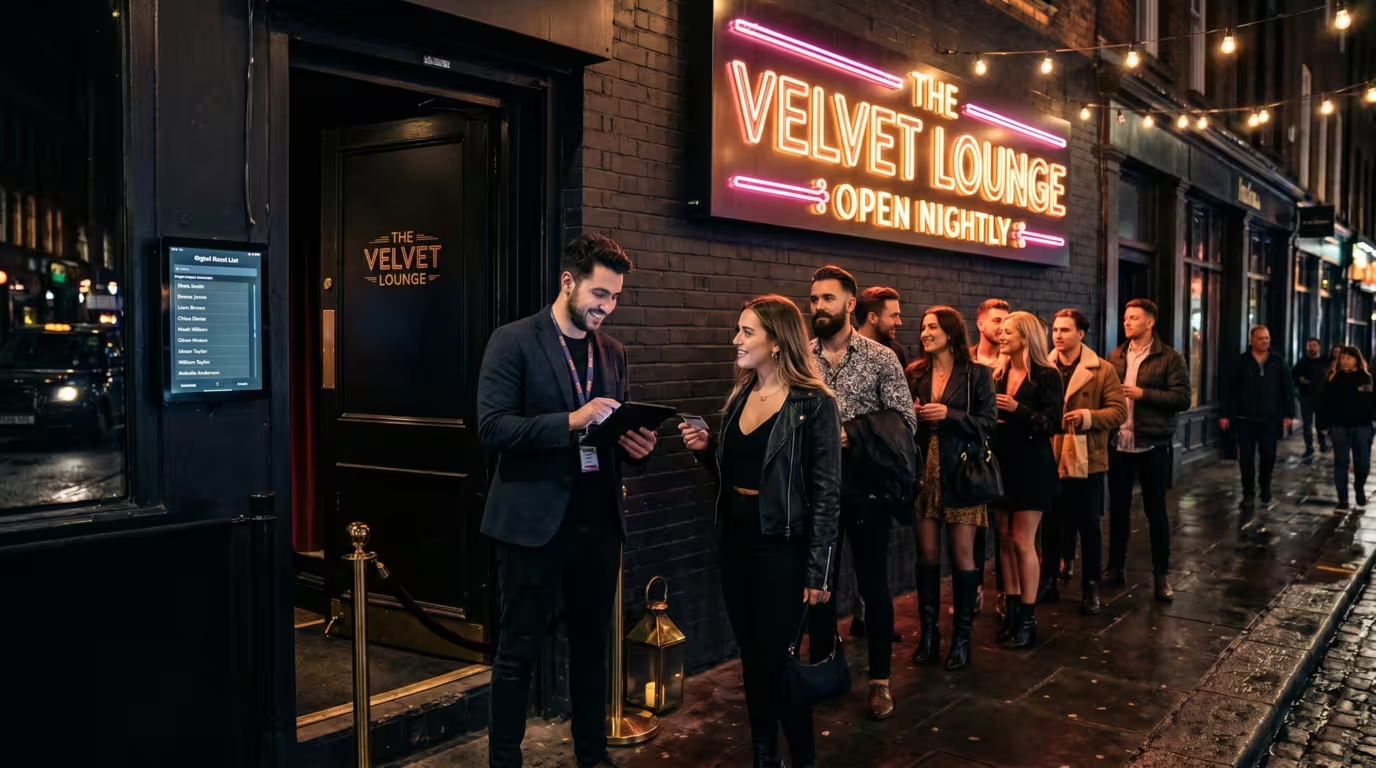
Then host. The atmosphere is your real product, and the experience starts at the door. Make people feel seen and welcome, work the room, introduce people, and keep the energy building. The most successful nights are run by teams that work hard at making sure everyone has a good time — guests should feel they've stumbled on the place to be. Hospitality-minded door and security staff, who can de-escalate calmly while keeping people safe, protect both the vibe and your reputation. Give your guest DJs space to do their job, look after them, and keep the whole thing running smoothly.
Building a recurring night and community
A one-off can be fun, but the real prize is a recurring night. Consistency is what turns a quiet launch into a local institution: keep the same night, venue and identity so people can build you into their routine. A recurring night gives the venue a reliable draw and gives you a platform to develop a following of regulars. Nurture that community — recognise the regulars, reward loyalty, collect feedback after each event — while keeping the core concept consistent and rotating guests to stay fresh.
Above all, be patient. Nights take months, not weeks, to build. As Mixmag notes, you can cultivate a solid club night around a core set of residents, but it takes time and patience. Improve something every time — better sound, better visuals, a smarter flyer — because people respond to a night that's visibly growing and feel special for being part of it. Review and learn after each event: what filled the room, what didn't, where the money went. Done well over time, the night becomes your residency, your brand and your platform all at once.
Practical tips and common mistakes
• Have a clear concept and identity. Name, sound and target crowd come before anything else — it's what you promote.
• Pick a venue and deal that fit and limit risk. Start small and affordable; favour a bar deal or low room cost over a big hire fee early on.
• Don't overspend on a big name too soon. Affordable local talent who bring a crowd beats an unaffordable headliner.
• Promote on every channel, anchored by word of mouth. Flyers, social, listings and presales matter, but personal invites win.
• Leverage everyone's networks. Guests, residents, the venue and you should all be sharing.
• Use presales to gauge and reduce risk. Early tickets build momentum and tell you what's coming before you spend.
• Be a welcoming host. The atmosphere and the door experience are the product.
• Remember the venue cares about the bar. A busy bar keeps you in the building.
• Be consistent and patient. Same night, same venue; nights are built over months.
• Don't lose money you can't afford. Budget, keep costs low, and treat early breakeven as success.
Key takeaways
• Your own night makes you the resident and your own platform — but it's real work and a financial risk, not just a party.
• A clear concept, the right-sized venue, a sensible deal and an affordable lineup are the foundation.
• Promotion is multi-channel but personal: word of mouth, flyers, social, listings and presales together.
• The venue's main interest is the bar; structure your deal to limit your own risk.
• Run the night as a host, then build it patiently into a consistent, community-driven residency.
Ready-made, exclusive EDM tracks with full rights — released as your own.
