For working and aspiring DJs, social media is now the main shop window. It is where new fans discover you, where promoters and labels size you up, and where you promote gigs and releases between shows. But it is a tool that serves your music and brand — not a replacement for being good behind the decks. This guide is the tactical how-to: the platforms, the content, the posting rhythm, and the growth tactics that turn scrolling strangers into a fanbase and a booking draw.
Why social media matters for DJs
For independent and emerging artists, social media is the single most cost-effective marketing channel that exists. It costs nothing to post a clip of last night's set, and that clip can reach people in another country by morning. It is how you build the following and draw that makes you bookable — and that matters because the people who book you are watching. Promoters and labels routinely check an artist's socials and engagement before making decisions, to the point where a strong online presence can tip a booking your way even against more technically gifted competitors.
How far this has gone is striking. A survey of 15,000 DJs and producers who use the Pete Tong DJ Academy, presented at IMS Ibiza in April 2025 and reported by Mixmag, found that 61% of emerging DJs believe their social media numbers matter more than their musical skill, and 62% believe the electronic music industry is a closed club. That is a sobering statistic, and it cuts both ways: social media is a genuine opportunity for the unconnected, but it can become a treadmill. The healthy framing is the one the best DJs use — social media amplifies who you are, so the work is to be worth amplifying. Your sound, your sets and your identity come first (that foundation is the subject of our Building a DJ Brand guide); social media is how you express and broadcast them.
Which platforms matter, and which to prioritise
The biggest mistake is trying to master every platform at once. Music-marketing educators are near-unanimous that a strong, consistent presence on one or two platforms beats a thin presence spread across five. Pick your primary platforms based on where your audience is and what content you can realistically make, then treat the rest as repost destinations.
Here is what each platform is for.
| Platform | Best for |
|---|---|
| Visual identity, Reels, community — the DJ/artist default | |
| TikTok | Short-form discovery, reaching brand-new audiences, virality |
| YouTube | Long-form mixes, sets, tutorials; searchable and evergreen |
| Mixcloud | Hosting full DJ sets/radio shows, licensed so they aren't taken down |
| SoundCloud | Original tracks, edits and mixes; discovery in the underground |
| Events, groups, an older demographic | |
| X (Twitter) | Industry chatter and announcements; less central now |
Instagram is the de facto home base for DJs — the place where your visual identity lives and where fans, promoters and peers expect to find you. Its Reels (short vertical video) are the growth engine, while Stories keep your existing community warm and the grid acts as a portfolio. Crucially, Reels are built for discovery: as Instagram itself explains, the platform shows them to people who don't follow you, so a single strong clip can reach far beyond your audience.
TikTok
TikTok is the discovery machine. Unlike follower-graph platforms, its For You feed is interest-based, which means a brand-new account with a great clip can reach huge numbers. That is why so many DJs have broken out there. The platform has leaned into electronic music hard: in 2024, videos tagged #ElectronicMusic on TikTok overtook the indie and rap categories for the first time, and the company rolled out a dedicated #ElectronicMusic hub for artists, DJs and producers. If your goal is reaching new people who have never heard of you, TikTok is the most powerful tool available.
YouTube
YouTube is the long-form home and a search engine in its own right — the place for full mixes, recorded sets, gear and technique tutorials, and vlogs. Its content is evergreen and searchable, so a good tutorial or mix keeps earning views for years, and YouTube Shorts lets you feed the discovery machine with clips cut from longer pieces. As CD Baby's DIY Musician notes, YouTube is a top platform for music discovery — citing Edison Research's figure that 70% of Americans aged 12 and up use it to find new music.
Mixcloud and SoundCloud
These are where your actual mixes live. The key practical fact: Mixcloud is fully licensed, with direct deals with major and independent labels, so full DJ sets and radio shows uploaded within its Featured Artist Rules won't be muted or taken down for copyright — unlike most other platforms. SoundCloud is the long-standing home for original tracks, edits and mashups and is excellent for underground discovery, though hosting full copyrighted DJ mixes there sits in a grey area. Use SoundCloud for your productions and Mixcloud for your long-form sets — and see our Recording Your DJ Mix guide for getting those mixes right in the first place.
Don't forget what you own
Algorithms change and platforms rise and fall — MySpace was once irreplaceable. That is why marketers increasingly stress building something you actually own: an email list and a website. Social media gets you seen; an email list lets you reach your fans directly when a release drops, no algorithm permitting. Treat it as the backstop to everything else.
Short-form video is the dominant format
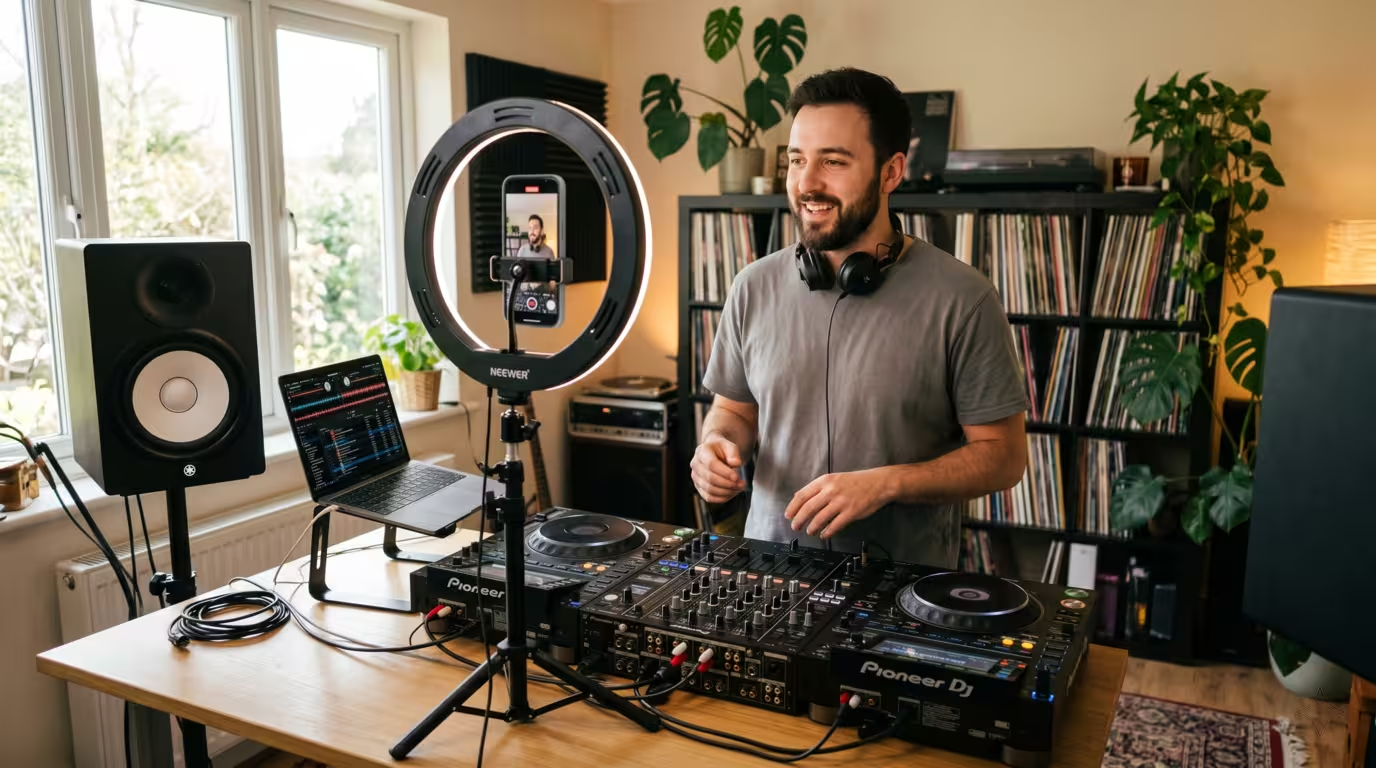
If you take one thing from this guide: short-form vertical video is currently the single biggest driver of organic reach for artists. Instagram Reels, TikTok and YouTube Shorts all run on discovery-driven algorithms that push video to non-followers, and every major platform has restructured itself around the format — a shift Wikipedia documents under the term TikTokification. HubSpot's State of Marketing research has repeatedly ranked short-form video as the top content format for reach and return on investment. For a DJ, that is a gift: your art is inherently visual and audible, which is exactly what these feeds reward.
The short-form content that works for DJs is well established.
| Content type | Why it works |
|---|---|
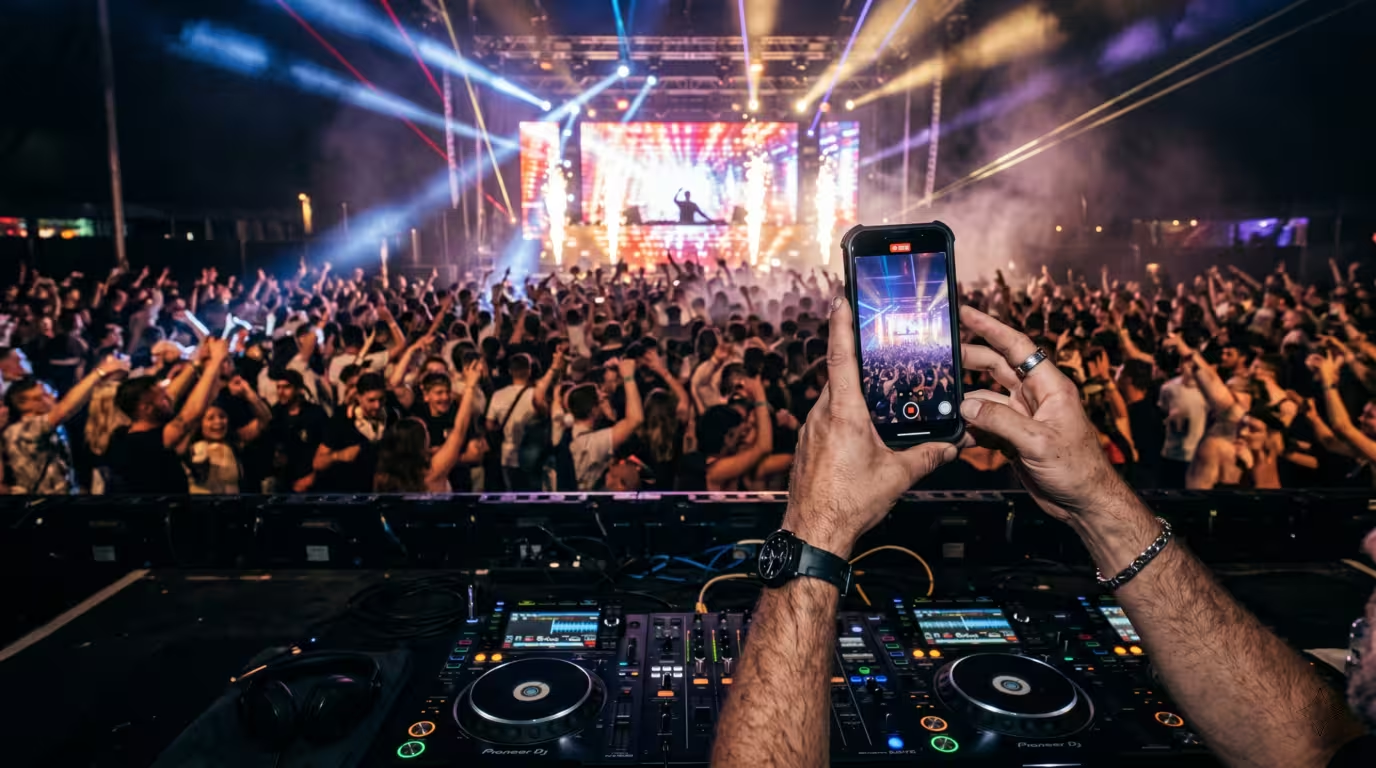
| Set clips and the "drop + crowd reaction" | Highly shareable; captures energy in seconds |
| Studio/production snippets | Shows your craft and gives a track preview |
| Behind-the-scenes / day-in-the-life | Builds intimacy and connection |
| Transitions and technique | Impresses peers and aspiring DJs |
| Track IDs and edits | Fans follow accounts to discover music |
| Talking-head / personality | People follow people, not just music |
Two principles govern all of it. First, the hook: the opening one to three seconds decide whether someone keeps watching or scrolls, and watch-time is one of the strongest signals an algorithm reads. Lead with the most arresting moment, not a slow build. Second, repurpose ruthlessly: film once and cut the same clip for TikTok, Reels and Shorts. You do not need separate content for each platform — cross-posting roughly triples your reach for the same effort.
What to post: the content mix
A profile that is nothing but gig flyers and buy-my-track links is the classic turn-off. DJ TechTools, in its well-known piece on social media mistakes, frames the core error as doing promotion first and hoping community follows — it should be the other way around: build the community, then occasionally bring them your mixes, gigs and releases. The practical rule is to mix promotional posts with genuine value and personality.
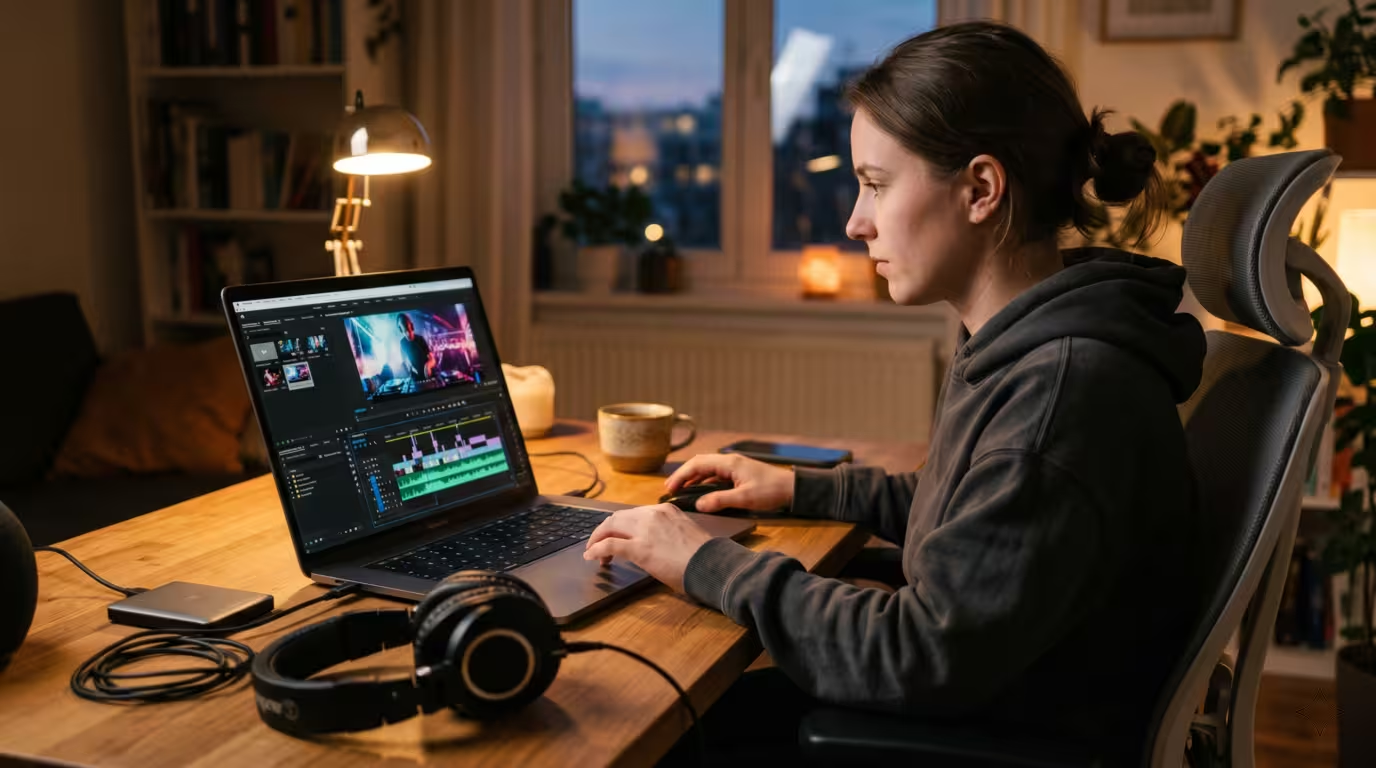
A healthy content diet for a DJ includes: performance and set clips (especially that drop-and-crowd moment); behind-the-scenes and day-in-the-life; studio and production process; track previews and IDs; gig and release announcements; tutorials and tips; talking-head/story content where you actually speak; and fan interaction like Q&As and replies to comments. The German DJ ESKEI83, who has built a following well into the hundreds of thousands, described his workflow in a Phase DJ interview: after a gig he syncs all the footage in Final Cut Pro, finds around twenty usable clips, and banks them for the weeks ahead — re-posting his signature routines from different gigs and testing captions to see what lands.
All of this should express your brand — the identity, sound, look and story you have defined elsewhere. Content is where the brand becomes visible, so keep it coherent: a recognisable colour palette, tone and subject matter so a stranger landing on your profile instantly gets you. (The brand foundation itself is covered in Building a DJ Brand; this is how you broadcast it.)
Consistency and posting strategy
Consistency is the most-cited factor in social growth, and for good reason: algorithms interpret regular posting as a sign of reliability and reward it, and audiences need repetition to remember you. The widely shared advice for DJs is to post a few times a week — ESKEI83's rule of thumb, in that same Phase DJ interview, is that it needn't be daily but should be at least two or three times a week, and many guides suggest three to five. What matters most is a cadence you can actually sustain. A steady three-times-a-week rhythm beats a frantic burst followed by a month of silence.
The way to stay consistent without it eating your life is to batch and schedule. Film and edit in blocks rather than scrambling daily, plan with a simple content calendar, and keep a backlog of ready clips for quiet weeks. This is exactly how busy working DJs keep feeds alive while still playing, producing and touring. Consistency compounds — the account that shows up reliably for a year is in a completely different position to the one that posts in spurts.
Growing a following organically
Organic growth is not mysterious: it is great content, plus consistency, plus genuine engagement, repeated over time. Short-form video does the reaching; everything else converts and retains. Specific levers that help:
• Hooks first. Win the first three seconds or lose the view.
• Captions and SEO over hashtags. Keywords in captions and your profile increasingly drive discovery on TikTok, YouTube and Instagram; a few relevant hashtags help, but stuffing them does not.
• Collaborate and tag. Duets, features, b2b clips, guest mixes and tagging other artists expose you to their audiences. On Mixcloud, being tagged as a guest puts you in another creator's search results.
• Engage to be seen. Liking and genuinely commenting on others' posts gets you noticed far more than posting alone.
• Test, then repeat what works. Instagram's Trial Reels even let you test a clip on non-followers before showing your audience.
And the firm don't: never buy followers or engagement. It is one of the most universally warned-against moves in music marketing because it actively backfires. Platform algorithms measure engagement rate, not raw follower count, so a bloated number with no interaction tells the algorithm your content is boring and suppresses your reach. Worse, industry professionals spot inflated counts instantly through engagement analysis, and it destroys credibility with the exact promoters and labels you are trying to impress. The honest, slow build is the only one that compounds — and it can move fast when it is real. Mixmag reported that DJ Lilli's mashups earned her 100,000 followers and 2 million likes within her first two weeks on the app, and that less than a year later she had 2.3 million followers and 54.2 million likes — all from content, not purchases.
Engagement and community
Social media is social — two-way, not a billboard. The DJs who build durable fanbases reply to comments and DMs, ask questions, and engage with other people's content rather than only broadcasting their own. ESKEI83's advice is blunt and typical: when people take the time to comment, reply with something meaningful and start a conversation, because that is how a follower becomes an invested fan. Community first, promotion second.
This is where social media overlaps with real networking. Genuine engagement online — supporting peers, sliding into DMs to talk about a track, being part of a scene's conversation — builds the relationships that lead to opportunities. (Our Networking in Dance Music guide goes deeper on the relationship side.) A few hundred people who actually care about what you do are worth more than thousands who never interact.
Authenticity and not burning out
People follow people, not logos. Showing personality — your taste, your humour, your story, your face — is repeatedly cited as what separates DJs who connect from those who just post product. The flip side is the spammy, relentless self-promoter, which is the fastest way to get muted. Give value, entertain or connect; sell sparingly.
Authenticity also protects you from the trend treadmill. Chasing every format at the expense of your identity is a recognised trap; the DJs who thrive adapt trends to their own voice rather than copying. And there is a real wellbeing dimension here that the dance-music press has covered candidly. The Pete Tong DJ Academy survey found 52% of respondents had experienced anxiety or burnout and 31% had considered quitting music, with one young DJ describing how every post starts to feel like a test, and a flop like a personal failure. Mixmag has reported separately that social media is dangerously affecting DJs' mental health. That mindset — tying your self-worth to metrics — is the danger. Set boundaries, remember a feed is a highlight reel rather than reality, and don't let the numbers consume the music. Posting sustainably for years matters far more than posting frantically until you crash.
Measuring it and using it as social proof
Learn to distinguish vanity metrics from real ones. A raw follower count is the shallowest number; comments, shares, saves, watch-time and DMs reflect genuine interest and a real community. Followers do function as social proof — they signal to promoters and labels that you can draw a crowd, which is one reason a healthy presence affects bookability (see How to Get DJ Gigs). But a big hollow number with no engagement fools no one in the industry, while a smaller, highly engaged community is genuinely persuasive. Use your built-in analytics lightly to see what resonates and do more of it, then carry that social proof into your outreach and press kit (a future EPK / Press Kit guide will cover packaging it).
Common pitfalls to avoid
• Only ever promoting. Pure self-promotion drives people away; lead with value.
• Inconsistency. Bursts then silence kills momentum and algorithmic favour.
• Buying followers or engagement. It suppresses reach and wrecks credibility.
• Chasing virality over identity. A viral clip that doesn't match who you are brings followers who leave.
• Ignoring engagement. Not replying wastes the social in social media.
• Copying without an angle. Learn from others, but add your own voice.
• Letting metrics harm your wellbeing. Protect your mental health; set limits.
• Neglecting the actual music. Clout without craft collapses — substance first.
• Spreading too thin. One or two platforms done well beats five done badly.
The bottom line
Social media is a genuinely powerful, low-cost tool that can build the fanbase and reputation that make a DJ career possible. But it works best layered on top of real substance — good music, good sets, a clear identity. It amplifies who you are. So put the work into being worth amplifying, pick your platforms, post consistently with personality, engage like a human, and let the music lead.
Key takeaways
• Social media is a primary discovery and marketing channel and a real bookability signal — but a tool that serves your music, not a substitute for skill.
• Pick one or two platforms (usually Instagram plus TikTok and/or YouTube); use Mixcloud for licensed full mixes and SoundCloud for tracks.
• Short-form vertical video drives the most reach; hook hard in the first seconds and repurpose one clip everywhere.
• Consistency beats intensity — batch content and post a sustainable few times a week.
• Engage genuinely, never buy followers, value real engagement over vanity counts, and protect your wellbeing.
Ready-made, exclusive EDM tracks with full rights — released as your own.
