Dance music is a relationship-driven, small-world industry. Gigs, collaborations, remixes, label signings, mentorship, and lucky breaks flow through people far more reliably than through cold emails and unsolicited demos. That is why networking — building real connections and being a genuine part of a community — is one of the most valuable skills a DJ or producer can develop. This guide is the dedicated, practical companion to our How to Get DJ Gigs roadmap: where that article treats networking as one route to bookings, this one treats relationship-building as a career-long craft in its own right.
Why networking matters in dance music
The electronic music world runs on trust and familiarity. Promoters book DJs they have met, seen out, or had vouched for by someone they respect; labels sign producers whose names already circulate among artists they trust; collaborations start with people who genuinely like each other. The most-repeated truth across music-business educators is that relationships, not raw talent alone, determine who gets the opportunities — the artists who land bookings, press, and signings are often the most connected rather than the most gifted.
This is not cynical. It reflects how a creative scene actually works: opportunities are scarce and risky, so people route them to those they know and believe in. Resident Advisor, which has documented club culture since 2001, frames local scenes as electronic music's core — the communities where DJs land their first gigs, where promoters throw their first parties, and where like-minded people connect, collaborate, and forge new ideas and friendships. Your network is, in a very practical sense, your access to the industry.
The mindset: authentic vs transactional
The single most important idea in this guide is the difference between authentic relationship-building and transactional networking. In the music industry the word networking often carries a bad smell — fake smiles, elevator pitches, and relationships based purely on what can you do for me. Real networking is the opposite: it is building genuine relationships, contributing to a community, and treating people as people rather than stepping stones or opportunities.
People sense transactional behaviour almost instantly, and it backfires. If the first time someone hears from you is when you want something, the whole interaction feels extractive. The healthier approach is to lead with genuine interest, generosity, and patience, and to let the business side grow naturally out of the relationship. Digital DJ Tips puts the limit of pure contact-collecting memorably: networking at a big event isn't a game of Pokémon Go — you can't simply collect people.
The table below contrasts the two mindsets.
| Authentic networking | Transactional networking |
|---|---|
| Building genuine relationships over time | Collecting contacts and business cards |
| Giving and helping before you ask | Only reaching out when you need something |
| Curious about other people and their music | Steering every conversation back to yourself |
| Patient; expects nothing immediate | Expects a quick payoff from each contact |
| Supports peers' wins and events | Sees other artists as competition |
Give before you ask
The reciprocity principle — give before you ask — is the most consistently cited rule of good networking. DJ TechTools, advising on how to approach promoters and club managers, calls giving before you ask the number-one key to influence. Generosity builds goodwill and reputation that tends to come back to you, often from unexpected directions.
The reassuring part is that even a newcomer has plenty to give. You can share and genuinely champion other people's releases and events, show up and bring friends to a night, offer feedback, make an introduction between two people who should know each other, lend a skill (design, video, copywriting, a spare controller), or simply be a reliable, supportive presence. Music-business writers describe this as creating a ripple effect: people remember who helped them, and that memory is what opens doors later.
Who to network with
A common mistake is aiming only at important people — promoters, label heads, agents. They matter, but they are a small slice of a useful network, and they are the hardest to reach cold. The most valuable connections are often your peers: the DJs and producers coming up alongside you. You understand each other's struggles, you collaborate, you cross-promote, and crucially you rise together. Today's fellow unknown is tomorrow's in-demand collaborator, label owner, or booker.
| Who | What the relationship can offer |
|---|---|
| Peers (emerging DJs/producers) | Collaboration, shared gigs and info, mutual promotion, lifelong support |
| Promoters and venue staff | Bookings, residencies, repeat slots |
| Resident DJs | Local credibility, intros, opening slots |
| Producers and engineers | Better-sounding music, collaborations, technique |
| Label staff and A&R | Releases, remixes, distribution |
| Journalists, bloggers, radio hosts | Coverage, premieres, airplay |
| Photographers, videographers, designers | Content, visual identity, cross-promotion |
Treat everyone — including door staff and the quiet producer in the corner — as a person worth knowing, not by rank. Reputations and roles change fast in a small scene.
The peer network: rising together
The rise-together pattern is so well documented in dance music that it is almost the default origin story for scenes, crews, collectives, and small labels. Friends who pool resources, share an audience, and champion each other can build something none of them could alone.
San Francisco's Dirtybird is a textbook example. It grew out of free Golden Gate Park barbecue parties thrown by a group of friends — Barclay Crenshaw (Claude VonStroke) with brothers Justin and Christian Martin and others — who wanted to become DJs together; VonStroke launched the label in 2005, and the crew of friends grew into a globally touring brand that later helped break newer artists. As VonStroke told VICE's Thump at the crew's tenth-anniversary barbecue, it was a great group of people, all of them friends, an awesome little community. The UK's Hessle Audio tells a similar story: founded in Leeds in 2007 by three friends — Ben UFO, Pearson Sound, and Pangaea — out of a club night and radio show they ran together, it became, in Crack Magazine's 15th-anniversary verdict, pound for pound perhaps the most influential British club label of its generation, while elevating all three founders' careers.
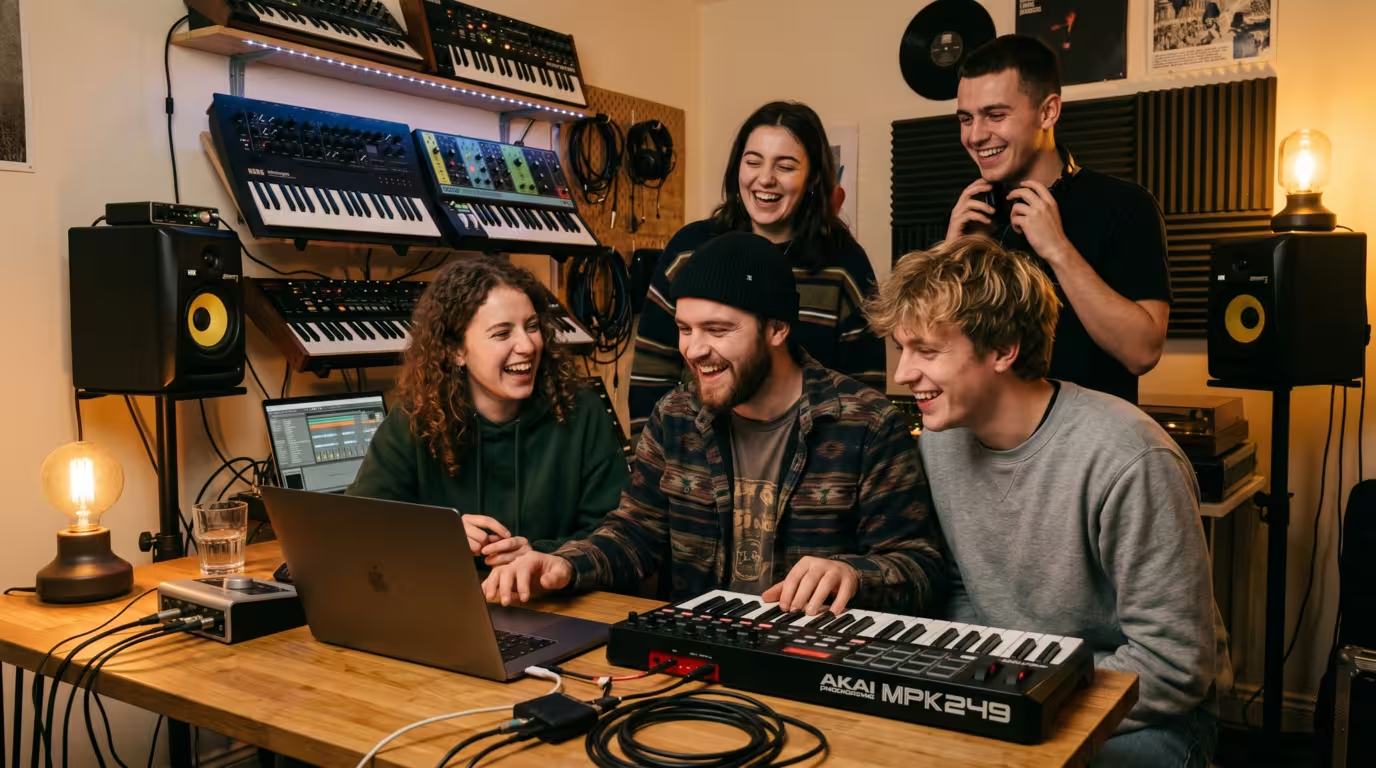
You do not need to found a label to benefit from this. Invite local producers to a studio session, start a small mix series or party with friends, share each other's work, and back each other up when gear fails or a set falls through. A peer group that supports each other is the most durable network you can build.
Where and how to network in person
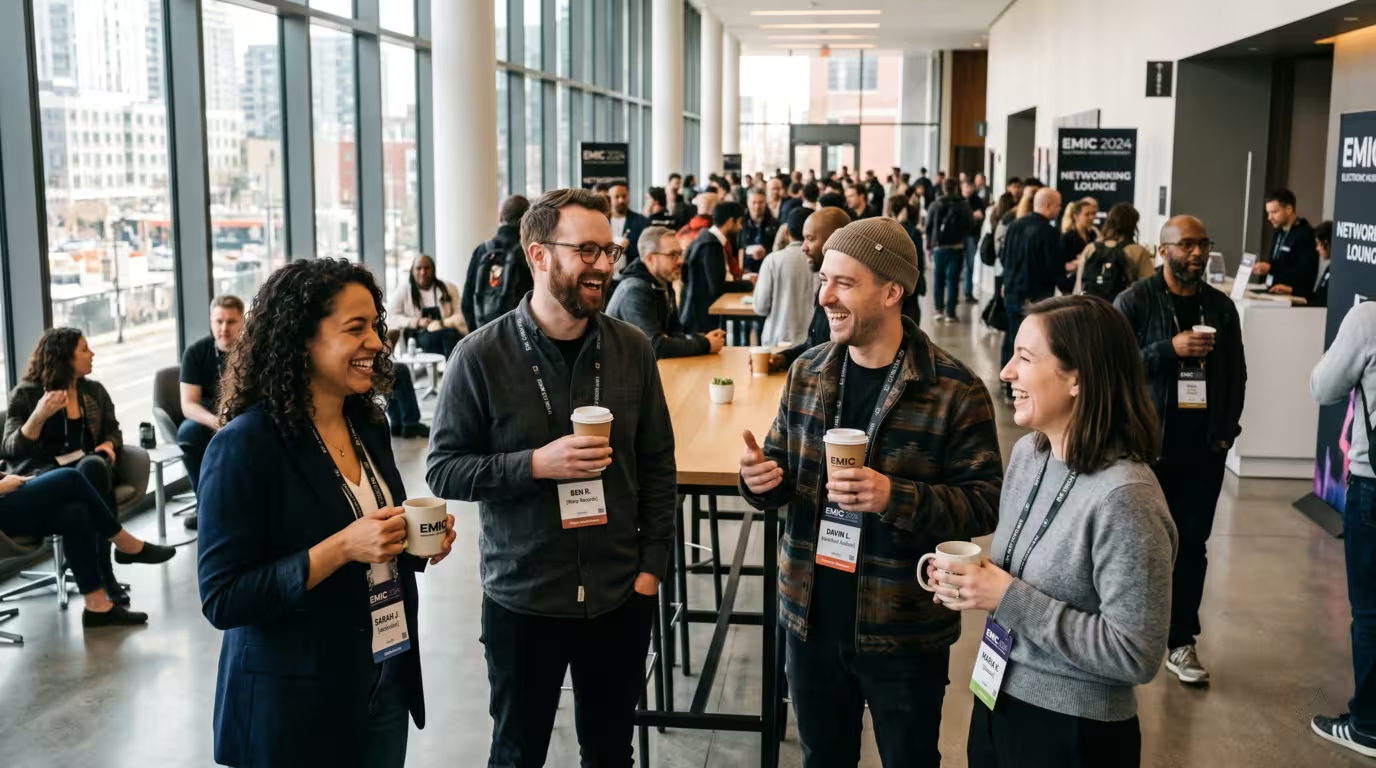
Your local scene is the number-one place to network. Go to the nights that play your kind of music, become a familiar, supportive regular, and meet promoters, residents, bar staff, and fellow dancers as a genuine community member — not as someone working the room for gigs. (Our How to Get DJ Gigs guide covers turning that local presence into bookings.) Beyond clubs, record shops, studios, workshops, label nights, and meetups all put you among people who share your passion.
Industry conferences concentrate the whole business in one place. The Amsterdam Dance Event (ADE), which launched in 1996 as a small industry conference and whose 30th-anniversary edition runs October 21-25, 2026, drew a record 600,000 visitors and 11,000 music professionals at its 2025 edition, combining a daytime conference with a city-wide festival and built-in networking hubs and matchmaking. The International Music Summit (IMS) in Ibiza — co-founded in 2007 by five partners, Pete Tong, Ben Turner, Danny Whittle, Mark Netto and Simeon Friend, and majority-acquired by Beatport in 2023 — is a smaller, focused electronic-music industry summit, and the UK's Brighton Music Conference bills itself as the country's foremost electronic music conference and networking event. These are real, verifiable gatherings where panels and mixers exist precisely so people can connect.
How you actually talk to people matters more than where. Digital DJ Tips advises spending real time with fewer people rather than racing to meet everyone, and DJ TechTools stresses that promoters and managers can see straight through a hustle, so authenticity sells. Be friendly and normal, talk about the music, ask people about themselves and their work, listen, and resist leading with a pitch. The goal of a first conversation is a genuine connection, not a deal.
Networking online
Online networking is a legitimate and powerful complement to showing up in person — and for many people it is where relationships begin. The same authenticity rules apply. On social media, engage genuinely with other people's posts and music rather than only broadcasting your own; thoughtful comments and real support build familiarity over time. Online communities — Reddit threads, Discord servers, forums, and Facebook groups — reward people who contribute (answering questions, sharing resources, offering feedback) rather than dropping links and leaving.
Direct messages, done well, open doors; done badly, they get you ignored or blocked. The difference is personalisation and restraint. A good DM is short and specific: a genuine, particular compliment (loved that second-to-last track in your set), a clear note of who you are, an easy exit if they're not interested, and a streamable link rather than a heavy attachment. Avoid mass-blasted generic messages, instant pitches to strangers, and over-follow-up. If someone doesn't reply, let it go gracefully — respect for a non-answer is part of good etiquette.
Maintaining relationships over time
Networking is not one-and-done. A contact you only ever use is not a relationship. The strongest networkers stay visible year-round and nurture connections without an agenda: congratulate people on their wins, share an opportunity that suits someone else even if it doesn't suit you, check in every couple of months, and follow up on what you said you'd do. Reliability — sending the track you promised, showing up when you said you would — is the foundation of professional trust.
This is also where patience pays. Industry relationships often take months or years to bear fruit; the producer you befriend today might invite you onto a release next year. Keeping light notes on who you've met and what you talked about is a small, genuine way to remember people as individuals, not entries in a list.
Reputation is your network
In a small, interconnected scene, your reputation travels ahead of you and effectively is your network. Being reliable, kind, humble, and easy to work with does as much for your prospects as any introduction — and being a flake, a diva, or someone who burns bridges spreads just as fast in the other direction. Treat sound engineers, opening acts, and bar staff with the same respect as headliners. Our Booth and Club Etiquette guide goes deeper on the professionalism side; the networking takeaway is simple: word gets around, so protect your name.
Networking when you're an introvert
You do not have to be a loud extrovert or a slick schmoozer to network well — a relief, since many DJs and producers are quieter, studio-minded people. Digital DJ Tips notes that a gathering like ADE isn't just for extroverted DJs, and that introverts can build strong connections by building in recovery time and focusing on depth over volume. Introverts' natural strengths — listening, empathy, reading a room — are genuinely good networking skills.
Play to those strengths: favour one-on-one conversations and smaller, more intimate events over working a crowded room; lean on online and DM-based connection where you can engage at your own pace; and aim for a couple of meaningful conversations per event rather than a stack of business cards. Quality over quantity is not a consolation prize here — it is the better strategy for everyone.
Common mistakes to avoid
• Being transactional — only appearing when you want something.
• Chasing only gatekeepers while ignoring your peers.
• Spammy, generic mass-DMs and instant pitches to strangers.
• Leading with self-promotion instead of curiosity about others.
• Collecting contacts you never nurture.
• Expecting fast results and giving up when they don't come.
• Burning bridges or being unreliable in a scene that talks.
Key takeaways
• Dance music runs on relationships; most opportunities come through people who know and trust you.
• Be authentic, not transactional — give and help before you ask, and lead with genuine interest.
• Invest most in your peers; crews and collectives that rise together (Dirtybird, Hessle Audio) are a documented pattern.
• Your local scene is the number-one venue; conferences like ADE and IMS concentrate the industry.
• Online engagement and personalised DMs complement in-person; never spam.
• Maintain relationships over time, protect your reputation, and remember introverts can network brilliantly on their own terms.
Ready-made, exclusive EDM tracks with full rights — released as your own.
