You can mix beautifully in your bedroom and still never get booked. Getting DJ gigs is its own craft — one built on hustle, relationships, and persistence far more than raw skill. This guide is the foundational roadmap for the Music Business and Career section of the DJ Knowledge Base: how a DJ actually lands bookings, from the very first slot to steady, recurring work. It points to deeper articles where they exist, but here we focus on the practical moves that get you playing out.
The reality: gigs are a people business
The single most important mindset shift is this: nobody is going to hand you gigs because you deserve them. Talent gets you in the door once; relationships and reliability keep you working. As a booker panel compiled by Pioneer DJ made clear, promoters book people they already know, trust, and see supporting the scene. A booker in Taipei put it plainly: just go hang out and support the club you want to play at, be part of the community, and if you've got what it takes you'll meet the right people eventually.
That means the work of getting booked is mostly social and gradual. The come-up is a ladder: first gig, then regular gigs, then better gigs. Rejection is normal — experienced DJs and educators agree that you will be told no many times, and that it only takes one yes. A promoter writing for 6AM noted that being turned down often just means not yet — you might be passed over now and asked to play later without ever having to approach a second time. Be patient, stay visible, and keep getting better. The DJs who make it are usually the ones who simply stuck around.
Build a local scene presence (the #1 route)
If you do only one thing from this article, do this: physically go to the nights and venues you want to play. Become a regular, familiar, friendly face. Buy a ticket, pay in, dance, support the resident DJs, share the promoter's event posts, and genuinely care about the night succeeding. This is the most-cited route into gigs across every reputable source, and it works because it flips the dynamic — instead of cold-pitching a stranger, you become someone the promoter already knows.
Digital DJ Tips, founded by longtime Manchester resident DJ and award-winning club promoter Phil Morse, recommends getting to know a venue and its staff long before you ever ask to play — going on quiet nights, befriending the bar staff, and casually getting your face into the owner's mind. London Sound Academy makes the same point bluntly: promoters always book those closest to them, DJs who support the night by turning up regularly get preference, and you should always visit a club before asking to play.
The harder truth, reported by DJs who book locally, is that bookers almost never have time to listen to unsolicited promos — so being physically present is how you get heard. Supporting the scene isn't a tactic you switch on to get a gig; it's a genuine part of being a DJ in a community. Promoters can sense the difference.

Networking and genuine relationships
Networking in music is really just building real relationships over time — with promoters, venue managers, resident DJs, and other up-and-coming DJs. The golden rule, repeated by DJ TechTools, is to give before you ask. Don't introduce yourself as a DJ desperate for a slot; introduce yourself as a person who supports what they do. Offer value first: help promote a night, support the current residents, bring friends, be easy and pleasant to be around.
DJ and producer AndThen described the approach concisely in an interview: follow the promoter, interact genuinely with their posts, go to their nights, say hello, tell them who you are, and just build a real relationship. Crucially, your fellow up-and-coming DJs are not your competition — they're your network. They recommend each other, book each other, and open for each other. In America this is half-jokingly called the homie hookup, and it explains why the same handful of DJs often play all the nights in a city: they're friends who book one another.
Remember too that the scene is small and your reputation travels. Be polite to everyone — floor staff, sound engineers, bar managers — because any of them might be booking somewhere else next year. This is the same reputation that gets you rebooked (more on that below), and it's why our Booth and Club Etiquette guide is essential reading alongside this one.
Have something to show: your mix and EPK
When a promoter does want to hear you, you need to make it effortless. The non-negotiable item is at least one strong, recent recorded mix that genuinely represents your sound and ability, hosted online with a single shareable link. (For how to actually record one well, see Recording Your DJ Mix.) Bookers we researched browse SoundCloud and Mixcloud constantly to discover talent — one London booker said she spends a lot of time on SoundCloud, cross-references RA listings and radio plays, and gets to hear most emerging artists online first.
A few principles experienced promoters and educators agree on:
• One link, not a wall of text. A booker told Pioneer DJ to keep outreach short and always include one or two links to your sets and productions.
• Tailor the mix to the slot. Digital DJ Tips reports that promoters' biggest complaint is demos full of headline anthems. If you want an opening slot, send a warm-up-style mix — it shows you understand the role.
• Keep it playable. A studio-edited mix you couldn't perform live will hurt you when you show up. Record something close to what you'd actually play.
You'll also want a short, professional bio and a simple electronic press kit (EPK) — your name, sound, a couple of links, a photo, and any notable gigs. We'll cover the EPK in depth in a future Music Business and Career article; for now, keep it concise and avoid overselling. As one DJ TechTools writer warned, billing yourself as the greatest DJ alive just makes you sound like the car dealership of music.
A short comparison of what bookers actually want versus what wastes their time:
| What promoters want | What turns them off |
|---|---|
| One strong, relevant mix link | A wall of text and huge file attachments |
| A short who-you-are and your sound | Generic, copy-pasted mass messages |
| Offer to play early / warm up | Demanding a headline slot with no track record |
Build an online presence and a following
Your online presence is how promoters find you, vet you, and decide whether you'll bring a crowd. Post mixes and short clips consistently across SoundCloud, Mixcloud, YouTube, Instagram, and TikTok, and make sure you're easy to find and contact. Mixcloud is purpose-built for long DJ sets with licensed playback (so your uploads won't get taken down), while SoundCloud's reposts and YouTube's reach help new listeners discover you.
The point isn't vanity metrics — it's bookability. Promoters want DJs who bring people through the door, so a genuine, engaged following is real leverage. But build it the right way: DJ TechTools stresses that community comes first, and you engage that community with your mixes — not the reverse. Endless spammy event posts are the classic mistake; thoughtful, consistent content that shows your personality and sound is what actually grows an audience. We'll go deep on this in upcoming articles on DJ branding and social media; for now, just be findable, be contactable, and post regularly.
Approaching promoters and venues the right way
There's a right way and a very wrong way to reach out. The wrong way — and the one that gets you ignored or blocked — is mass-spamming generic messages, being entitled or demanding, attaching huge files, and pitching for a headline slot you haven't earned. DJ TechTools' founder keeps a long event-block list of DJs who do exactly this.
The right way is a concise, polite, personalized message that shows you know and support their night, includes one good mix link and a brief line about who you are, and offers to play an early or warm-up slot. A London booker explained that the success of a cold email often hinges on how well it's presented — DJs should research the platform, make sure their style aligns, keep it clear, short and well structured, and include relevant links. Better still, build the relationship in person first; bookers consistently say they appreciate being approached politely at their own events. One promoter said it takes a lot to walk up to a booker, but he loves when people do — and suggested also getting to know the wider team (night manager, marketing, social media), who often have more time to get to know you.
If you don't hear back, a single polite follow-up a couple of weeks later is fine. Endless chasing is not.
Start small: first gigs and open decks
You start at the bottom, and that's normal. Your first slots will likely be warm-up and opening sets, smaller bars, cafés, house parties, and friends' events — and that's exactly where you build experience and trust. Don't expect to start at the top; every gig is a step.
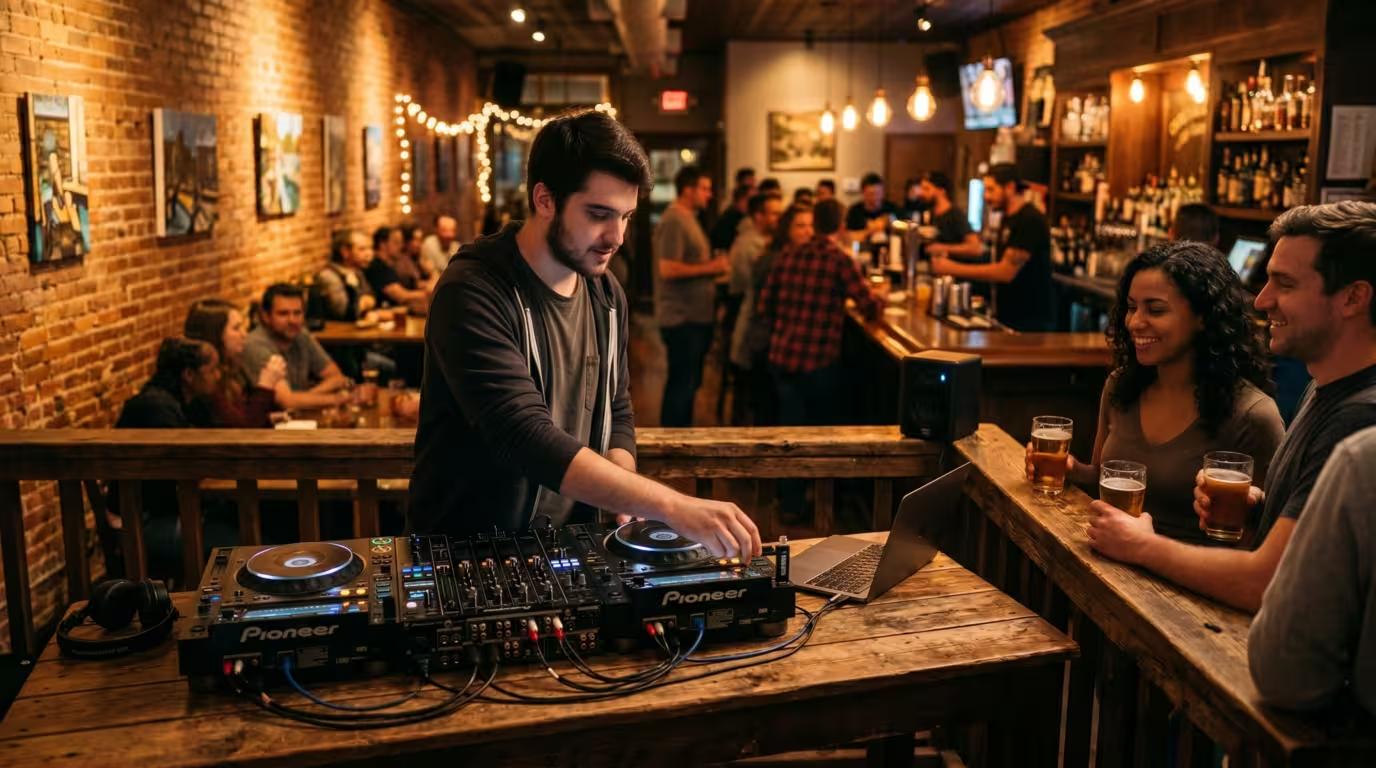
The best modern entry point is the open-decks night — the DJ equivalent of an open mic. As DJ Mag documents, these events let beginners and casual selectors play on proper club equipment in a supportive, low-pressure setting, often via a first-come sign-up sheet or a raffle. They're brilliant for three reasons at once: live experience, confidence, and meeting the exact community that leads to bookings. DJ Mag and Pioneer DJ both note that impressing at open decks has led directly to residencies for some DJs. Tips from those who run them: always sign up, go alone sometimes so you actually meet people, and if you make a mistake, just style it out — the crowd usually doesn't notice.
Create your own opportunities
If you can't get booked, make your own platform. Throwing your own night is a time-honoured route that several working DJs credit for their careers — and it doubles as a launchpad because it gives you a residency, lets you book bigger DJs onto your own lineup, and builds your own crowd (which makes every other promoter want you). Start small and low-risk: a quiet midweek slot, a back room, a free party. London Sound Academy and DJ TechTools both describe offering to fill a venue's dead night as a classic way in — one DJ TechTools writer literally got his first gig by offering to play a normally-closed basement room.
Beyond your own night, you can build demand through a regular mix series or podcast, livestreaming, and community engagement. Entrepreneurial DJs create their own gravity; promoters are far more interested in someone who's clearly making things happen.
Online radio, guest mixes, and competitions
Three more recognized routes to exposure, experience, and connections:
• Online and community radio. Internet and community stations are always looking for presenters, and a regular show builds credibility, gets you music early, and puts you in front of an audience. Many stations openly recruit DJs. As Berklee notes, aspiring radio DJs can earn their first credits and industry exposure by volunteering at a college or independent station, interning at a major one, or producing and distributing their own podcast.
• Guest mixes. Recording a guest mix for a night, label, radio show, or respected mix series is a portable calling card. One booker described climbing the online mix ladder the same way you climb the club ladder — landing a mix for a series like Resident Advisor or Boiler Room works as a stamp of approval.
• DJ competitions. Many promoters, festivals, and radio stations run opening-slot competitions where you submit a mix for a chance to play. Examples range from local festival win-an-opening-set contests to national radio: Ireland's RTÉ 2FM ran a 2026 competition asking entrants to send a 20-minute mix and a short artist profile for a slot on the 2FM Rising Stage at Forbidden Fruit Festival, ultimately won — from a field of more than 100 entries — by Dublin garage producer RKM333. Even when you don't win, you gain a polished mix, practice, and contacts.
Residencies: the goal worth aiming for
A residency is a regular, recurring slot at a venue or night — weekly, monthly, or seasonal. As Wikipedia's entry on the resident DJ explains, it historically meant being part of a club's staff, and it remains one of the best ways for a novice DJ to learn — forcing you into a real conversation with a crowd week after week. Residencies provide steady work, sharpen your skills, and build your profile — they're the backbone of many DJ careers, from Frankie Knuckles' pioneering 1977-1982 residency at Chicago's The Warehouse (widely credited as a birthplace of house music) to countless local residents quietly paying their bills.
How do residents earn those slots? Through exactly the things in this article: scene presence, reliability, and relationships. A London head of promotions told Heavy Hits that beyond musical taste and a base level of ability, which always come first, the deciding factor for a weekly resident is whether they genuinely care — whether they're reliable, turn up on time with the right equipment, and have prepared for the set. Many residents start by opening and warming up rooms, then earn later slots as trust grows. We'll publish a dedicated residencies guide in this category; treat landing one as a milestone once you've built some presence.
Get rebooked: where steady work really comes from
Landing a gig is only half the battle — getting rebooked is how steady work compounds. Once you're playing, professionalism does the heavy lifting: arrive early, be reliable, read the room, play the right set for your slot, be easy to work with, and thank the promoter. Bring a crowd if you can. Then promote the night and share clips afterward. Bookers are unanimous that they prefer DJs who are dependable and pleasant over more talented divas; as one resident put it, if you're easy to work with they'll choose you over a difficult ego any day.
This is the flip side of the small-scene reputation point: deliver and you'll be recommended and invited back; flake, get too drunk, play the wrong music for the slot, or burn a bridge, and word travels just as fast. For the craft of actually delivering, lean on the Performance and Sets articles — Reading the Crowd, Building a DJ Set, Warm-Up/Peak/Closing, and especially Booth and Club Etiquette, which covers the professionalism that gets you rebooked.
Practical tips and common mistakes
• Immerse yourself locally and become a familiar, supportive face before you ask for anything.
• Build genuine relationships, not transactional ones — give before you ask.
• Have one great, recent mix online and make it dead easy to hear and contact you.
• Reach out professionally: personalized, concise, one link, offer to warm up. Never mass-spam or send huge files.
• Start with small, warm-up, and open-deck slots — and say yes to opportunities early on.
• Create your own opportunities if the gigs aren't coming: your own night, a mix series, online radio.
• Be reliable and professional to get rebooked — that's where steady work comes from.
• Build a following so you bring a crowd, which makes you more bookable.
• Be patient and persistent, don't undervalue yourself, but don't be a diva before you've earned it.
Key takeaways
• Getting gigs is mostly hustle, relationships, and persistence — not talent alone.
• Building a genuine local scene presence is the single most reliable route to bookings.
• Have one strong mix online and approach promoters concisely, politely, and personally — never spam.
• Start small (warm-ups, open decks), create your own opportunities, and use radio, guest mixes, and competitions for exposure.
• Once booked, reliability and professionalism get you rebooked — and that's how steady work and residencies grow.
Ready-made, exclusive EDM tracks with full rights — released as your own.
