Talent gets you your first gig; etiquette gets you your tenth. The DJ booth is a shared professional workspace, not a VIP hangout, and how you behave in it — toward the gear, the other DJs, the venue staff, and the crowd — does as much to build or wreck your career as your mixing does. This guide is the complete code of conduct for behaving like a professional at a gig: the unwritten rules of the booth, clean changeovers, respecting the people around you, and the conduct that gets you rebooked. It points to the more technical articles in this knowledge base where the details live, and focuses on the social and professional etiquette that holds the whole night together.
Why etiquette matters
DJing is a small world, and reputation travels faster than any mix. Promoters talk to each other, residents talk to bookers, and the security guard who watched you be rude to the bar staff remembers your name. The uncomfortable truth that experienced DJs and promoters repeat constantly is that bookings rarely go to the most technically gifted DJ — they go to the one who is reliable, professional, and easy to work with. As Digital DJ Tips frames it, the booth is your workplace and you are part of the staff, not one of the party-goers; act professionally and bookers will trust you, and other DJs will want to share a bill with you.
The flip side is brutal. Being a diva, turning up late, getting too drunk to play, sabotaging a changeover, or being disrespectful to staff can kill a career fast, no matter how good you are. Asked what matters most when booking a new artist, Berlin-based DJ, promoter and writer The Brvtalist pointed straight to professionalism — to artists who stay humble, grateful for opportunities, and never take anything for granted. Etiquette, in other words, is not just manners — it is career strategy. Good conduct compounds into relationships, residencies, and rebookings; bad conduct compounds into a quiet blacklist you never get told about.
The booth is a workspace
Treat the booth as a professional workspace, not a stage to be seen on or a place to entertain your friends. A clean, uncluttered booth lets you do the one job you came to do; a crowded, chaotic one invites mistakes and accidents.
The single most repeated rule in DJ culture is: do not pack the booth with your entourage. A booth full of non-DJs makes it hard for the working DJ to move, to reach the mixer, and to concentrate — and it makes the next DJ self-conscious. Techno DJ Kyle Geiger told the booth-conduct blog Happy Tuesdays about a night when the booth was so crowded he couldn't even turn around, recounting how a drunk guest stashing his jacket in a cubby hole by his feet ended up blocking him from reaching the mixer and brought the music to a complete stop. The booth is not a cloakroom, a phone-charging station, or a photo opportunity. If you bring a guest or two, ask the DJ who's playing first, and brief your people on the rules before you walk in.
The other cardinal rule is about drinks. Keep all drinks away from the gear. A spilled drink on a CDJ or mixer can end the night and leave you with a repair bill — many venues will bill the DJ for damage. Use a separate surface or shelf, prefer a bottle with a screwable cap over an open glass, and never set a drink on top of the players or the mixer. Don't lean on the gear, don't rest your weight on the booth, and mind your physical space so you're not elbowing the person trying to mix.
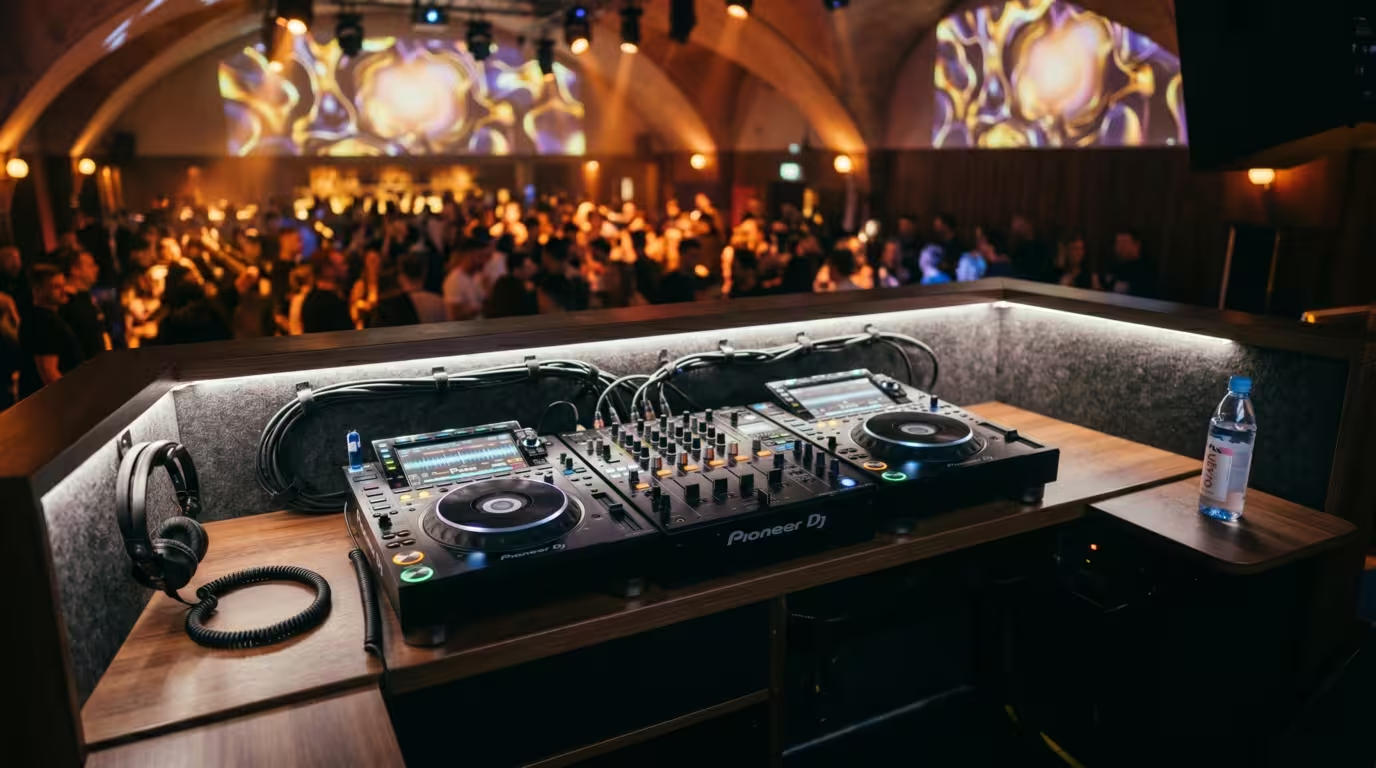
A few quick booth-space norms hold almost everywhere.
| Do | Don't |
|---|---|
| Keep the booth tidy and clear | Bring an entourage or use it as a hangout |
| Give the playing DJ room to work | Crowd or lean over their shoulder |
| Keep drinks on a separate surface | Put drinks or ashtrays on the gear |
| Leave it as you found it for the next DJ | Stash coats and bags under the decks |
Changeover etiquette
The changeover — the handover between two DJs — is where good etiquette is most visible and most often botched. Done well, it goes unnoticed; done badly, it embarrasses you in front of the whole room. For the technical mechanics of plugging in cleanly, see Connecting to a Club Sound System, and for ejecting your media safely, see Preparing USBs for CDJs. Here is the social code.
Arrive ready and in good time. Get to the booth comfortably before your slot — most working DJs aim for at least 15 to 30 minutes — so you can greet the DJ you're following, see what gear you've got, and avoid the faux pas of rushing in a minute before you're due on. Never set up your own equipment while another DJ is playing if you can avoid it; reaching over a playing DJ to plug in is, as London Sound Academy puts it, unprofessional and likely to cause you a lot of trouble. If you're bringing your own kit, arrange a soundcheck before doors — see Soundcheck and Venue Setup.
Only touch the deck or source that isn't currently playing. This is the iron law of the changeover. Never unplug the playing DJ's gear, never pull their USB mid-set, and never yank a cable. New DJs frequently eject the wrong USB in the heat of the moment — check the screen to confirm which source is actually playing before you remove anything. When MusicRadar asked a selection of artists at Amsterdam Dance Event for the worst booth behaviour they'd witnessed, the breaches named ran exactly along these lines: having a USB stick pulled out before they'd finished playing, and over-aggressive changeovers.
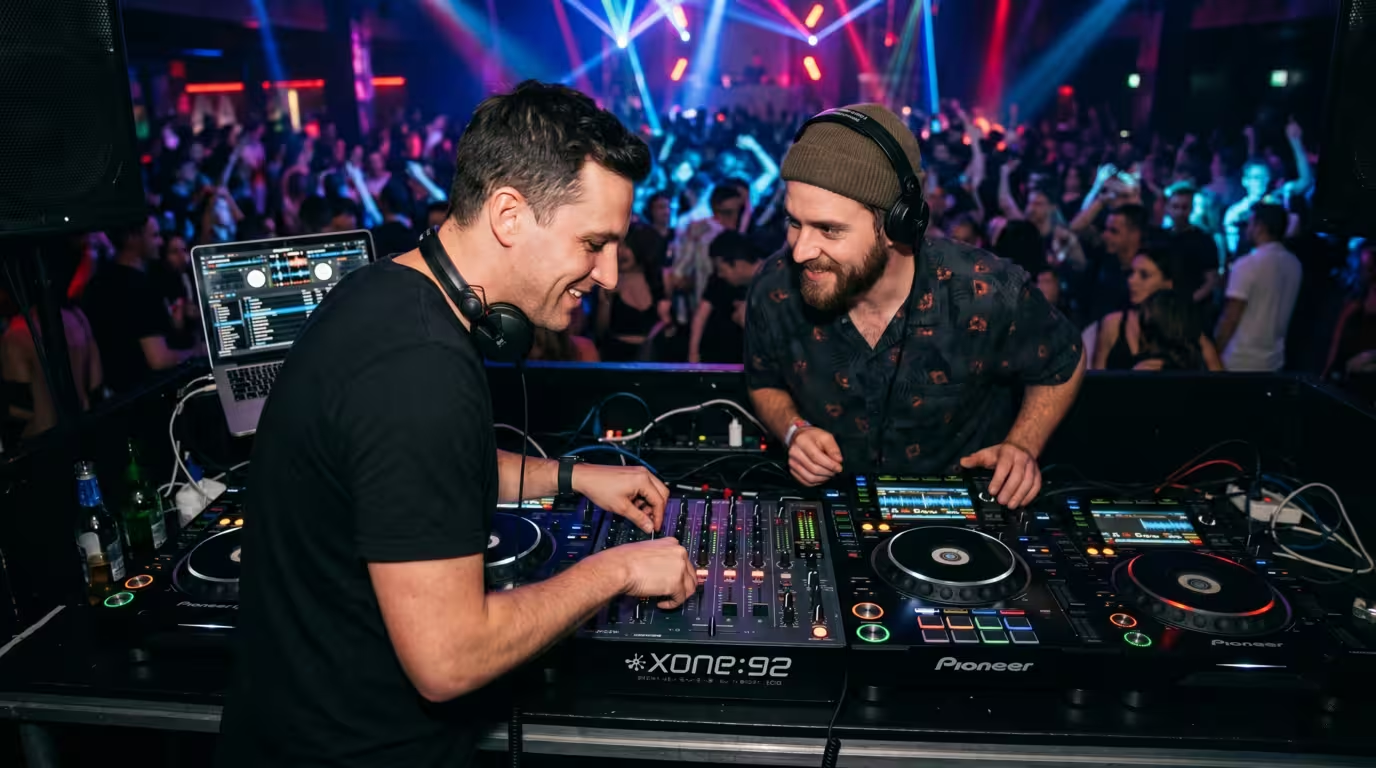
Hand over smoothly, and end on time. Bring your first track in as the previous DJ brings theirs out; don't kill the sound, leave a silent gap, or cut the other DJ off. Ask the outgoing DJ how they want to do it — some want their last track played out in full, some are happy for you to mix straight in. When your own slot is up, get off graciously: don't overrun, don't milk it by riding effects and soaking up applause while the next DJ is setting up around you. As Mixmag bluntly advises, don't overrun even if the last DJ did — be the bigger DJ. And leave the next person a long enough track to get acclimated; dropping a two-minute outro on someone is an amateur move.
Respecting other DJs and the lineup
The most common rookie mistake is to view the other DJs on the bill as competition. They are not — they are your most direct route to more gigs, because DJs recommend DJs. Treat them as colleagues.
Support the lineup: watch other DJs' sets, be encouraging, and say great tune when the next DJ drops their first record. Don't talk over someone's set, don't backseat-DJ or shout requests from the booth, and don't correct another DJ's mistakes uninvited — offer help only if they're clearly struggling and would welcome it. Be very wary of trash-talking other DJs; you never know who is friends with whom, and the scene has a long memory. As one veteran joked, DJs already have a reputation for thinking nobody can do it quite like they can — don't live up to the stereotype.
Know and respect your role in the night. If you're warming up, your job is to build the room and set up the headliner, not to beat the crowd into submission or empty your best material early — and you never play the headliner's signature tracks before them unless they've expressly said it's fine. On the Drink Champs podcast, veteran DJs Enuff and Camilo summed up the warm-up code simply: if the headliner needs to shine, you let them shine — that's the etiquette. The full breakdown of slot roles lives in Warm-Up, Peak-Time, and Closing Sets.
Respecting venue staff and the engineer
Be polite and genuinely friendly to everyone who works the room: security, bar staff, the promoter, the runner, and especially the sound engineer. This is not only decent behaviour — it is remembered and relayed. Security guards in particular are often the people who pass crowd feedback back to bookers, so keeping them onside can directly affect whether your name comes up again.
The sound engineer runs the system, and their domain is sacred. Do not touch the master volume or system EQ. One of the fastest ways to anger a club owner or engineer, as Digital DJ Pool puts it, is to not trust the levels — most clubs have an engineer maintaining the system and often a limiter protecting it. If you need something changed, ask; don't reach for it yourself. On a big system you'll be asked to keep it out of the red, and you should respect that without argument. Never try to unplug the house system to put your own gear up. The technical reasoning — limiters, gain staging, why the master is off-limits — is covered in Connecting to a Club Sound System. Socially, the rule is simpler: it's their system, so communicate and defer.
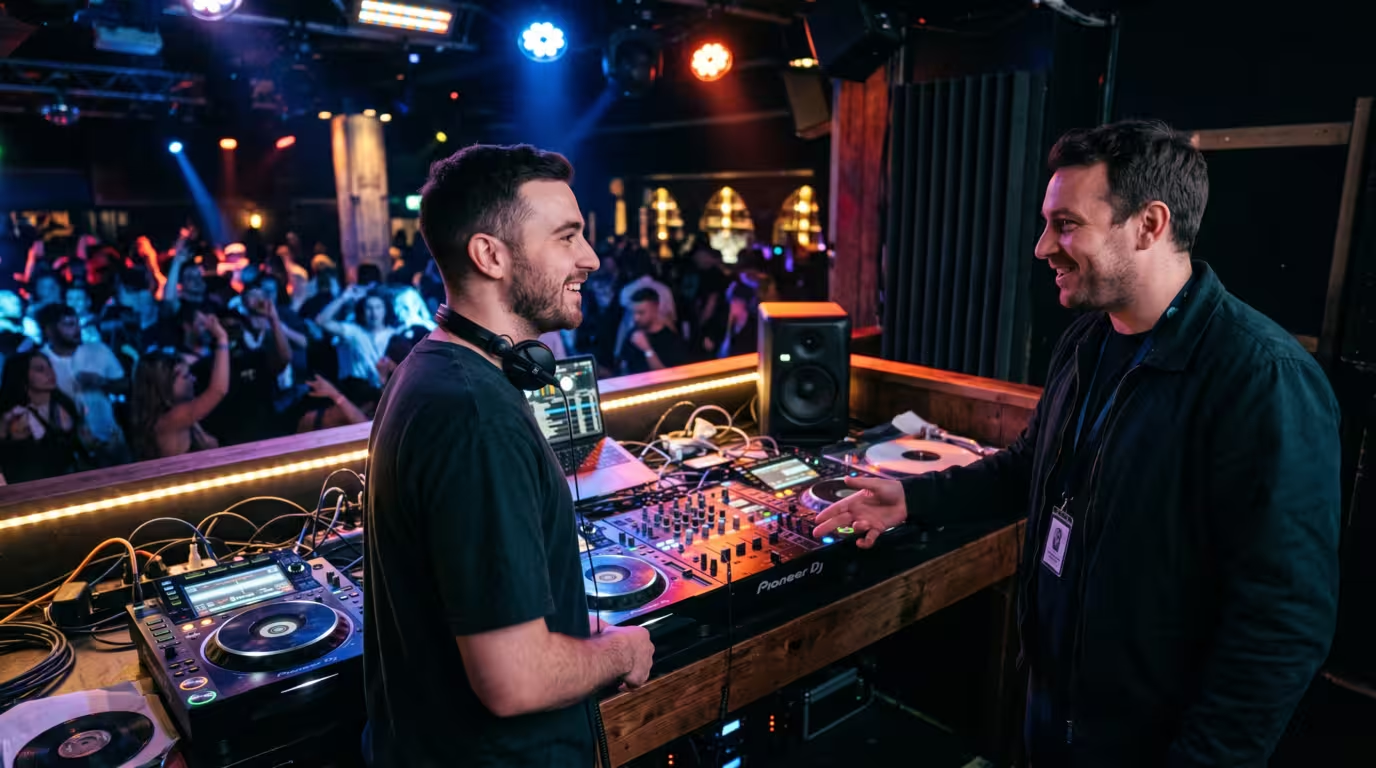
Thank people. A sincere thank-you to the engineer, the bar staff, and the promoter costs nothing and is one of the cheapest, most effective career investments you can make.
Conduct during your set
Your attention belongs to the crowd and the music, not your phone. The most visible modern etiquette failure is the DJ who spends the set filming themselves, scrolling social media, or staring at a screen instead of reading and engaging the room. As DJ Mag has documented at length in its coverage of phones on the dancefloor, the disconnection runs both ways — and a DJ buried in their phone signals to a paying crowd that they'd rather be somewhere else. Make eye contact, face the floor, and look like you want to be there even when nerves say otherwise.
Use the microphone sparingly. A little can lift the energy; constant shouting over tracks gets obnoxious fast and clears floors. If you do speak, duck the music first so the crowd actually hears you, and never bellow over a playing record. Handle requests with grace: don't scoff at anyone's taste and don't promise a song you won't play — a polite I'll see if I can work it in keeps everyone happy without turning you into a jukebox. The full playbook is coming in the future Handling Requests article. And don't treat the booth as your personal promo machine by playing only your own tracks all night — read the room and serve the party.
The gear
Treat shared and club gear as if you'll be billed for any damage, because you might be. Don't change settings on the mixer or players that affect the system or the next DJ — leave the master, the booth EQ, and anything outside your channels alone. Don't yank USBs; eject them properly (see Preparing USBs for CDJs). Don't abuse the equipment with rough handling, ash, or spills. If something isn't working, report it to the tech rather than fiddling and potentially making it worse. The golden principle: leave the gear exactly as you found it, ready for the next person.
After your set
How you leave is as important as how you arrive. Don't immediately vanish the moment your last track fades. If you're an opener, sticking around to watch the headliner is one of the most underrated career moves there is — half your future bookings come from people who noticed you stayed, supported the night, and behaved like part of the team rather than a hired gun who bolted.
Thank the promoter, the engineer, and the staff before you go. Handle payment professionally and unawkwardly: agree your fee and terms in writing before the gig, and if you're collecting cash on the night, do it politely but promptly — experienced DJs collect their fee soon after finishing rather than assuming it'll appear later. Offer to help pack down if it's that kind of gig. And follow up: a short thank-you message the next day — thanks for the slot, had a great time, would love to come back — keeps the relationship warm and puts you front of mind for the next booking. Be gracious whether the set flew or flopped; nobody wants to rebook someone who sulks.
Don't be that DJ
Almost every etiquette failure traces back to a handful of repeat offenders. Here are the breaches that get DJs quietly dropped, and why each one stings.
| Breach | Why it costs you |
|---|---|
| Touching the master or another DJ's gear | Disrespects the engineer and risks killing the sound |
| Packing the booth with friends | Crowds the working DJ and looks unprofessional |
| Drinks or ash on the gear | One spill can end the night and bill you |
| Getting too drunk or high to play | Unreliable; the fastest way to not be rebooked |
| Overrunning your slot | Steals from the next DJ and annoys the booker |
| Trainwrecking the changeover | Embarrasses you in front of the whole room |
| Being rude to staff | Travels straight back to the promoter |
| Ignoring the crowd for your phone | Signals you'd rather be elsewhere |
A note on sobriety, because it underpins several of these: staying sober enough to perform well is a core professionalism expectation. Free drinks plus pre-gig nerves is a classic trap. A couple of drinks is normal at most clubs; ten will get you remembered for all the wrong reasons. DJ TechTools advises that for a first gig it can be wise not to drink at all and simply put your best foot forward.
How good etiquette builds a career
Reframe all of the above as opportunity rather than restriction. Being professional, humble, reliable, respectful, and easy to work with is precisely what builds the relationships that sustain a DJ career — and in a small, talkative industry, those relationships are everything. Residencies, the backbone of many sustainable DJ careers, are handed to people the venue trusts to represent its sound and show up reliably week after week. Every clean changeover, every thank-you, every set where you read the room instead of your phone is a small deposit in a reputation that bookers and fellow DJs will draw on when they decide who to call next. Etiquette is not the thing that holds your artistry back; it's the thing that gets your artistry heard again.
Key takeaways
• Promoters rebook DJs who are reliable, professional, and easy to work with — not just the most talented.
• The booth is a shared workspace: keep it tidy, keep drinks off the gear, and don't pack it with friends.
• In a changeover, only touch the non-playing source, never unplug or pull the playing DJ's media, and end your slot on time.
• Respect other DJs, venue staff, and the engineer — never touch the master, and thank everyone.
• Stay sober enough to perform, engage the crowd not your phone, and don't disappear the second you finish.
• Good etiquette is career strategy: it compounds into relationships, residencies, and rebookings.
Ready-made, exclusive EDM tracks with full rights — released as your own.
