A residency is the closest thing a working DJ has to a home. Instead of chasing one-off bookings, you hold a regular, recurring slot at a venue or club night — and that consistency is where DJs genuinely grow. This is the dedicated guide to residencies: what they are, why they matter so much, the forms they take, how to land one, what's expected of you, and how to keep and grow the gig once it's yours. For the broader gig-getting roadmap it builds on, see the companion guide How to Get DJ Gigs.
What a DJ residency actually is
A residency is a DJ slot you play on an ongoing, repeating basis at the same place — weekly, bi-weekly, monthly, or seasonally — as opposed to a one-off guest booking. The DJ who holds it is the resident. As Wikipedia's entry on the resident DJ puts it, a resident (or local) DJ is effectively part of a club's staff, unlike a guest artist who works freelance and plays at several clubs. Historically, the resident was the DJ: in the first underground clubs of the 1970s and 80s, fixed hiring was the norm, so almost every club DJ was a resident representing one room.
A few distinctions matter. A guest makes a single, novelty-driven appearance and moves on; a resident provides continuity, shows up repeatedly, and becomes part of the venue's identity. Residents typically conform to the venue's musical line — Wikipedia notes the resident almost inevitably has to conform to certain musical styles dictated by the hiring company — but in return the club invests its marketing and reputation in them. Crucially, residents are usually responsible for the club's musical identity: when you hear resident of Berghain or resident of fabric, a specific sound comes to mind. That's the resident's signature at work.
Why a residency is worth chasing
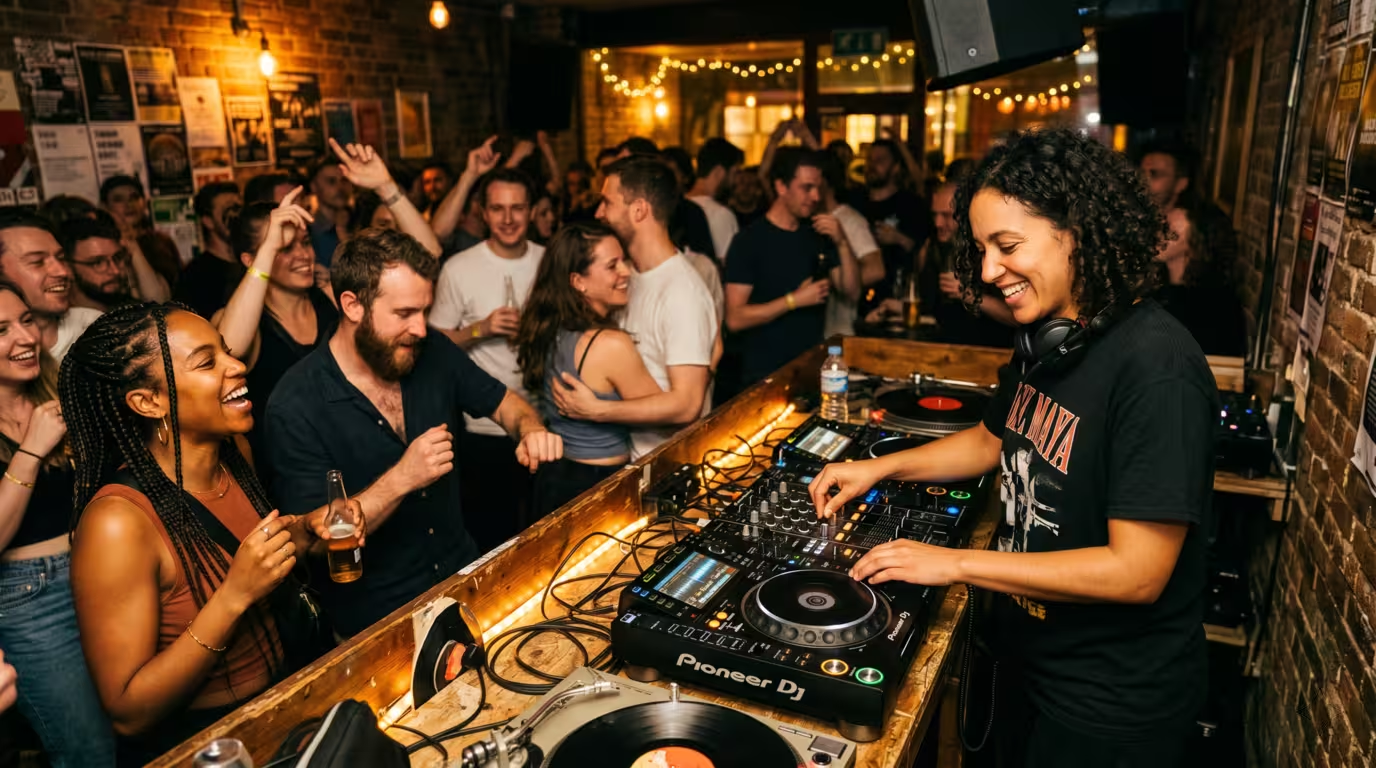
The single biggest reason is development. A residency gives you regular playing time in front of a real, recurring crowd, and that is widely regarded as the best way to actually learn the craft. Wikipedia calls a residency the best way of pragmatic learning for a novice DJ — everything you practised at home is now put into a conversation with an audience. DJ TechTools opens its residency guide with the same point: one of the single best ways to develop your skills and reach the next level is consistent gigs in front of a specific crowd.
Over weeks and months you learn things one-off gigs can't teach: how a specific room fills up, how to warm up and build energy, how to read and grow a crowd you'll see again, and how to develop sets and selection over time. You also get steady, recurring work and a more reliable income base than gig-to-gig hustling, plus a platform that builds your profile, credibility, and a loyal local following. And you build deep relationships — with the venue, the promoter, the staff, and the regulars.
The history makes the case vividly. Frankie Knuckles' residency at The Warehouse in Chicago is widely credited as the birthplace of house music — the genre's name itself comes from the club. The City of Chicago's official Warehouse landmark report states that the history of house is clear that it originated between 1977 and 1982 at The Warehouse, at 206 S. Jefferson St., through its pioneering resident DJ Frankie Knuckles. Across town and across the era, Larry Levan was, in Wikipedia's words, best known for his decade-long residency at the New York night club Paradise Garage, described as the prototype of the modern dance club, where he developed a cult following who called his sets Saturday Mass. More recently, Ben Klock and Marcel Dettmann built their reputations as residents of Berghain in Berlin, and Craig Richards anchored London's fabric — Resident Advisor notes he played the club every Saturday for 18 years, and fabric says he played over 700 Saturday nights there since 1999. These aren't footnotes — they're proof that the residency is the backbone of DJ culture and, for many, the launchpad to everything else.
The main types of residency
Residencies come in several forms, varying by venue, frequency, and the slot you play. The table below maps the most common types.
| Type | What it is |
|---|---|
| Club / club-night resident | Regular slot at a nightclub or a specific recurring club night, often representing that night's sound |
| Bar or venue resident | Ongoing slot at a bar, lounge, or restaurant; broader, more relaxed selection and crowd-driven |
| Radio residency | A recurring radio or online-radio show (e.g. BBC Radio 1, NTS, The Lot Radio) |
| Festival / brand resident | A recurring slot with an event series, promoter brand, or festival stage |
| Seasonal residency | A fixed run for a season — most famously an Ibiza summer residency across the April-October club season |
Frequency is its own axis: weekly residencies build the deepest crowd relationship, while monthly or seasonal slots carry more prestige per night. The Ibiza summer residency is the best-known seasonal model — clubs there run weekly resident nights right across the season, and brands like Carl Cox's Music Is Revolution became pilgrimages. That run lasted 15 seasons at Space Ibiza, from 2001 to 2016, closing on 20 September 2016 with a marathon set reported at around nine to ten hours (DJ Mag cited nine hours; Mixmag and others cited ten). It's also worth separating the warm-up/opening resident from the headline/main resident: many DJs start as the opener who warms the room, then grow into bigger slots over time.
How to land a residency
A residency is earned, not handed out, and it usually comes after you've proven yourself in lower-stakes slots. The roadmap below builds on the fundamentals in How to Get DJ Gigs and Networking in Dance Music, focused specifically on residencies.
Build genuine scene presence and relationships. Become a known, supportive regular at the venue or night you want. When On The Rise DJ Academy asked over 30 resident DJs how they got their first residency, the answer was almost always being in the right place at the right time — which really means being involved and supporting your local scene. DJ TechTools is blunt that mailing mixes rarely works: club owners almost never have time to listen to promos, so you have to get their attention by being around and being useful.
Prove yourself in guest and warm-up slots first. Most residents start by opening for bigger acts, warming the floor from an empty room. Getting your foot in the door can be as simple as offering to open for a friend's booking, getting recommended as a support act, or offering to play a normally dead slot or closed room. Then you make that first chance count.
Demonstrate reliability, professionalism, and value. Venues want dependable residents who show up, deliver, represent the night, and ideally draw a crowd. Most promoters look for residents who bring at least a small base crowd. Bring your people out early, be easy to work with, and treat the staff well — see Booth and Club Etiquette for the professionalism that gets you rebooked.
Have your sound, brand, and EPK ready and fitting the room. Research the venue like you already play there, and make sure your mix, brand, and press kit match its policy and crowd — the foundations covered in Building a DJ Brand and Building a DJ Press Kit. A residency pitch should sound like you already understand the room, not a random playlist link.
Create your own residency. One of the most reliable routes is to start your own night and be the resident. Find the right bar, offer to promote it and bring the gear, build a crowd, and you've created the opportunity instead of waiting for it — a recognised strategy covered further in How to Get DJ Gigs. Many residents and promoters started exactly this way.
Leverage relationships and follow up. Recommendations and word-of-mouth open most doors. After you've shown value, stay front of mind — DJ TechTools describes landing several residencies simply by checking in regularly to ask what's coming up, so you're there at the moment a slot opens. Then be patient: a residency is earned over time.
What residents are expected to do
The resident's job is bigger than playing records. Reliability comes first: show up every time, on time, prepared. Flexibility is close behind — residents often play whatever slot the night needs, frequently warming up for guests, sometimes closing, and occasionally jumping into a peak-time slot if a headliner is a no-show. As Wikipedia notes, residents serve as support for guests, warm up the floor, and keep an irregular, flexible schedule across the night.
If you're the opening resident, take it seriously. As resident Jozef K told DJ TechTools, if you're booked to play a warm-up set, then play a warm-up set — nobody is impressed by flashy delay tricks before the drop to an empty room. The craft of the warm-up — playing familiar but not peak-time music, leaving the big tunes for the headliner, and reading the early room — is covered in depth in Warm-Up, Peak-Time, and Closing Sets and in Digital DJ Tips' warm-up guide.
Beyond the music, residents read and build the regular crowd over time, represent and help promote the night, embody its identity, adapt to the venue's vibe and music policy, and sometimes contribute to curation or bookings. Above all they're professional and easy to work with — a reliable team player for the venue and promoter. The relationship should be symbiotic. As DJ Eric Sharp writes in Mixmag's do's and don'ts of residencies, you should bring more to the table than just selection, mixing and crowd-reading — help the night succeed and bring a crew, because it's the customers who keep the lights on.
Keeping and growing a residency
Landing the slot is only the start. You keep a residency by delivering consistently, keeping the crowd and venue happy, staying reliable and professional, and keeping your sets fresh. Complacency is the enemy: the demand to refresh your music is real, because you face the same crowd repeatedly and they expect evolution. At the same time, don't chase novelty for its own sake — many residents lean on selections they know work for that room while steadily folding in new finds.
Invest in the relationship and the night itself. Be good to everyone from the bar staff to security — one Dublin resident interviewed by On The Rise DJ Academy keeps a five-year residency partly by being so reliable she'll cancel her own plans to cover when the venue is in a panic. Promote actively; in most up-and-coming residencies the venue expects you to help fill the room, as Digital DJ Tips lays out in its guide to promoting your own club nights.
Then grow within the gig — from warm-up to bigger slots, or into curation and bookings — and use the residency as credibility for external gigs. Treat it as a long-term investment. Craig Richards told RA that his fabric residency was a dream situation that let him explore the craft of playing records in a way globetrotting never could. A residency you hold for years is one of the most valuable things in a DJ career.
The reality: earned, not given
Be clear-eyed about the trade-offs. Residencies are competitive — as DJ Eric Sharp warns in Mixmag, there are hundreds if not thousands of DJs who would line up to take your place, often for less than you're being paid. They take time, presence, and proof to land. And pay varies widely: many residencies, especially early on, pay modestly, and the real value is the development, platform, and profile rather than the fee. As a rule, residents historically earn less fame and money than touring guests — with notable exceptions like Klock and Dettmann who built global careers from a residency.
There's also a bigger-picture tension worth knowing. As Mixmag's feature Return of the resident recounts, the rise of the touring superstar guest pushed residents into the shadows for years, before clubs began consciously reviving the residency model. The takeaway for you: a residency is a long game, and its biggest payoff is who you become as a DJ by doing the reps. Don't be a diva or a flake — that's the fastest way to lose it.
Key takeaways
• A residency is a regular, recurring slot at a venue or night where you're the resident, distinct from a one-off guest booking.
• It's widely regarded as the best way to develop your craft and is historically the backbone of DJ culture, from Frankie Knuckles to Berghain.
• Land one by building scene presence, proving yourself in warm-up and guest slots, showing reliability and value, and often by starting your own night.
• The resident's job is reliability, flexibility (often warming up), reading the crowd, promoting the night, and being easy to work with.
• Keep and grow it by staying consistent, fresh, and professional — and value the development and platform, not just the pay.
Ready-made, exclusive EDM tracks with full rights — released as your own.
