Sending a demo is still the most common way an electronic music producer gets a track signed and released by a label. A demo is simply your music — usually one or two finished tracks — sent to a label in the hope that they will sign and release it. Done well, it can open the door to a label's audience, promotion, credibility, and A&R support. Done badly, it lands in the trash with the hundreds of other submissions that arrive every week. This guide walks through the whole process, from finishing the track to handling rejection, and how it connects to releasing a track you own.
Why send a demo, and what it achieves
A demo (short for demonstration) is a recording sent to record labels, producers, or other artists hoping the artist will be signed onto the label's roster. In electronic music the demo is usually the finished track itself, because the label won't be financing studio time — what you send is the product.
The people who decide are the label's A&R (Artists and Repertoire) staff, the division responsible for scouting and signing new talent. When you impress them, you gain what a record label is built to provide: distribution, marketing and promotion, a roster and community, credibility, and sometimes an advance or other money. A label amplifies what you have already built; it does not replace the work.
There is an alternative. You do not need a label — you can self-release through a distributor and keep full ownership and a larger share of revenue. That route is covered in our planned article on releasing music and distribution. This guide is about the label-demo route specifically, and what labels do after they say yes is covered in our planned record-labels article.
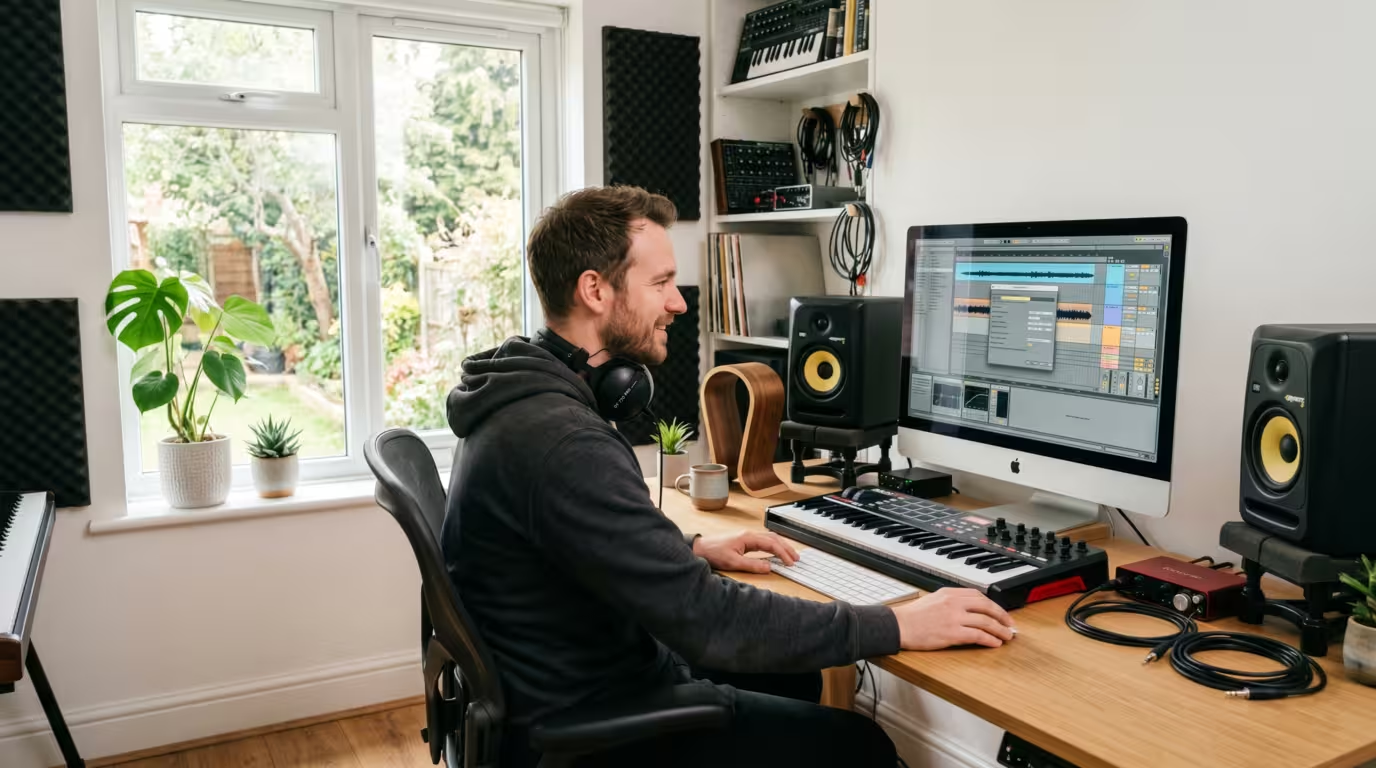
Get the track ready first
This is the single most important point: most demos are rejected on the music alone. Before you contact anyone, the track must be finished — fully arranged, well-produced, mixed, and mastered or at least carrying a strong, commercially loud mixdown. Labels reject works-in-progress, sketches, loops, and almost-there ideas instantly.
The reasoning is simple. An A&R can't judge your level or your potential from an unfinished piece of audio, so don't make them imagine the finished version. Send your best, most on-brand work, not everything you've made. It also helps to test the track — play it out, get it in front of other producers or DJs — before it goes anywhere near a label.
There's a subtler trap, too: if the demo you send is noticeably weaker than your existing released tracks, the label may take that as a bad sign. The demo is your first impression, so make it your strongest — and remember A&Rs often decide a track's fate within the first 15 to 30 seconds, so the opening has to land. Until you have built a relationship with a label, send only finished music you are genuinely proud of. For the deeper craft of mixing and mastering, lean on dedicated audio resources — a polished, competitive track is the price of entry.
Research and target the right labels
The number-two rule, echoed by nearly every label boss, is to only send to labels that would genuinely be interested in your style. A techno track sent to a trance label is an instant reject. Mass-sending to everyone is worse than useless — it actively turns A&Rs off.
Think of it like a job application: you wouldn't send the same CV to a school, a restaurant, and an accountancy firm. Research each label's roster, recent releases, and overall sound, and honestly ask whether your track sounds like it could belong there. Build a shortlist of genuinely fitting labels rather than a blast list. Quality of targeting beats quantity of sends every time.
Be realistic about tier, too. The biggest labels typically sign artists who already have a following or buzz, and many won't even consider unsolicited demos. Independent labels are often a better first target: they're more reachable, more flexible, and more willing to take a chance on emerging talent. A pool of a couple of dozen well-chosen labels of varying sizes is plenty.
Find the right submission method
Once you have your shortlist, check each label's stated demo policy — usually on their website or social channels — and follow it exactly. Ignoring the stated method is one of the fastest ways to get ignored. Common channels include:
| Channel | How it works |
|---|---|
| Demo submission form / portal | An official form on the label's site; you upload or link your track |
| Dedicated demo email address | A specific inbox (often demo@label) separate from general contact |
| Demo-submission platform | A service like LabelRadar that routes demos to participating labels |
| Private streaming link | A private SoundCloud (or similar) link sent via the label's stated method |
A growing number of major dance labels now accept demos through LabelRadar, which Beatport acquired in May 2022. Producers upload a track, select the 20-second clip that best represents it, then submit either to a single label privately or to a public pool — with notifications when a label listens. Named labels using the platform include Toolroom, Armada, Monstercat, Anjuna, NCS, Blanco y Negro, Drumcode and Defected, among others. It exists precisely because labels were drowning in emailed WAV files and dead SoundCloud links.
Crucially, many labels are closed to unsolicited demos and sign mainly through relationships or A&R contacts. Some major labels state outright that a demo must come recommended by an established industry professional. Respect that. Sending to a personal DM, the wrong email, or a social-media team that has nothing to do with A&R will get you ignored — and sending huge file attachments instead of a streaming link clogs inboxes and can trip spam filters.
How to write the demo email
When you do send an email, keep it short, professional, and personal. A&Rs are busy and receive a great many demos; make it effortless to read your message and hit play.
| Element | What to include |
|---|---|
| Subject line | Your artist name + "Demo" so it's easy to filter and find |
| Greeting | Address the label or right person by name — never "To whom it may concern" |
| Intro | One or two lines on who you are and any genuine, credible achievements |
| Why this label | A specific reason your track fits their sound — shows you know them |
| The music | A private streaming link to one or two of your best tracks, strongest first |
| More info | A link to your EPK / socials / artist profile |
Lead with your single strongest track; don't dump ten on them, because most A&Rs won't listen past the first one anyway. Use a private streaming link with downloads enabled rather than attachments or public links — it lets the A&R listen in one click and pass it up the chain if they like it. Skip the life story, the arrogance, and the hard sell; let the music speak. Name your files cleanly (Artist Name - Track Name) and label any unmastered version as such. Then proofread, and make the whole thing easy to act on. For building the press materials and bio you'll link to, see our Building a DJ Press Kit article.

What not to do
The mistakes that get demos binned are remarkably consistent across labels:
• Mass-sending or blind-CCing every label at once
• Ignoring the label's stated submission method
• Sending unfinished, weak, or wrong-genre music
• Huge email attachments, public links, or dead/broken links
• Long, rambling, arrogant, or rude emails
• Being pushy, spammy, or aggressively chasing
• Fake hype or inflated claims
• Sending to a closed label, or not personalizing at all
• Bad metadata and messy file names
• A demanding, entitled tone, or sending too many tracks
A telling detail from label heads: seeing that a track has been emailed to fifty people at once, or has been public for months with barely any plays, kills their interest. Labels want to feel the track is special, not the leftover from a scattershot blast.
Follow-up and patience
Set realistic expectations. Demo volume is brutal — Armada Music's own submission guide notes that a label could be receiving well over a hundred demo submissions a day, and even smaller indies field dozens daily, so they simply don't have time to reply to every one. Give it time — weeks, not days — before any follow-up. Send one polite follow-up at most; never nag or repeatedly chase.
Many labels won't reply at all, and a non-reply usually means no. As the dance-music publication Attack Magazine put it bluntly in its A&R feature, if you didn't hear back, you didn't make the cut; and Thomas Von Party, the A&R at Canadian imprint Turbo Recordings, was equally direct in the same piece: don't pester for feedback. Don't take silence personally — it's the volume, not you. Staying patient and professional is part of the job.
Handling rejection and persisting
Rejection is normal; most demos are rejected, and the music industry runs on hearing no before yes. The professionals who eventually get signed are the ones who didn't stop at the last rejection. A few principles help:
• Don't burn bridges — stay courteous even when ignored or turned down.
• Learn and improve; if a label offers feedback, treat it as gold.
• Keep making better music and building your profile.
• Try other genuinely fitting labels.
Over time, persistence plus genuine improvement — and a growing online presence — make future demos land better. The same A&R staff who passed on you once will remember a professional attitude and a rising profile.
Why warm intros beat cold demos
Here's the honest reality most guides underplay: a warm introduction or an existing relationship beats a cold demo almost every time. As Wikipedia's A&R entry summarizes the industry norm, executives rely mostly on word of mouth from trusted associates, critics and business contacts rather than on unsolicited demo tapes. People sign people they know, trust, and are already hearing buzz about. A cold demo is the hardest route in.
That doesn't mean cold demos never work — they do — but it means you should also be doing the slower, more durable work: networking, genuinely engaging with labels and their artists, supporting and playing their music, collaborating with producers a step ahead of you, and building a credible online footprint. Those efforts are covered in our Networking in Dance Music, Building a DJ Brand, and Social Media for DJs articles. When your name is already familiar to an A&R, your demo stops being cold. And when a label likes a demo, the first thing they'll do is look you up — so a real, active online presence matters as much as the track.
The ownership tie-in: you must own what you sign
Brief but essential: to sign and release a track to a label, you must actually own the rights to it. This matters specifically if you're releasing a ghost-produced or bought ready-made track under your own name. Before you submit such a track, make sure you have the exclusive rights and full ownership — ideally documented — so you can legitimately sign it. Labels and distributors will expect you to confirm you control the rights, and an ownership dispute can delay or kill a release.
Never submit a track you don't have the rights to. For how rights transfer and ownership work when you buy a ready-made track, see our Buying Ready-Made Tracks and Ghost Production Contracts and Rights articles — getting that paperwork right is what makes a bought track yours to release.
A quick pre-send checklist
• The track is finished, mixed, and mastered (or a strong mixdown) — and genuinely competitive.
• You've shortlisted labels that actually release your sound.
• You've found and followed each label's stated submission method.
• Your email is short, personal, and addressed to the right place.
• You're sending one or two best tracks via a private streaming link.
• Files are named cleanly; your EPK/socials are linked and up to date.
• You own the rights to everything you're submitting.
• You're prepared to wait weeks, follow up once, and move on gracefully.
Key takeaways
• A demo is finished music sent to a label hoping to get signed; the music quality is the primary thing labels judge.
• Target labels that fit your genre and use their stated submission channel — mass-sending and wrong-genre demos get ignored.
• Keep the email short, personal, and easy to act on: one or two best tracks via a private streaming link, not attachments.
• Expect slow replies and mostly rejection; follow up once, stay professional, and keep improving.
• Warm introductions and a strong profile beat cold demos — and you must own the rights to any track you sign.
Ready-made, exclusive EDM tracks with full rights — released as your own.
