A DJ rider is the document that travels alongside your performance contract and tells the promoter exactly what you need to do your job — the right gear in the booth, and, when you're touring, the comfort and logistics to get you there in one piece. Most DJs first meet the word rider when a promoter emails, "Can you send your tech rider?" and they realise they don't have one. This guide explains what a rider is, the two main types, what goes in each, how riders fit into a booking, how they grow with your career, the truth behind the famous crazy demands, and how to write one that's clear, professional and proportionate.
What a DJ rider actually is
A rider is a set of requirements a performer asks the host venue to fulfil so they can perform. In live music it has two standard forms — the technical rider and the hospitality rider — and what a performer can ask for scales with their status and leverage. That definition is consistent across encyclopedic and live-production sources, including Wikipedia's entry on the rider.
The name is literal. The document rides on top of the main performance contract: the contract covers the core deal — fee, date, set length, cancellation terms — while the rider attaches all the technical, logistical and hospitality conditions needed to make the show actually happen. It lists the things you need that aren't the fee itself. The DJ (or their agent) sends it to the promoter, and it's the promoter's and venue's job to meet it.
Crucially, the rider isn't a separate, optional wish-list — for larger bookings it's folded into and signed off as part of the contract, so it carries the same weight. For the contract side of this relationship — fees, deposits, cancellation, and how the rider attaches — see our companion guide DJ Contracts Explained; this article goes deep on the rider itself.
The two main types of rider
Almost every DJ rider breaks into two parts. Some DJs keep them as two documents; many combine them into one rider with clearly labelled sections. Either works — what matters is that the technical needs and the comfort needs are both covered and easy to read.
The technical rider
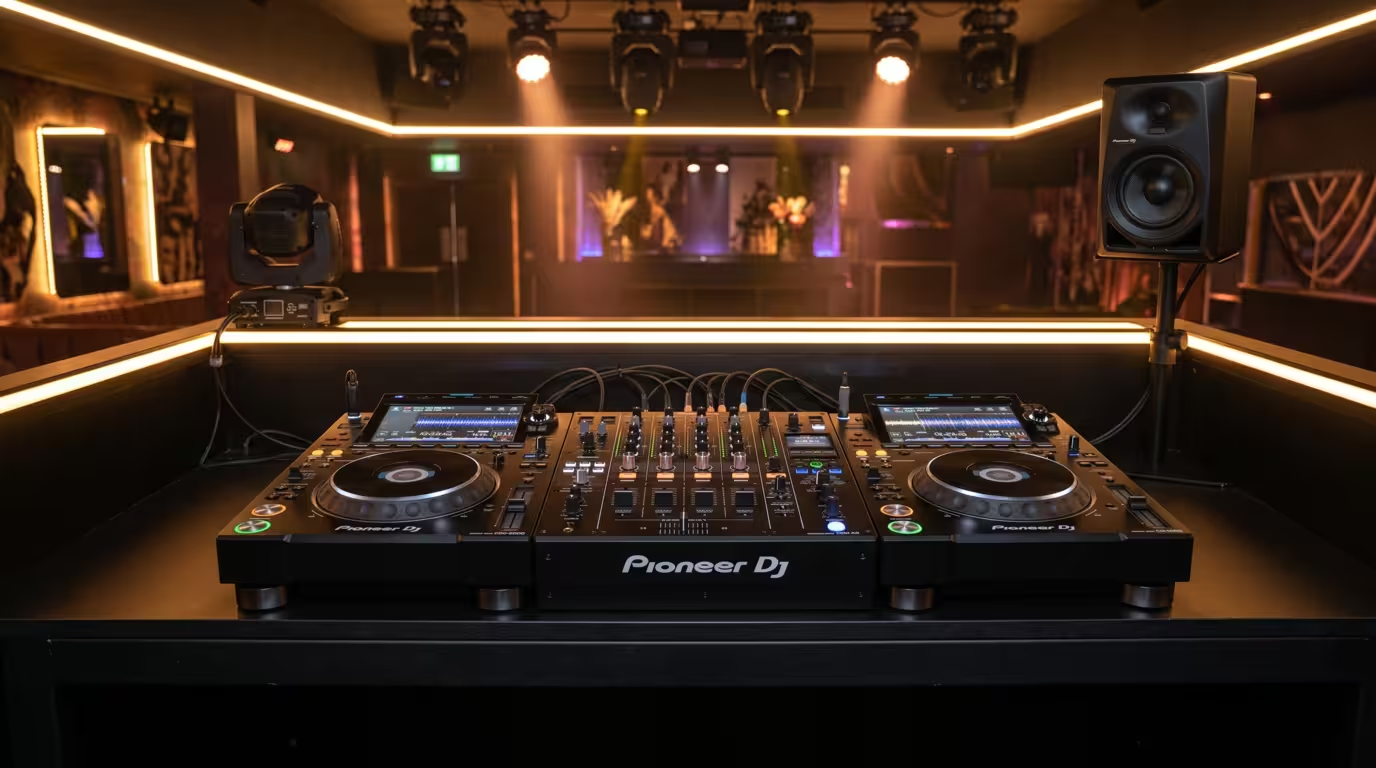
The technical rider is the list of gear and technical setup you need to perform. Think of it as the blueprint for the booth: it tells the venue's production team and engineer exactly what to have plugged in, working and ready before you arrive. For a DJ that typically means the players, the mixer, monitoring, the booth itself, power, and a microphone — plus, at bigger shows, expectations about the PA and the engineer.
The point of the technical rider is simple: you should be able to walk in, plug your USBs or laptop into compatible, working equipment, and play. The club-standard digital setup in electronic music is a pair (or more) of Pioneer/AlphaTheta CDJ media players and a Pioneer/AlphaTheta DJM mixer — currently the CDJ-3000 (and newer CDJ-3000X) with a DJM-A9 or DJM-900NXS2, networked over Pro DJ Link so one USB drive feeds every deck. International touring artists routinely specify exactly this gear, and venues that own it can host almost any act without renting in. Pioneer DJ even publishes official downloadable rider templates for its most popular setups; as the manufacturer's technical riders page frames it, detailed tech riders for the most popular set-ups let you focus on the crowd rather than the equipment. For the gear context the technical rider describes — the booth, the CDJ-plus-DJM chain, monitors and the house engineer — see Connecting to a Club Sound System and Headphone and Monitor Specs; for firmware and USB compatibility (a common, preventable booth disaster) see Preparing USBs for CDJs.
Here are the items a typical DJ technical rider covers and why each one matters.
| Technical item | Why it's on the rider |
|---|---|
| DJ players (e.g. 2-4 CDJ-3000 / CDJ-3000X), models and count | The decks you load and play from; specifying models and number ensures compatible, networkable gear |
| Club mixer (e.g. DJM-A9 / DJM-900NXS2 / DJM-V10) | The hub for blending, EQ and effects; the most common point of substitution, so name it |
| Turntables if needed (e.g. Technics SL-1200 / PLX-1000) | Only for vinyl or turntablist sets; otherwise leave them off |
| Booth monitor(s) with independent level control | Lets you hear your mix at the decks, separate from the dancefloor volume |
| A sturdy, adequately sized table or booth at the right height | Stops the gear vibrating or wobbling and gives you room to work |
| Sufficient, accessible power outlets | Laptops, controllers, adapters and accessories all need reliable power |
| A microphone | For announcements or MC work; specify if you bring your own |
| A working, tested PA and a competent sound/monitor engineer | Ensures the system performs and someone can fix problems fast |
| Pro DJ Link / linked players, booth lighting (where relevant) | One USB for all decks; enough light to see the gear in a dark booth |
A booth monitor with its own volume is worth singling out, because new DJs often overlook it. It's a speaker pointing at you in the booth, on a level control separate from the front-of-house mix, so you can turn yourself up or down without touching what the crowd hears. As Digital DJ Tips explains in its guides to booth monitoring, learning to trust the monitor is one of the biggest steps from bedroom to club. If a small venue has no dedicated monitor, the usual workaround is placing the booth beside a main speaker — which is exactly the kind of thing your rider, or a quick chat when advancing, should flag.
The hospitality rider
The hospitality rider covers everything off the decks: your comfort and logistics. It exists to make sure the artist is looked after, especially when they're travelling and away from home. For a gig five minutes from your house you may need none of it; for an out-of-town or touring booking it can matter as much as the gear.
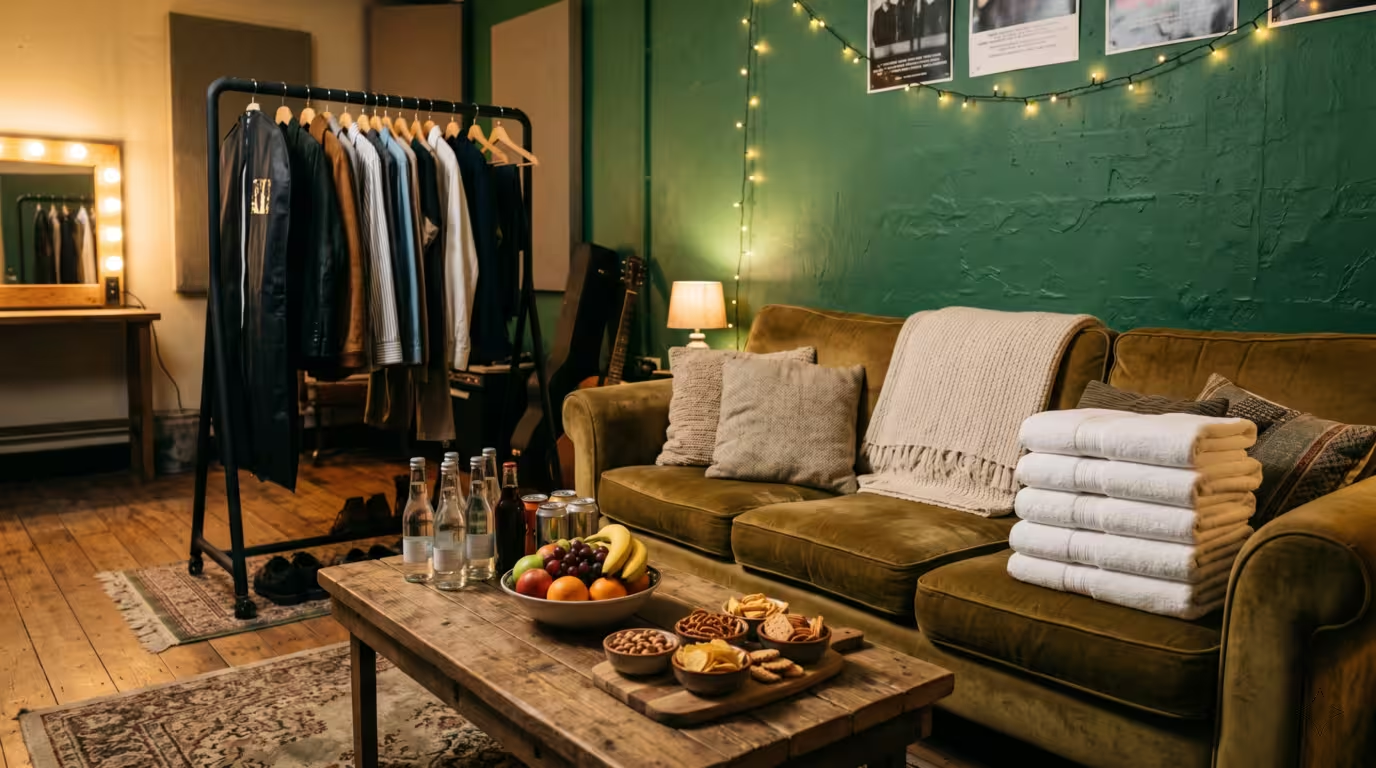
Typical hospitality items and their purpose.
| Hospitality item | Why it's requested |
|---|---|
| Private green room / dressing room | Somewhere to prepare, store bags and decompress away from the crowd |
| Water, soft drinks and reasonable refreshments | Basic comfort across a long night in a hot booth |
| Food — a meal, or a cash "buyout" instead | Keeps a travelling artist fed; a buyout lets you choose your own meal |
| Hotel accommodation | A place to sleep when the gig is far from home |
| Ground transport (airport pickup, hotel-to-venue) | Removes the stress of finding your own way in an unfamiliar city |
| A set number of guest-list spots | Lets you bring friends, contacts or industry guests |
| Towels and freshen-up amenities | Practical comfort before and after a sweaty set |
On tour, food is often handled as a buyout — a set cash amount per person paid instead of a provided meal. Touring-logistics guides put the typical figure in the region of $15 to $35 per head at club and mid-level shows (Orphiq cites a $15 to $30 per person per day range, with some 2026 touring breakdowns quoting $20 to $35). Hospitality details like dietary needs, the exact dinner arrangement and the buyout amount are usually finalised when advancing the show rather than left as surprises on the day.
How a rider works in a booking
A rider matters most for club, festival and touring gigs; a casual local bar set may need little or none. Once a show is confirmed, the details get nailed down in a process called advancing — the pre-show stage where the artist's side and the venue/promoter get on the same page about load-in, soundcheck, set time, the technical setup and hospitality. The rider is the core attachment in that conversation.
For bigger acts a tour manager or booking agent handles advancing, contacting each venue a week or two out to confirm everything the rider specifies. Solo and emerging DJs often advance their own shows — which is exactly why having a clear rider ready to send is so useful. The whole point is to iron out problems before show day instead of discovering them at soundcheck. A clear, agreed rider is also your protection: if the booth turns up wrong, a signed rider is documentation that the venue was responsible for the setup. For what happens once you're in the booth, see Soundcheck and Venue Setup and, for festivals with separate FOH and monitor engineers and a line-check, Playing Festival Sets.
Your rider also lives naturally inside your press kit. A technical rider is commonly attached to or included in an EPK, so a promoter who's considering you can see your requirements up front — see Building a DJ Press Kit for how that fits together.
Riders scale with your status
A rider grows with your career. A new or small DJ needs only a simple technical rider — the gear, monitor, table and power to play — and little or no hospitality. As you start touring, headlining and drawing crowds, the rider expands: travel, a hotel, a green room, transport, a fuller hospitality section. The bigger your name, the more leverage you have to ask for, because the promoter wants you specifically and is paying for the draw you bring.
The flip side is proportionality, and it's the single most important judgment call in writing a rider. Don't over-demand before you've earned it. A diva rider at a small gig is a bad look and can cost you future work. As Stagent's guide to building an artist rider warns, emerging artists who request luxury items or excessive quantities damage their reputation — venues talk to each other, and word spreads about difficult artists with unrealistic demands. The sensible rule is to match your rider to your career stage, since your leverage to ask for more grows naturally as your reputation and crowds do. Keep alcohol and luxury requests modest early on. Your fee and your reputation — not your rider — are what grow first. (For where the money sits versus the rider, see How Much DJs Charge.)
The "no brown M&Ms" story — myth vs reality
No discussion of riders escapes the legends of outrageous demands, and the most famous is real — but almost always misunderstood. The rock band Van Halen's 1982 tour rider was a 53-page typewritten document, and buried in its Munchies section, per the Snopes fact-check, was a line demanding M&Ms with, in capital letters, absolutely no brown ones. Frontman David Lee Roth catalogued it as Article 126, warning that any brown M&Ms backstage meant forfeiture of the show with full compensation.
For years this looked like pure rock-star excess. The real reason, which Roth explained in his autobiography Crazy from the Heat and on camera, is far smarter. Van Halen was among the first bands to haul arena-scale production into small, third-tier venues — by Roth's account they travelled with the biggest production of its time, rolling up with around nine eighteen-wheelers full of gear where the local standard was three trucks at most. Many of those buildings genuinely couldn't handle the weight and power demands, and the band's multi-page technical rider was full of safety-critical specifications. The brown-M&M line was buried deep in that rider as a deliberate compliance check: if Roth walked backstage and spotted a brown M&M in the bowl, he knew the venue hadn't read the contract carefully and the whole production needed re-checking for technical errors. The candy was a tripwire — a quick, visible signal of whether the venue had actually read the whole document. Authors Chip and Dan Heath, in Decisive, made the same point: Roth was no diva but an operations master, and in Van Halen's world a brown M&M was a tripwire. Roth cites a real 1980 incident in Pueblo, Colorado, where a venue ignored the weight requirements, the staging sank through the arena floor, and the damage ran into tens of thousands of dollars.
The lesson for DJs isn't to plant gotchas in your rider. It's the opposite: the famous diva demand was actually a safety system, and the vast majority of working-DJ riders are modest, sensible documents. Keep yours that way.

How to write a good DJ rider
A good rider is clear, professional and proportionate to your level and the gig. Work through it in this order:
• Cover genuine needs before wants. Working, compatible gear — the right CDJs and mixer, a booth monitor with its own level, a sturdy table, enough power — comes first. Comfort items come second, and only when the gig justifies them.
• Be specific but realistic. Name models and counts (e.g. 2 x CDJ-3000, 1 x DJM-A9) so there's no ambiguity, but don't demand boutique gear most clubs can't supply unless you genuinely need it.
• List acceptable alternatives. Writing "DJM-A9, or DJM-900NXS2 acceptable" keeps you bookable at smaller venues instead of pricing yourself out. This is standard, sensible advice across the DJ-education world.
• Separate technical from hospitality so the production team and the hospitality team can each find their part fast. Keep it short — ideally a page or so a production crew can scan in under a minute.
• Scale it to your status and update it as you grow. Revisit it when your setup, your fee or your touring changes.
• Make it easy to fulfil, and include a contact — yourself or a tech/tour contact — so the venue can call with questions before the night rather than improvise on it.
Tie the whole thing back to one test: can you actually perform well on what you've asked for? Compatible decks and mixer, a monitor you can hear, firmware and USBs that play nicely together (see Preparing USBs for CDJs), and power that works. A clear rider is the cheapest insurance you can buy against on-the-night disasters.
Common mistakes and quick tips
The recurring mistakes are easy to avoid once you know them:
• No rider at all — you turn up to incompatible or broken gear nobody knew you needed.
• An over-the-top, diva rider beyond your status — reputationally expensive, as above.
• Vague or unrealistic technical specs — "good CDJs" tells the venue nothing.
• No alternatives listed — you price yourself out of venues that can't source your exact mixer.
• Forgetting essentials — monitors, power and a sturdy table are the classics.
• Copying a superstar's rider — their leverage isn't yours, and their needs aren't either.
• Never updating it — and getting surprised by gear or firmware mismatches a current rider would have caught.
And the tips, distilled: be reasonable, be specific, list alternatives, separate technical from hospitality, scale with your status, make it genuinely fulfillable, and keep it updated. Professionalism off the decks reads the same way it does on them — see Booth and Club Etiquette.
Key takeaways
• A DJ rider is the document attached to your performance contract listing the technical and hospitality requirements a venue must provide for you to perform — it rides alongside the contract and is sent when advancing the show.
• The two main types are the technical rider (players, mixer, monitors, booth/table, power, mic, PA and engineer) and the hospitality rider (green room, food/drink, hotel, transport, guest list, towels).
• Riders scale with status: small DJs need a simple technical rider; touring headliners add hospitality. Keep it proportionate — diva demands damage emerging artists.
• The Van Halen "no brown M&Ms" clause was a real safety compliance check buried in a 53-page technical rider, not mere ego — a reminder that good riders are sensible, not outrageous.
• Write yours clear, specific and fulfillable, list acceptable gear alternatives, separate tech from hospitality, include a contact, and update it as you grow.
Ready-made, exclusive EDM tracks with full rights — released as your own.
